Replacement French Press Filters That Stop the Grit
Bodum’s replacement filter screen is the top pick for anyone running a Chambord or Brazil press, since it matches the original mesh and spring tension exactly. Frieling’s replacement plate and spring follow for stainless press owners, and SterlingPro’s universal filter suits buyers whose brand no longer sells parts.
Bodum’s replacement filter screen is the safest first choice for Bodum press owners, since a mismatched filter is the most common reason grounds start showing up in the cup.
We compared brand-specific fit, mesh gauge, and owner reports on spring tension loosening over time to rank these seven filters, since a loose spring is often the real cause of a gritty press.
What we recommend

Bodum Replacement Filter Screen
This filter matches the mesh gauge and spring tension of Bodum’s original Chambord and Brazil press filters, so plunging feels the same as it did when the press was new. It threads onto the same plunger rod without modification.
Pros
- Matches original mesh gauge and spring tension exactly
- Threads directly onto the existing plunger rod
- Restores the press to near-original filtering performance
Cons
- Only fits Bodum’s specific plunger rod thread
- Priced higher than generic universal filters
Frieling Replacement Filter Plate and Spring
Frieling sells the filter plate and spring as a matched assembly, which keeps spring tension consistent with how the press was originally calibrated. It fits the brand’s double-wall stainless press line.
Pros
- Plate and spring sold together keep tension calibrated correctly
- All-stainless build resists wear better than mixed-material filters
- Fits directly without needing to swap other press parts
Cons
- Only compatible with Frieling’s specific press models
- Costs more than universal-fit alternatives

SterlingPro French Press Replacement Filter
SterlingPro designs this filter to fit a range of standard French press plunger rods rather than one specific brand, useful for presses whose original manufacturer no longer sells parts. Mesh gauge is fine enough to limit sediment in most 8 to 12 cup presses.
Pros
- Fits a range of standard plunger rod threads
- Useful when the original brand no longer sells parts
- Extra mesh layer helps catch finer sediment
Cons
- Fit can vary slightly depending on your exact press model
- Not a guaranteed match for non-standard thread sizes

Espro P7 Replacement Filter Set
Espro’s own press uses a dual micro-filter system rather than a single mesh screen, and this replacement set matches that two-stage design. It is built specifically for the P7 press line.
Pros
- Dual-stage mesh matches Espro’s original fine-filtering design
- Direct fit for the P7 line without modification
- Keeps sediment lower than single-mesh replacement filters
Cons
- Only compatible with the Espro P7, not other presses
- Higher cost reflects the dual-filter construction
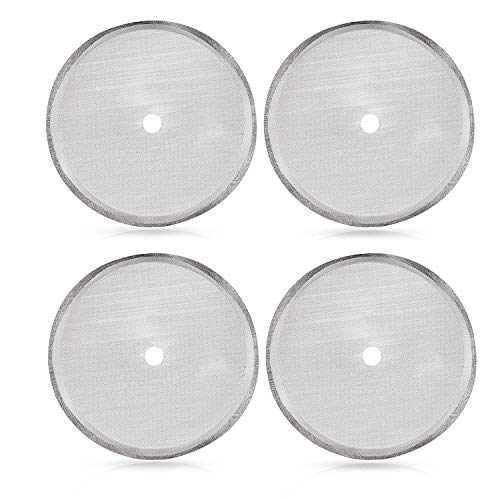
Secura Stainless Steel Mesh Replacement Filter
Secura’s filter covers standard press thread sizes at a lower price than brand-specific replacements. It suits buyers testing whether a worn filter, rather than the whole press, is the actual problem.
Pros
- Lower price point than brand-specific filters
- Good option for testing if a filter swap solves grit issues
- Standard threading fits many common press models
Cons
- Mesh gauge is coarser than premium dual-filter options
- Fit is not guaranteed on non-standard press threads
KONA French Press Replacement Filter
KONA sizes this replacement filter to match its own press line’s spring tension, which keeps the plunge resistance feeling consistent with a new unit. It fits directly without needing to also replace the carafe.
Pros
- Spring tension matches the brand’s original calibration
- Direct fit without needing other replacement parts
- Stainless mesh resists bending during cleaning
Cons
- Limited to KONA’s own press models
- Fewer third-party reviews than more established brands

Primula Universal Replacement Filter
Primula’s filter is built to adjust across a range of common glass press diameters, aimed at buyers unsure of their exact press brand or model. It works best on standard 3 and 4 cup glass carafes.
Pros
- Adjustable fit covers several common glass carafe sizes
- Affordable option for unbranded or discontinued presses
- Simple assembly for quick swaps
Cons
- Larger 8 cup and up presses may not be covered
- Less precise fit than a brand-matched filter
The lineup, side by side
| # | Model | Compatible Brand | Best for | Score | Price |
|---|---|---|---|---|---|
| 1 | Bodum Replacement Filter Screen | Bodum Chambord and Brazil | Best for Bodum presses | 9.2 | Check price |
| 2 | Frieling Replacement Filter Plate and Spring | Frieling stainless French press | Best for Frieling stainless presses | 9.0 | Check price |
| 3 | SterlingPro French Press Replacement Filter | Multiple standard press brands | Best universal fit | 8.8 | Check price |
| 4 | Espro P7 Replacement Filter Set | Espro P7 press | Best for Espro presses | 8.9 | Check price |
| 5 | Secura Stainless Steel Mesh Replacement Filter | Standard press thread sizes | Best budget universal pick | 8.5 | Check price |
| 6 | KONA French Press Replacement Filter | KONA French press | Best for KONA presses | 8.6 | Check price |
| 7 | Primula Universal Replacement Filter | Multiple glass press brands | Best for mixed glass press brands | 8.4 | Check price |
How to pick the right one
Why French press filters wear out before the carafe does The spring, mesh, and plate flex every time the plunger is pressed, which is far more mechanical stress than the glass or steel carafe experiences. A loosened spring or warped plate is the most common reason grounds start passing through on an otherwise intact press.
Brand-specific fit versus universal filters Brand-matched filters replicate the original spring tension and mesh gauge exactly, which keeps the plunge feel and filtering performance close to new. Universal filters cost less and work across more press models, but fit and tension can vary slightly from the original.
Mesh gauge and how much sediment gets through A finer mesh, especially dual-stage designs like Espro’s, leaves less sediment in the cup but can slow the plunge slightly. Single-layer mesh plunges faster but lets more fine grounds through, which matters more for people sensitive to a gritty mouthfeel.
When a new filter will not fix a gritty press If grounds still pass through after installing a well-fitted replacement filter, the grind itself may be too fine for a French press, since this brew method is designed for coarse grounds. Switching to a coarser grind setting solves that issue faster than buying another filter.
Common questions
How do you know if a French press filter needs replacing?
Grounds showing up in the cup despite a correct coarse grind usually means the mesh or spring has worn out.
Are French press filters interchangeable between brands?
Not always; thread size and spring tension vary, so a universal filter fits more models but less precisely than a brand match.
What is the mesh made of in most French press filters?
Most use stainless steel mesh, chosen for rust resistance and the ability to hold fine gauge openings without warping.
Why does my French press filter feel loose when plunging?
A weakened spring loses tension over time, which is one of the most common replaceable parts on an aging press.
Can a dual-stage filter reduce sediment more than a single mesh?
Yes, dual-stage designs like Espro’s filter sediment through two layers, leaving noticeably less grit than a single mesh screen.
Do universal French press filters fit all carafe sizes?
No, most are sized for common 3, 4, or 8 cup carafes, so checking your carafe size before buying matters.
How often should a French press filter be replaced?
Replacement timing depends on use frequency, but a filter showing visible wear or looseness is overdue regardless of age.
Will a new filter fix a gritty cup if the grind is too fine?
No, an overly fine grind will pass through any filter; coarsening the grind solves that before a filter swap will.
The bottom line
Bodum’s replacement filter is the right call for anyone with a Chambord or Brazil press, since it restores the original spring tension exactly. Frieling and Espro owners should stick to their brand-matched filters instead, and anyone with an unbranded or discontinued press should start with SterlingPro’s universal option.
Dana Whitfield
Dana spent eight years buying and merchandising for a regional kitchenware retailer before moving into editorial work. She has handled thousands of SKUs across cookware, small appliances and kitchen organization, and focuses on the practical differences that matter once a product is actually in daily use.


