Getting a Beginner Kitted Out for Football Practice
The Riddell Victor-i Youth Football Helmet is the top pick when a helmet purchase is actually needed. The Franklin Sports Youth Football Uniform Set gets a new player kitted out fastest, and the Wilson NFL MVP Junior Football fits smaller hands correctly.
Head protection is the one category where a beginner should not economize, which is why the Riddell Victor-i Youth Football Helmet tops this list. The Franklin Sports Youth Football Uniform Set gets a new player kitted out quickly at low cost. Hands still learning to throw a spiral do better with the correctly sized Wilson NFL MVP Junior Football.
Knowing what to actually buy is the hardest part of outfitting a beginner, since some leagues supply helmets and shoulder pads while others supply nothing. We compared certification and protection level, sizing and adjustment range, ease of fitting, and durability against first season value, then checked what owners report about sizing accuracy and unused items.
What we recommend

Riddell Victor-i Youth Football Helmet
Riddell built the Victor-i around young players instead of shrinking an adult shell, and fit quality directly affects how well a helmet protects. It arrives with the facemask and chinstrap already attached, so a parent is not assembling safety gear from parts. Owners report the fitting process feels more straightforward than older Riddell models.
Pros
- Purpose built for youth players
- Arrives assembled and ready to fit
- Lighter than adult derived helmets
Cons
- Needs careful sizing and refitting as a child grows
- Confirm league certification requirements before buying

Franklin Sports Youth Football Uniform Set
Franklin bundles a jersey, trousers and a basic pad set, the fastest way to get a new player looking and feeling part of a team. It suits backyard play, flag leagues and first practices rather than full contact competition. Treat the included padding as introductory, not a substitute for dedicated contact equipment.
Pros
- Full first season kit in one purchase
- Low cost way to test interest in the sport
- Sized specifically for young players
Cons
- Padding is not adequate for full contact
- Fabric wears faster than dedicated team kit

Wilson NFL MVP Junior Football
Getting ball size right matters more than beginners realize, since a ball too large for the hand teaches throwing mechanics that take years to unlearn. A composite cover works in wet grass and needs no break in period. It holds up to daily use on hard ground.
Pros
- Correct size for younger hands
- Handles wet conditions unlike leather
- Inexpensive and hard wearing
Cons
- Feel does not match leather game balls
- Cover turns slick when heavily dirtied

Shock Doctor Max AirFlow Mouthguard
New players often reject mouthguards because breathing through them feels restrictive during conditioning, which the enlarged airflow channel directly addresses. Boil and bite fitting takes a few minutes at the kitchen sink. Buy a fresh one each season, since the material compresses and loses its fit over time.
Pros
- Easier to breathe through during exercise
- Simple home fitting process
- More likely to actually get worn
Cons
- Needs replacing every season
- Braces require a different model

Riddell Youth Rival Shoulder Pads
A young player entering contact football gets the essentials here without the bulk and cost of varsity level pads. Strap and lace adjustment accommodates a growing frame within a single season. Confirm whether the league already supplies pads before buying, since many do.
Pros
- Appropriate protection for youth contact play
- Adjustable as a player grows through a season
- Lighter than varsity level pads
Cons
- Not sized for older or heavier players
- Many leagues already supply pads
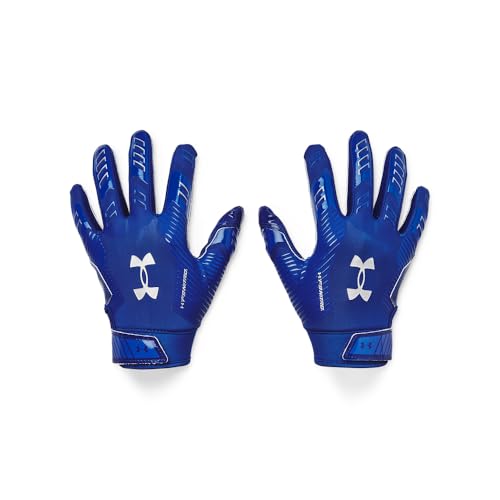
Under Armour Youth F8 Football Gloves
Beginner receivers benefit disproportionately from gloves, since a tacky palm forgives some of the hand positioning errors that come with learning to catch. Grip and fit stay comfortable without the cost of elite gloves. Grip fades over a season, which is normal at this level.
Pros
- Helps beginners hold on to catches
- Comfortable youth specific fit
- Reasonable cost for a first pair
Cons
- Grip degrades faster than premium gloves
- Sizing runs small for some hands

Franklin Sports Flag Football Set
Flag football teaches routes, throwing and reading a field without the equipment burden or the collisions of tackle football. The set includes belts and flags for two teams and packs into a carry bag. It is the cheapest way to find out whether a child enjoys the sport before committing to gear.
Pros
- Teaches the game without contact risk
- No protective equipment needed
- Very low cost entry into the sport
Cons
- Belt clips wear with heavy use
- Flags detach in wet or muddy conditions
How to choose
What does the league actually supply? The most common beginner mistake is buying a helmet and shoulder pads before checking whether the organization issues them. Many youth and school programs supply and maintain both, since correct fit and current certification require a reconditioning schedule. Ask the coach or league administrator for the equipment list first. Often the parent list is limited to cleats, a mouthguard, a girdle and practice clothing.
Why does fit matter more than growing room? Buying sports gear a size up so a child gets two seasons out of it is natural, but that logic fails with protective equipment. A loose helmet shifts on impact, and oversized shoulder pads slide and expose the collarbone. Measure properly, follow the manufacturer chart, and recheck the fit partway through the season. Jerseys and practice clothing can carry all the growing room you like.
Is flag football a good way to start? Flag and touch formats teach the parts of the game that take real time to learn, meaning route running, throwing mechanics, reading coverage and understanding downs. They do it with almost no equipment and no collision risk, which suits younger players and anyone unsure the sport will stick. Many players move to contact football later with stronger fundamentals than those who started in pads.
What size football should a beginner use? Footballs come in junior, youth, intermediate and official sizes matched to age brackets. A ball too large forces a young player to compensate with wrist and arm mechanics that become bad habits. Start with the size recommended for the age group, even if it looks small, and move up as the hand grows. Composite covers suit beginners since they grip in wet grass and need no breaking in.
The lineup, side by side
| # | Model | Level | Best for | Score | Price |
|---|---|---|---|---|---|
| 1 | Riddell Victor-i Youth Football Helmet | Youth football | Best overall | 9.4 | Check price |
| 2 | Franklin Sports Youth Football Uniform Set | Jersey, trousers and pads | Best value | 9.2 | Check price |
| 3 | Wilson NFL MVP Junior Football | Junior | Best first football | 9.0 | Check price |
| 4 | Shock Doctor Max AirFlow Mouthguard | Boil and bite | Best mouth protection | 8.8 | Check price |
| 5 | Riddell Youth Rival Shoulder Pads | Youth contact | Best entry shoulder pads | 8.6 | Check price |
| 6 | Under Armour Youth F8 Football Gloves | Tacky grip surface | Best first gloves | 8.3 | Check price |
| 7 | Franklin Sports Flag Football Set | Belts and flags for two teams | Best for learning without contact | 8.0 | Check price |
Frequently asked questions
What football equipment do beginners actually need?
Usually cleats, a mouthguard, a padded girdle and practice clothing, since many leagues supply helmets and shoulder pads. Check with the coach before buying anything expensive.
Should parents buy a helmet or will the league provide one?
Most organized youth and school programs provide helmets and handle reconditioning and certification. Buying your own only makes sense if the league does not supply them or allows personal helmets, and certification requirements still need checking.
How do you fit a youth football helmet correctly?
Measure head circumference above the eyebrows and match it to the manufacturer chart. The helmet should sit about a finger width above the eyebrows, stay still when the head shakes, and the chinstrap should sit snug on all four points.
What size football should a young beginner use?
Match the size to the age bracket, junior or youth for younger players and intermediate before official size. A ball too big for the hand encourages poor throwing mechanics that are hard to correct later.
Is flag football a good place to start for kids?
For most beginners, yes. It teaches routes, throwing, catching and game understanding without collision risk or an equipment list, and many players transition to tackle football afterward with stronger fundamentals.
Do beginner football players need gloves?
Not strictly, but they help. A tacky palm forgives some hand positioning errors that come with learning to catch, and midrange youth gloves are entirely adequate at this level.
How much does it cost to start playing youth football?
It varies depending on what the league supplies. Where helmets and pads are issued, the parent list stays short. Where nothing is supplied, protective equipment becomes the main expense.
What football gear should be replaced every season?
The mouthguard, without exception, since it compresses and loses fit. Gloves usually need replacing annually with regular use, while helmets and shoulder pads last several seasons but must be checked and refitted as a player grows.
Final word
Confirm what the league issues before buying anything, since many programs supply the helmet and shoulder pads already. Where a helmet purchase is needed, the Riddell Victor-i Youth Football Helmet is built for young players rather than adapted from adult gear. For a first taste of the sport with no equipment burden, the Franklin Sports Flag Football Set teaches what matters most.
Derek Holt
Derek has a background coaching recreational and amateur athletes and has worked the sales floor at specialty fitness retailers. He focuses on equipment durability, ergonomics and realistic use cases rather than marketing claims.