Manual or Electric: How to Pick the Right Food Chopper
KitchenAid’s 3.5-Cup Food Chopper leads this list for one-touch pulse control and a dishwasher-safe bowl. Hamilton Beach’s 8-Cup Food Processor & Vegetable Chopper suits families who batch-cook on weekends. Fullstar’s Vegetable Chopper skips electricity entirely, a fit for campers, dorms, and tight counters.
KitchenAid’s 3.5-Cup Food Chopper suits home cooks who chop vegetables and herbs most nights of the week. One-touch pulse control and a dishwasher-safe bowl cut prep and cleanup time. Large-batch cooks will outgrow its 3.5-cup bowl fast.
Food choppers span battery-free pull-cord models and powered mini processors, so bowl capacity and blade design rarely compare directly. We checked manufacturer specifications, dishwasher-safe parts, and patterns in owner feedback across manual and electric designs to rank these seven.
Our top picks
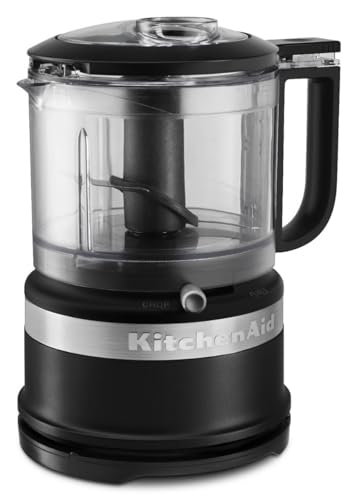
KitchenAid 3.5-Cup Food Chopper
A stainless steel blade pulses inside a 3.5-cup bowl to chop vegetables, herbs, and nuts to an even texture. Bowl, lid, and blade all go in the dishwasher, cutting hand-washing after each session. The compact base tucks into a cabinet or sits on a crowded counter.
Pros
- One-touch pulse control skips a speed dial
- Bowl, lid, and blade are dishwasher-safe
- Compact base fits tight kitchens
Cons
- 3.5-cup bowl caps batch size for large families
- Single speed gives less control than multi-speed processors
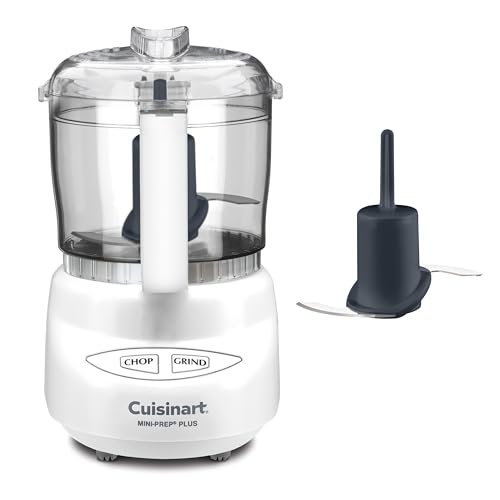
Cuisinart Mini-Prep Plus
A 250-watt motor drives two speeds, chop and grind, inside a 3-cup work bowl built for herbs and small sauce batches. Reverse blade action minces herbs rather than pureeing them. The stainless steel blade, bowl, and lid all go in the dishwasher.
Pros
- Two speeds separate light chopping from grinding
- 3-cup bowl handles herbs and spices well
- Blade, bowl, and lid are dishwasher-safe
Cons
- 3-cup capacity falls short for family meal prep
- Compact base leaves little room for cord storage
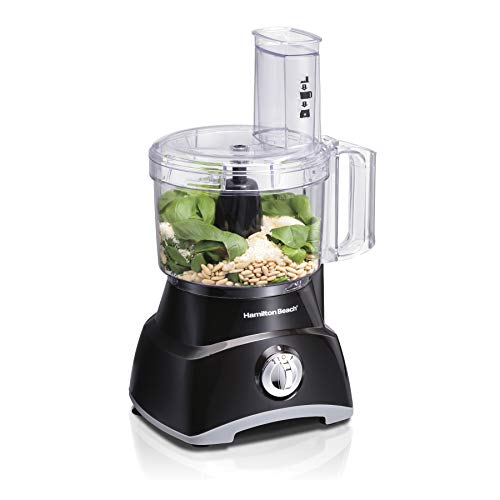
Hamilton Beach 8-Cup Food Processor & Vegetable Chopper
An 8-cup bowl and 450-watt motor chop several cups of vegetables in a single batch. Weekly meal preppers and larger households get the most use from that capacity. A stainless steel S-blade handles chopping, and an included disc adds slicing.
Pros
- 8-cup bowl clears large-batch chopping in one pass
- 450-watt motor pushes through dense vegetables
- Slicing disc adds a second function beyond chopping
Cons
- Larger footprint takes more counter and storage space
- Extra parts mean more pieces to wash per use

Mueller Austria Pro-Series 8-Cup Food Chopper
An 8-cup bowl pairs with a 500-watt motor and a multipurpose stainless steel blade for everyday vegetable and fruit prep. Chopping, mincing, and pureeing all run through the same blade. Pricing sits below most comparable large-capacity processors.
Pros
- Large 8-cup bowl costs less than rival processors
- 500-watt motor handles dense produce without stalling
- Bowl, lid, and blade separate for dishwasher cleaning
Cons
- Base is bulkier than compact mini choppers
- One blade style limits texture variety versus multi-blade kits

Fullstar Vegetable Chopper
A pull-slice handle drives four interchangeable stainless steel blades to dice, julienne, and cube vegetables without electricity. The 4-cup container catches chopped food directly below the blade. Blades store in a slot on the lid, and the whole unit works well for camping trips or dorm kitchens.
Pros
- Needs no electricity or outlet
- Four interchangeable blades cover multiple cut styles
- Compact size suits RVs, dorms, and small counters
Cons
- Pull-slice motion takes more effort on large batches
- Blades need careful hand-washing to avoid dulling

Ourokhome Manual Food Chopper
A pull-cord mechanism spins a 3-blade stainless steel assembly inside a 3-cup bowl. One hand holds the base steady while the other pulls the cord. No batteries, cords, or motor noise come with this design, and the bowl, lid, and blade separate for the dishwasher.
Pros
- One-handed pull-cord operation skips batteries and outlets
- Runs quieter than motorized choppers
- Bowl, lid, and blade unit are dishwasher-safe
Cons
- 3-cup bowl limits use to small or medium batches
- Repeated pulling tires the hand during long prep sessions
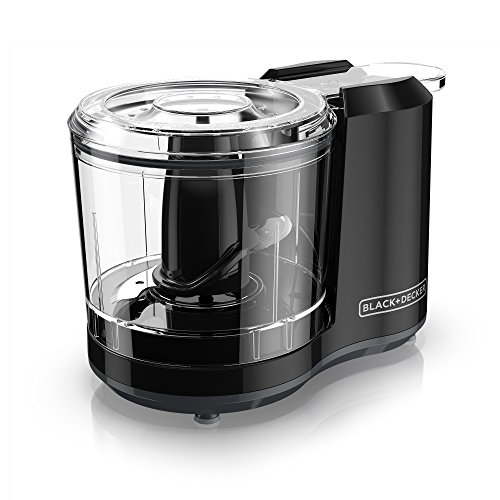
Black+Decker HC306 Chopper
A single stainless steel blade pulses inside a 3-cup bowl at the press of a button. Onions, garlic, and small vegetable batches suit this handheld electric chopper best. Its price makes it an easy entry point for anyone still chopping by hand.
Pros
- Budget-friendly entry point into electric chopping
- One-touch button skips any learning curve
- Bowl and lid lift off for dishwasher cleaning
Cons
- 3-cup bowl suits only small jobs
- Motor base must stay dry, off-limits to the dishwasher
Compared at a glance
| # | Model | Bowl capacity | Best for | Score | Price |
|---|---|---|---|---|---|
| 1 | KitchenAid 3.5-Cup Food Chopper | 3.5 cups | Best overall | 9.4 | Check price |
| 2 | Cuisinart Mini-Prep Plus | 3 cups | Best for herbs and nuts | 9.1 | Check price |
| 3 | Hamilton Beach 8-Cup Food Processor & Vegetable Chopper | 8 cups | Best for large batches | 8.8 | Check price |
| 4 | Mueller Austria Pro-Series 8-Cup Food Chopper | 8 cups | Best value | 8.6 | Check price |
| 5 | Fullstar Vegetable Chopper | 4 cups | Best for manual, no-electricity use | 8.3 | Check price |
| 6 | Ourokhome Manual Food Chopper | 3 cups | Best one-handed manual chopper | 8.1 | Check price |
| 7 | Black+Decker HC306 Chopper | 3 cups | Best budget | 8.0 | Check price |
What matters most
Manual versus electric: how the two types work Food choppers split into two basic designs. Manual models use a pull-cord or pull-slice handle and need no power at all. Electric models pulse a motor base at the press of a button or lever. The Fullstar Vegetable Chopper and Ourokhome Manual Food Chopper suit camping trips, small kitchens, or anyone skipping another cord on the counter. The KitchenAid 3.5-Cup Food Chopper and Cuisinart Mini-Prep Plus trade an outlet requirement for less physical effort on larger jobs. Daily vegetable prep tends to favor electric models, while occasional chopping suits manual designs just fine.
Matching bowl capacity to household size A single cook or couple rarely needs more than a 3-cup bowl. That size covers a chopped onion, a handful of herbs, or a small batch of salsa. Families of four or more, or weekend batch cooks, get more use from an 8-cup bowl like the one on the Hamilton Beach 8-Cup Food Processor & Vegetable Chopper or Mueller Austria Pro-Series Food Chopper. Overbuying capacity wastes cabinet space for someone who mostly chops garlic and onions. Undersizing means running a small chopper through multiple batches, which adds time during meal prep.
Blade material and cleanup Nearly every chopper here uses a stainless steel blade, since it resists rust and holds an edge longer than coated alternatives. Dishwasher-safe bowls and lids cut cleanup time. Manual pull-slice blades, like the ones on the Fullstar Vegetable Chopper, often belong on the top rack only, to protect their edge. Motorized bases, including the one on the Black+Decker HC306 Chopper, should stay off the dishwasher entirely, since water can reach the motor. Hand-drying blades right after washing also helps prevent spotting on stainless steel.
Chopping nuts, ice, and prepping in tight kitchens Nuts and hard spices need a blade and bowl combination that handles repeated pulses without food escaping under the blade. A multi-speed model like the Cuisinart Mini-Prep Plus has an edge here over single-speed choppers. Ice is generally too hard for compact choppers, and it can dull blades or crack plastic bowls over time. Renters, dorm residents, and RV owners often prefer manual choppers precisely because they skip the outlet and motor noise. Limited counter space calls for weighing a chopper’s stored footprint, since even compact electric models still need a spot near an outlet.
Common questions
What is the difference between a food chopper and a food processor?
Food choppers use one blade and a single pulse action for basic dicing and mincing. Food processors add multiple blades, discs, and speed settings for slicing, shredding, and pureeing. The Cuisinart Mini-Prep Plus sits between the two, offering two speeds in a compact chopper body.
How many cups should a food chopper hold for a family of four?
An 8-cup bowl, like the one on the Hamilton Beach 8-Cup Food Processor & Vegetable Chopper, handles a family-size batch in one pass. Smaller 3-cup models usually need two or three rounds for the same amount.
Can a manual food chopper handle onions and garlic as well as an electric one?
Manual choppers like the Ourokhome Manual Food Chopper dice onions and garlic effectively with a few pulls of the cord. They take more physical effort than pressing a button, though. Electric models finish the same task faster over repeated batches.
Which food chopper works best for nuts?
The Cuisinart Mini-Prep Plus separates chopping from grinding with its two-speed motor. That extra setting gives more control over nut texture than a single-speed chopper offers, and it helps avoid turning nuts into paste by accident.
Is a food chopper worth buying if I already own a food processor?
A compact chopper still saves time on small jobs, like mincing one onion or a few cloves of garlic, since it skips assembling a full-size processor. Owners who mostly prep small quantities often reach for the chopper daily and save the processor for bigger recipes.
Food chopper vs food processor: which one fits daily meal prep?
Daily meal prep for one or two people usually fits a 3-cup chopper like the KitchenAid 3.5-Cup Food Chopper, which cleans faster than a full processor. Larger households cooking bigger batches typically get more use from a processor’s bigger bowl and extra attachments.
Are food chopper blades dishwasher safe?
Most stainless steel chopper blades are dishwasher safe, though manufacturers often recommend the top rack to protect the edge. Motorized bases, including the one on the Black+Decker HC306 Chopper, should never go in the dishwasher, since water can damage the motor.
How do you stop a food chopper from leaking liquid when chopping onions or tomatoes?
Filling the bowl only to the manufacturer’s marked fill line keeps liquid-heavy foods like onions and tomatoes from pushing past the lid seal. Pulsing in shorter bursts, instead of running the blade continuously, also reduces the pressure that forces liquid upward.
Do manual food choppers need batteries?
No. Manual models like the Fullstar Vegetable Chopper and Ourokhome Manual Food Chopper run on a pull-slice handle or pull-cord mechanism instead. That design works during a power outage or on a campsite with no outlet nearby.
What is the best food chopper for small kitchens?
The KitchenAid 3.5-Cup Food Chopper’s compact base fits a crowded counter or a shallow cabinet shelf. The Fullstar Vegetable Chopper stores just as easily, and it skips the outlet a motorized model needs.
The verdict
KitchenAid’s 3.5-Cup Food Chopper earns the top spot for one-touch operation, a dishwasher-safe bowl, and a footprint that suits most kitchens. Families cooking larger batches should look at the Hamilton Beach 8-Cup Food Processor & Vegetable Chopper instead, since its bigger bowl and stronger motor handle more volume per pass. Anyone skipping cords and motors entirely can turn to the Fullstar Vegetable Chopper for a manual, no-electricity option.
Dana Whitfield
Dana spent eight years buying and merchandising for a regional kitchenware retailer before moving into editorial work. She has handled thousands of SKUs across cookware, small appliances and kitchen organization, and focuses on the practical differences that matter once a product is actually in daily use.


