Portable Hammocks for Backpacking That Pack Tiny
The Kammok Mantis UL is the best overall for backpackers who want a full bug-proof shelter at a reasonable weight. It offers a spacious double-layer design and integrated bug net, but you’ll need to buy the rain fly separately. For ultralight purists, the Warbonnet Blackbird XLC is a close second with its innovative footbox and premium build.
Backpacking hammocks have come a long way from the bulky rope-and-canvas models of the past. Today’s designs use ripstop nylon, integrated bug nets, and clever suspension systems that pack down to the size of a grapefruit. Whether you’re thru-hiking the Appalachian Trail or just want a light shelter for a weekend trip, the right hammock can transform how you sleep outdoors.
We looked at weight, packed size, suspension quality, and comfort across seven top-selling models. From budget-friendly options to premium ultralight setups, these hammocks represent the best balance of portability and functionality for backpackers. Our top pick nails the sweet spot for most people, while the others excel in specific areas.
How to choose
The shortlist, ranked
Kammok Mantis UL
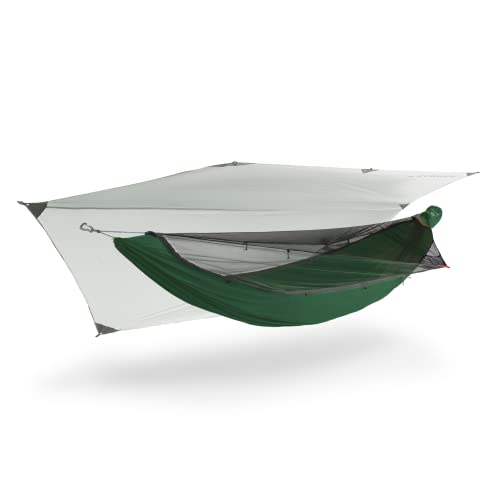
The Kammok Mantis UL is a complete hammock camping system that includes a 20D ripstop nylon hammock, integrated no-see-um bug net, and a lightweight stuff sack. It weighs just over 2 pounds and packs down small, making it ideal for backpackers who want a full shelter without the extra weight. The double-layer fabric allows for a sleeping pad or underquilt to be inserted, adding warmth in cooler conditions.
Pros
- Integrated bug net offers full protection
- Double-layer design accommodates underquilt
- Compact packed size for its feature set
Cons
- Rain fly sold separately
- Suspension straps not included

Warbonnet Blackbird XLC
The Warbonnet Blackbird XLC is a favorite among thru-hikers for its innovative design and high-quality materials. It features a unique footbox that allows you to lie diagonally for a flatter, more comfortable sleep. The hammock is made from breathable 40D nylon and includes an integrated bug net with a dual zipper system. Weighing in at under 2 pounds for the hammock alone, it’s one of the lightest full-feature hammocks available.
Pros
- Unique footbox design for better sleep
- Integrated bug net is easily stowable
- High capacity and durable fabric
Cons
- Expensive compared to others
- Suspension system requires additional purchase

ENO SubLink Ultralight Hammock
The ENO SubLink is a stripped-down hammock designed for ultralight enthusiasts. It lacks the integrated bug net and stuff sack of more complete systems, but it makes up for it with an incredibly low weight of just 10.9 ounces. The 30D nylon fabric is strong enough for a 300-pound capacity, and the hammock packs down to the size of a soda can. It’s perfect for those who carry minimal gear and don’t mind adding a separate bug net or tarp.
Pros
- Extremely lightweight and packable
- High capacity for its weight
- Simple design with no unnecessary parts
Cons
- No bug net or suspension included
- May feel less durable than thicker fabrics

Hennessy Hammock Expedition Asym Zip
The Hennessy Hammock Expedition Asym Zip is a comprehensive camping hammock that includes the hammock, rain fly, bug net, and suspension all in one package. It features a unique asymmetrical design that allows you to lie flat and a bottom entry that some users find more convenient. The whole system weighs about 3.5 pounds, which is heavier than modular setups but still manageable for backpackers who want simplicity.
Pros
- Everything included out of the box
- Asymmetrical design for flat sleeping
- Durable fabric can withstand rough use
Cons
- Heavier than component setups
- Bottom entry may be awkward for some

Grand Trunk Skeeter Beeter Pro
The Grand Trunk Skeeter Beeter Pro is a budget-friendly hammock that includes an integrated bug net, making it a great value for backpackers on a tight budget. It weighs about 2.5 pounds and is made from parachute nylon. The hammock is 10 feet long, providing ample space for most users. The bug net is zippered and can be tucked away when not needed.
Pros
- Affordable price point
- High weight capacity
- Integrated bug net saves money
Cons
- Heavier than premium models
- Bug net zipper can snag occasionally

Sea to Summit Ultralight Hammock
The Sea to Summit Ultralight Hammock is a generous two-person hammock that weighs just over a pound, making it one of the lightest double hammocks available. It is made from 30D ripstop nylon and has a capacity of 400 pounds. The hammock comes with lightweight straps and carabiners, and it packs down to a small size. It is ideal for couples or friends who want to share a hammock while backpacking.
Pros
- Very lightweight for a double hammock
- High capacity and durable
- Comes with straps and carabiners
Cons
- No bug net or rain fly included
- May be too compact for taller users when lying diagonally
Ticket to the Moon Pro Hammock
The Ticket to the Moon Pro Hammock is known for its soft, breathable fabric and high-quality construction. It is made from a special ripstop nylon that feels comfortable against the skin and dries quickly. The hammock is 10.5 feet long, offering plenty of room for a flat lay. It comes with a compression sack and tree-friendly straps. While it doesn’t include a bug net, it is a solid choice for those who prioritize comfort.
Pros
- Exceptionally comfortable fabric
- High capacity and durable
- Includes straps and compression sack
Cons
- Bug net not included
- Packed size is slightly larger than ultralight options
How they stack up
| # | Model | Weight | Best for | Score | Price |
|---|---|---|---|---|---|
| 1 | Kammok Mantis UL | 2 lbs 1 oz | Best overall for bug protection and comfort | 9.4 | Check price |
| 2 | Warbonnet Blackbird XLC | 1 lb 15 oz (hammock only) | Best for ultralight backpackers who want premium comfort | 9.2 | Check price |
| 3 | ENO SubLink Ultralight Hammock | 10.9 oz | Best for minimalists who want the lightest setup | 8.8 | Check price |
| 4 | Hennessy Hammock Expedition Asym Zip | 3 lbs 9 oz (full system) | Best all-in-one system with rain fly | 9.0 | Check price |
| 5 | Grand Trunk Skeeter Beeter Pro | 2 lbs 8 oz | Best budget-friendly option with bug net | 8.5 | Check price |
| 6 | Sea to Summit Ultralight Hammock | 1 lb 1 oz | Best for pair camping or extra space | 8.2 | Check price |
| 7 | Ticket to the Moon Pro Hammock | 1 lb 5 oz | Best for comfort and durability | 8.0 | Check price |
Common questions
How much weight can a backpacking hammock hold?
Most backpacking hammocks have a weight capacity between 250 and 400 pounds. Some heavy-duty models can hold up to 600 pounds. Always check the manufacturer’s specifications and factor in the combined weight of all occupants and gear.
What is the best way to stay warm in a hammock?
Use an underquilt or a sleeping pad inside the hammock to insulate your back. A top quilt or sleeping bag is also recommended. Avoid using a regular sleeping bag without insulation underneath, as it compresses and loses heat.
Are hammocks allowed in all camping areas?
No, some parks and wilderness areas have restrictions on hammock use to protect trees. Always check local regulations and use tree straps that are at least 1-2 inches wide to minimize damage. When in doubt, ask a ranger.
How long should a backpacking hammock be?
A hammock should be at least 2 feet longer than your height to allow for a comfortable diagonal lie. Most standard hammocks are 9-11 feet long. Taller individuals may need a longer hammock, such as 11 or 12 feet.
Can I use a hammock without trees?
Yes, you can use hammock stands or mount the hammock to posts or other sturdy structures. However, these are not practical for backpacking. In treeless areas, consider using a bivy sack or tent instead.
What is the difference between a single and double hammock?
A single hammock is designed for one person and is narrower and lighter. A double hammock is wider, often used by two people, but can also be used by one for extra room. Doubles are heavier but offer more comfort and space.
Do I need a rain fly for a hammock?
If you expect rain, a rain fly is essential to keep you dry. Some hammock systems include a rain fly, while others require a separate purchase. A tarp can also be used as a rain fly.
How do I set up a hammock correctly?
Find two trees 12-15 feet apart. Attach the straps around the trees at head height. Adjust the suspension so the hammock hangs at a 30-degree angle from the ground. Sit in the center, then fine-tune the height for comfort.
What is the best way to pack a hammock?
Most hammocks come with a stuff sack. Fold the hammock in half lengthwise, then roll it tightly from one end. Place the straps and any accessories in the sack first or in a separate compartment if the sack has one.
Are expensive hammocks worth it?
Expensive hammocks often use lighter materials, have better construction, and include features like integrated bug nets. For serious backpackers who count every ounce, the premium is worth it. For occasional use, a budget model may suffice.
Our take
For most backpackers, the Kammok Mantis UL is the best choice because it offers a rare combination of low weight, full bug protection, and comfort at a reasonable price. If you are an ultralight enthusiast who is willing to invest in a premium shelter, the Warbonnet Blackbird XLC is unmatched in comfort and innovation. Budget-conscious adventurers will find great value in the Grand Trunk Skeeter Beeter Pro, which includes a bug net without breaking the bank.
Derek Holt
Derek has a background coaching recreational and amateur athletes and has worked the sales floor at specialty fitness retailers. He focuses on equipment durability, ergonomics and realistic use cases rather than marketing claims.