What Makes a Flush Cutter Worth Keeping in Your Kit?
The Knipex Flush Cutter delivers the cleanest cut across wire and soft metal for general use, the Xuron Flush Cutter is built specifically for electronics lead trimming, and the Tamiya Flush Cutter handles plastic model sprues without crushing the part. Each leaves a flatter cut than a standard wire cutter.
The Knipex Flush Cutter is the strongest general-purpose pick, with a beveled blade edge that sits nearly flat against the material for a clean, level cut. It handles wire and soft metal well, though its blade angle is not specialized for delicate plastic model sprues the way Tamiya’s is. Hobbyists working mainly with plastic kits should look at the Tamiya option instead.
A flush cutter’s value comes down to how close to flat its blade can cut without crushing or leaving a stub, which depends on blade bevel and material match. We compared bevel angle, material compatibility, edge retention, and handle comfort across seven current cutters.
Our top picks
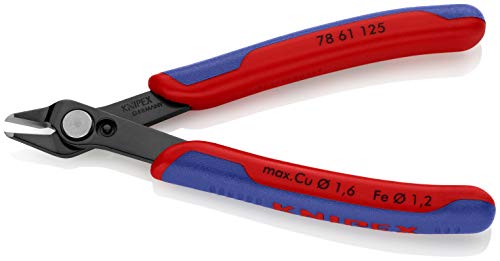
Knipex Flush Cutter
Knipex grinds this cutter’s blade to a shallow bevel angle, letting the flat side sit directly against a surface for a level cut. It handles copper wire, soft steel, and similar materials without excessive force. The blade angle is less suited to brittle plastic sprues than hobby-specific cutters.
Pros
- Shallow bevel produces a genuinely flush cut
- Handles copper wire and soft metal reliably
- Comfortable cushioned grip for repeated use
Cons
- Not ground specifically for brittle plastic sprues
- Blade edge dulls faster on hardened wire

Xuron Flush Cutter
Xuron shapes this cutter specifically for trimming component leads on circuit boards, where a clean flush cut avoids leaving a sharp stub. The narrow blade tip reaches tightly spaced leads other cutters cannot access as easily. Its blade is not intended for thicker wire gauges or metal stock.
Pros
- Reaches tightly spaced component leads easily
- Spring-loaded grip reduces hand fatigue
- Clean cut avoids sharp lead stubs
Cons
- Not suited to thicker wire or metal stock
- Blade tip is delicate compared to general-purpose cutters

Hakko Flush Cutter
Hakko narrows this cutter’s jaw for fine wire and lead trimming similar to Xuron’s focus, with a slightly different handle shape some users find more comfortable for extended sessions. The narrow jaw limits how thick a wire it can comfortably cut. It performs best on soldering and electronics bench work.
Pros
- Narrow jaw suits precise lead and wire trimming
- Comfortable grip for extended bench sessions
- Clean flush cut reduces sharp edges
Cons
- Limited to thinner wire gauges
- Not suited to general hardware cutting tasks

Wiha Flush Cutter
Wiha shapes this cutter’s handles for comfort during repeated cutting sessions, aimed at electricians and technicians making many cuts in a row. The flush blade angle performs comparably to other mid-range cutters on wire and soft metal. Its ergonomic focus adds a bit of bulk compared to slim hobby cutters.
Pros
- Contoured grip reduces fatigue during repeated cuts
- Reliable flush cut on wire and soft metal
- Durable construction for daily use
Cons
- Bulkier handles than slim hobby-style cutters
- Not specialized for plastic model work

Tamiya Flush Cutter
Tamiya grinds this cutter’s blade specifically for plastic sprue material, common in scale model kits, rather than metal wire. The flush angle leaves a clean cut without crushing small plastic parts. Using it on metal wire can dull or chip the plastic-focused blade edge.
Pros
- Clean flush cut on plastic sprues without crushing parts
- Lightweight for extended model-building sessions
- Widely used standard in scale model building
Cons
- Not intended for metal wire cutting
- Blade can chip if used on harder materials

Godhand Flush Cutter
Godhand thins this cutter’s blade edge beyond what most plastic-focused cutters offer, aimed at miniature and fine detail model work where any nub affects visible seams. The ultra-thin edge requires more careful handling to avoid chipping. It costs more than standard hobby flush cutters.
Pros
- Ultra-thin edge leaves almost no visible nub
- Suited to fine detail miniature work
- Lightweight for precise control
Cons
- More expensive than standard hobby cutters
- Thin edge requires careful handling to avoid chipping

Hozan Flush Cutter
Hozan hardens this cutter’s blade steel to hold an edge longer under daily repeated wire cutting, common in electronics assembly lines or repair shops. The flush angle performs reliably on both wire and light plastic. Its hardened blade costs more to resharpen than softer hobby-grade blades.
Pros
- Hardened steel holds an edge longer under daily use
- Performs reliably on both wire and light plastic
- Durable enough for repair shop or assembly use
Cons
- Costs more to resharpen than softer blades
- Overbuilt for occasional hobby use
How to pick the right one
What makes a cut truly flush A flush cutter grinds one side of the blade nearly flat, so that side sits against the material’s surface instead of leaving a raised nub the way a standard angled wire cutter does. The flatter that ground edge, the closer to level the finished cut sits.
Wire and metal versus plastic sprues Cutters ground for wire, like Knipex or Wiha, handle copper and soft metal well but are not optimized for brittle plastic. Tamiya and Godhand grind their blades specifically for plastic model sprues, where a metal-focused blade can crush or chip the part instead of cutting cleanly.
Fine electronics work versus general use Xuron and Hakko narrow their jaws for component leads and fine wire on circuit boards, which limits their use on thicker wire. A general-purpose cutter like Knipex handles a broader range of wire gauges at the cost of some precision on tiny leads.
Blade durability for repeated daily cutting Hozan’s hardened steel blade holds up better to daily repair shop or assembly line use than a softer hobby-grade blade. Occasional hobby use does not demand that level of hardness, where edge sharpness for clean cuts matters more than long-term wear resistance.
Compared at a glance
| # | Model | Blade bevel | Best for | Score | Price |
|---|---|---|---|---|---|
| 1 | Knipex Flush Cutter | Shallow angle for flush cuts | Best overall for wire and soft metal | 9.1 | Check price |
| 2 | Xuron Flush Cutter | Precision flush angle | Best for electronics lead trimming | 8.9 | Check price |
| 3 | Hakko Flush Cutter | Precision flush angle | Best for fine wire and lead work | 8.7 | Check price |
| 4 | Wiha Flush Cutter | Flush-cutting angle | Best ergonomic grip for repeated use | 8.5 | Check price |
| 5 | Tamiya Flush Cutter | Flush angle optimized for plastic | Best for plastic model sprues | 8.2 | Check price |
| 6 | Godhand Flush Cutter | Ultra-thin precision flush angle | Best ultra-clean cut for miniatures | 8.0 | Check price |
| 7 | Hozan Flush Cutter | Flush-cutting angle | Best durability for daily repeated use | 7.9 | Check price |
Good to know
What is the difference between a flush cutter and a regular wire cutter?
A flush cutter grinds one side of the blade flat so it leaves a nearly level cut, while a standard wire cutter’s symmetrical bevel leaves a small pointed nub on both sides.
Can a flush cutter be used on hardened steel wire?
Most flush cutters, including Knipex and Wiha, are rated for soft to medium wire and can chip or dull quickly on hardened steel.
Are plastic model flush cutters different from wire flush cutters?
Yes, cutters like Tamiya’s and Godhand’s grind their blades specifically for brittle plastic sprues, while wire-focused cutters like Knipex’s are ground for metal.
Why do electronics technicians use a different flush cutter than hobbyists?
Component lead trimming, handled by Xuron or Hakko, needs a narrow jaw to reach tightly packed leads, which general-purpose or plastic-focused cutters are not shaped for.
How do you keep a flush cutter blade sharp longer?
Avoid cutting materials outside its intended use, such as metal wire with a plastic-focused blade, and store it with the jaws closed to protect the edge.
Can a flush cutter leave a perfectly flat cut every time?
It gets closer to flat than a standard cutter, but a small amount of nub often remains depending on blade sharpness and cutting angle against the material.
Is a spring-loaded handle better for repeated cutting?
A spring-loaded design, like Xuron’s, reduces hand fatigue during many repeated cuts compared to a cutter that needs manual reopening each time.
Do flush cutters work on zip ties and cable ties?
Yes, general-purpose flush cutters like Knipex’s or Wiha’s trim zip ties cleanly, leaving less of a sharp edge than a standard cutter.
The bottom line
The Knipex Flush Cutter remains the most versatile choice for general wire and soft metal cutting around the house or shop. Hobbyists building plastic model kits should choose the Tamiya cutter instead, since Knipex’s blade angle is not ground for brittle sprue material. Electronics technicians trimming component leads get a better fit from the Xuron cutter’s narrow precision jaw.
Jake Monroe
Jake worked as a residential contractor for over a decade before shifting to full-time writing. He evaluates power tools, hand tools and workshop gear through the lens of someone who has actually used them on job sites, not just read the box.