Fitness Trackers Built for Different Training Goals
Fitbit’s Charge 6 is the strongest all-around pick with built-in GPS and a week of battery life. Apple’s Watch SE fits iPhone owners wanting a full smartwatch, and Whoop 4.0 is worth its subscription only for someone specifically chasing recovery data.
Fitbit’s Charge 6 tops this list because its built-in GPS tracks outdoor routes without a paired phone, and its battery lasts close to a week. Some of its deeper health metrics sit behind a Fitbit Premium subscription, which is worth checking before buying.
Battery life, GPS type, and the sport or health features each band emphasizes drove the comparison, since a band built for recovery tracking serves a different buyer than one built for GPS running.
The shortlist, ranked
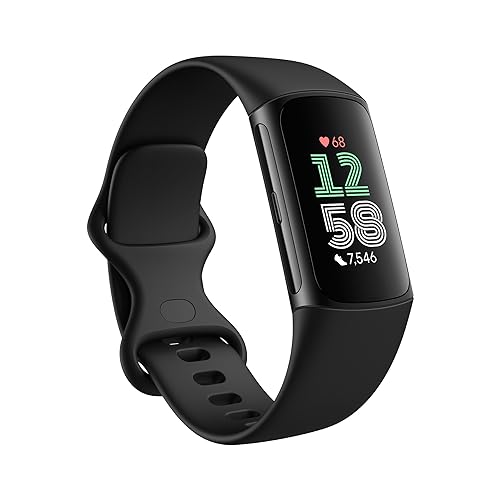
Fitbit Charge 6
Built-in GPS tracks outdoor routes without a paired phone. Google integration adds tap-to-pay and turn-by-turn directions, with a week-long battery for daily wear.
Pros
- Built-in GPS removes the need to carry a phone for outdoor runs
- Google Wallet support enables tap-to-pay from the wrist
- Battery comfortably covers a full week between charges
Cons
- Some advanced health metrics sit behind a Fitbit Premium subscription
- Smaller screen than a full smartwatch limits on-device app use
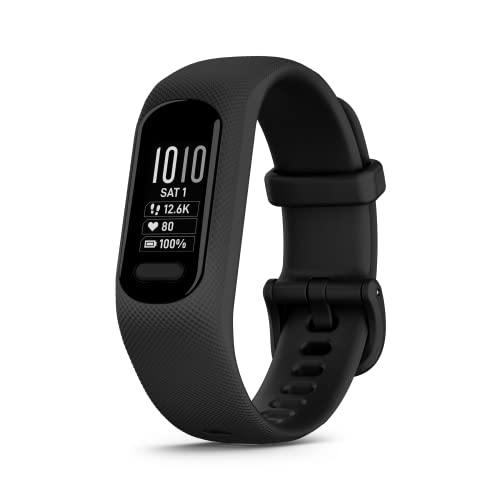
Garmin Vivosmart 5
Garmin’s Body Battery metric tracks daily energy reserves rather than just steps. Connected GPS relies on a paired phone instead of a built-in chip.
Pros
- Body Battery gives a more actionable energy reading than step count alone
- Garmin Connect app pulls in detailed sleep and recovery trends
- Slim band is comfortable for all-day and overnight wear
Cons
- GPS tracking needs a connected phone rather than a built-in chip
- Button-free touch interface can misregister taps during workouts

Apple Watch SE (2nd Gen)
Crosses from fitness band into full smartwatch territory with app support and notifications. Battery life is noticeably shorter than dedicated fitness bands.
Pros
- Full smartwatch functionality beyond fitness tracking, including apps and calls
- Crash detection and fall detection add safety features bands lack
- Deep integration with iPhone notifications and Apple Fitness+
Cons
- Battery life is roughly a day, far short of band-style trackers
- Requires an iPhone, no Android compatibility

Samsung Galaxy Fit3
Longer battery life than most AMOLED trackers at a lower price. A slim form factor targets buyers who want fitness basics without smartwatch extras.
Pros
- Battery life stretches close to two weeks between charges
- Lower price than Fitbit Charge 6 or Garmin Vivosmart 5
- Lightweight band is comfortable for sleep tracking
Cons
- No built-in GPS, relies on a connected phone for route mapping
- iOS functionality is more limited than on Android

Whoop 4.0
A screenless band pairs with an app-based recovery score built from heart rate variability and sleep. Aimed at users who want deep recovery data rather than a display on the wrist.
Pros
- Recovery score synthesizes HRV, sleep, and strain into one daily number
- Screenless band is less obtrusive for 24/7 wear, including sleep
- Clip-on battery pack allows charging without removing the band
Cons
- Requires an ongoing membership subscription to access any data
- No on-wrist display, all data lives in the phone app

Garmin Vivoactive 5
A broader sport-profile library than a basic band. Built-in GPS and longer battery suit runners and cyclists logging regular structured workouts.
Pros
- Over 30 built-in sport profiles cover training beyond basic step counting
- Built-in GPS avoids relying on a paired phone during workouts
- Battery life holds up well even with regular GPS use
Cons
- Larger case size than slim fitness bands, less discreet under a sleeve
- Price sits closer to a sports smartwatch than a basic tracker
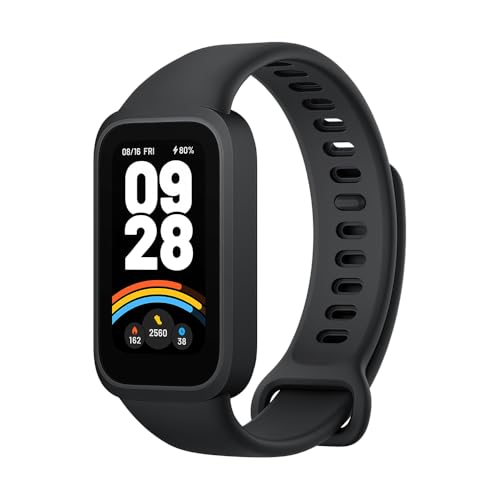
Xiaomi Smart Band 8
Among the longest battery ratings in this lineup, with a slim band design. Aimed at buyers prioritizing low maintenance over advanced metrics.
Pros
- Battery life rated well beyond two weeks reduces charging frequency
- Slim, lightweight band suits all-day and sleep wear
- Lower price than nearly every other tracker in this lineup
Cons
- No built-in GPS, depends on a connected phone for mapped routes
- Companion app offers fewer third-party integrations than Fitbit or Garmin
How they stack up
| # | Model | Display | Best for | Score | Price |
|---|---|---|---|---|---|
| 1 | Fitbit Charge 6 | AMOLED touchscreen | Best Overall | 9.1 | Check price |
| 2 | Garmin Vivosmart 5 | AMOLED display | Best for Outdoor GPS | 8.7 | Check price |
| 3 | Apple Watch SE (2nd Gen) | Retina LTPO OLED, always-on optional | Best for iPhone Users | 8.9 | Check price |
| 4 | Samsung Galaxy Fit3 | AMOLED touchscreen | Best Budget | 8.3 | Check price |
| 5 | Whoop 4.0 | No screen, data lives in companion app | Best for Recovery and Sleep | 8.8 | Check price |
| 6 | Garmin Vivoactive 5 | AMOLED touchscreen | Best for Multi-Sport Training | 8.9 | Check price |
| 7 | Xiaomi Smart Band 8 | AMOLED touchscreen | Best Battery Life on a Budget | 8.2 | Check price |
What to look for
Fitness Band vs Full Smartwatch The Charge 6 and Vivosmart 5 stay in fitness-band territory with longer battery life, while the Apple Watch SE crosses into smartwatch territory with apps and calls at the cost of needing a daily charge.
Built-in GPS vs Connected GPS Charge 6 and Vivoactive 5 carry their own GPS chip, tracking outdoor routes without a phone nearby, while Galaxy Fit3 and Xiaomi Smart Band 8 depend on a connected phone for mapped routes.
Tracking Recovery, Not Just Steps Whoop 4.0 and Garmin’s Body Battery metric go beyond step counting into daily energy and recovery scoring, useful for anyone training hard enough to need recovery insight rather than basic activity counts.
Battery Life Tradeoffs Across This Lineup Xiaomi’s Smart Band 8 and Samsung’s Galaxy Fit3 stretch battery life past two weeks by skipping GPS and smartwatch features, while the Apple Watch SE trades that endurance for full app functionality.
Common questions
Does a fitness tracker need built-in GPS to track outdoor runs accurately?
Built-in GPS, found on the Charge 6 and Vivoactive 5, tracks routes without a phone nearby, while connected GPS trackers like the Galaxy Fit3 need a paired phone along for the run.
What is the difference between a fitness band and a smartwatch?
A fitness band like the Charge 6 focuses on tracking with longer battery life, while a smartwatch like the Apple Watch SE adds apps, calls, and notifications at the cost of needing daily charging.
Do fitness trackers require a monthly subscription to use basic features?
Basic step, heart rate, and sleep tracking work without a subscription on most of these, though Whoop 4.0 requires an ongoing membership for any data access, and some Fitbit features sit behind Premium.
How accurate is heart rate tracking on wrist-worn fitness bands?
Wrist-based heart rate sensors on bands like these are generally reliable for steady-state activity, though they can lag behind chest straps during very high-intensity interval changes.
Can a fitness tracker work with both Android and iPhone?
Xiaomi’s Smart Band 8 supports both platforms fully, while Samsung’s Galaxy Fit3 offers more limited functionality on iOS, and the Apple Watch SE requires an iPhone.
What does a recovery score like Whoop’s actually measure?
It combines heart rate variability, resting heart rate, and sleep quality into a single daily number meant to indicate how ready the body is for strain that day.
How long should a fitness tracker’s battery last between charges?
It varies widely, from about a day on the Apple Watch SE to over two weeks on the Xiaomi Smart Band 8, largely depending on whether the device runs a full smartwatch display and GPS.
Is SpO2 tracking on a fitness band medically reliable?
SpO2 readings on consumer fitness bands are useful for general trend tracking but are not a substitute for a medical-grade pulse oximeter when an accurate reading matters.
Do these trackers work for swimming or showering?
Most of these, including the Charge 6, Vivosmart 5, and Galaxy Fit3, carry water resistance ratings suitable for swimming and showering, though checking the specific rating before submerging is worthwhile.
Which tracker fits someone training for multiple sports, not just walking?
Garmin’s Vivoactive 5 carries over 30 built-in sport profiles, making it the strongest fit here for someone training across running, cycling, and other structured workouts.
Final word
Fitbit’s Charge 6 is the best all-around pick thanks to built-in GPS without smartwatch bulk or a short battery life. iPhone owners who want a full smartwatch should pick the Apple Watch SE instead, and Whoop 4.0 is only worth its subscription for someone specifically prioritizing recovery tracking over on-wrist convenience.
Marcus Chen
Marcus covered consumer electronics for enthusiast tech publications for six years before joining ChoiceCrest. He specializes in translating manufacturer spec sheets into plain-language buying advice, with a focus on audio, computing accessories and smart-home gear.
You might also need
Nintendo Game & Watch: Super Mario Bros Review: Still Worth It as a Collectible?

Ray-Ban Meta (Gen 2) Wayfarer Smart Glasses: Worth $379 for Clear Lenses?
AlyKets Nikon UC-E6 Replacement USB Cable: Does a $7.95 Cord Work as Well as the Original?
