Fishing Waders That Hold Up Through a Full Season
The Simms G3 Guide Waders lead this comparison with premium breathable fabric and taped seams built for full-season guide use. The Orvis Pro Waders suit anglers who prioritize all-day comfort, while the Frogg Toggs Hellbender Waders fit anyone testing fly fishing without a major investment.
The Simms G3 Guide Waders stand out because their multi-layer breathable fabric and fully taped seams hold up to the daily wear a fishing guide puts on gear, not just occasional weekend use. Their main limitation is price, since that durability comes at a cost well above entry-level waders.
We compared published fabric layers, breathability rating, seam construction and boot or stocking foot design across each pair rather than running our own river wear tests.
The top picks, ranked

Simms G3 Guide Waders
Multi-layer breathable fabric sheds water from outside while letting sweat vapor escape, reducing clamminess on long days. Fully taped seams prevent leaks at stress points better than glued-only construction. A stocking foot design pairs with separate wading boots, letting anglers choose boot fit independently.
Pros
- Fully taped seams resist leaks better than glued construction
- Multi-layer fabric balances waterproofing with breathability
- Stocking foot design allows independent wading boot choice
Cons
- Highest price point among the waders compared here
- Stocking foot design requires a separate wading boot purchase

Orvis Pro Waders
A four-layer breathable fabric in the legs balances durability with airflow for long days on the water. An articulated knee design reduces fabric bunching when wading through uneven riverbed terrain. Adjustable shoulder straps and a wide waist belt improve fit compared to fixed-strap waders.
Pros
- Articulated knees reduce bunching on uneven terrain
- Adjustable straps and belt improve all-day fit
- Breathable fabric balances durability and airflow
Cons
- Premium price similar to the Simms G3 Guide Waders
- Stocking foot design still requires separate wading boots
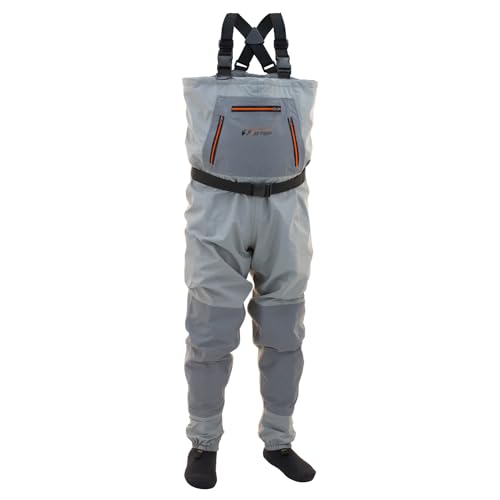
Frogg Toggs Hellbender Waders
A breathable fabric keeps the price well below premium guide-level waders while still managing some moisture vapor. Taped seams at major stress points reduce leaks compared to fully glued budget waders. A stocking foot design keeps the base price lower than boot-foot alternatives.
Pros
- Lower price than premium breathable waders
- Taped seams at stress points reduce leaks versus glued-only budget waders
- Suits anglers testing fly fishing before a bigger investment
Cons
- Less durable fabric than premium guide-level waders
- Breathability falls short of multi-layer premium options
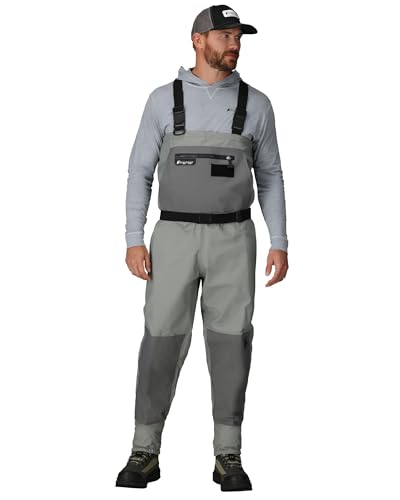
Redington Sonic-Pro Waders
A three-layer breathable fabric balances cost and performance better than entry-level single-layer waders. Fully taped seams match the leak resistance of pricier premium waders at a lower price point. A stocking foot design keeps the price down compared to integrated boot-foot waders.
Pros
- Fully taped seams match premium leak resistance at a lower price
- Three-layer fabric balances durability and breathability
- Mid-range pricing suits regular anglers without guide-level budgets
Cons
- Less durable long-term than the Simms G3 Guide Waders
- Fewer comfort features like articulated knees than premium models
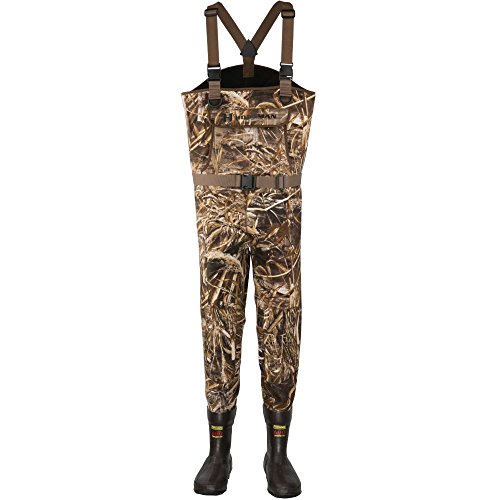
Hodgman Aesis Sonic Taped Waders
Sonic-welded and taped seams combine two leak-resistant construction methods rather than relying on one. A breathable fabric sheds water while allowing some vapor to escape during active wading. A stocking foot fit keeps overall weight lower than boot-foot waders.
Pros
- Combined sonic-welded and taped seams add extra leak resistance
- Breathable fabric manages vapor during active wading
- Lighter overall weight than boot-foot wader designs
Cons
- Less premium fabric layering than the Simms G3 or Orvis Pro
- Fewer articulated fit features than higher-end waders

LaCrosse Alpha Swampfox Neoprene Boot-Foot Waders
Neoprene material insulates against cold water better than breathable fabric waders designed for warmer conditions. An integrated rubber boot-foot design removes the need for separate wading boots. The thicker neoprene material trades some breathability for warmth in cold rivers or lakes.
Pros
- Neoprene insulation handles cold water better than breathable fabric
- Integrated boot-foot design skips a separate wading boot purchase
- Thicker material adds durability against rocks and brush
Cons
- Less breathable than fabric waders, causing more sweat in warm weather
- Heavier than breathable stocking foot waders

Caddis Deluxe Breathable Stockingfoot Waders
A wider opening and stretch panels make these waders easier to put on and take off than snugger-fitting premium waders. Breathable fabric manages moisture during wading without the price of top-tier brands. Reinforced knee panels add some extra durability in a high-wear area.
Pros
- Wider opening and stretch panels simplify putting waders on and off
- Reinforced knee panels add durability in a high-wear spot
- Mid-range price keeps it accessible for regular anglers
Cons
- Less premium breathability than the Simms G3 or Orvis Pro
- Stretch panels may show wear sooner than solid premium fabric
The lineup, side by side
| # | Model | Material | Best for | Score | Price |
|---|---|---|---|---|---|
| 1 | Simms G3 Guide Waders | Multi-layer breathable fabric | Best Overall Premium | 9.2 | Check price |
| 2 | Orvis Pro Waders | 4-layer breathable fabric | Best for All-Day Comfort | 9.0 | Check price |
| 3 | Frogg Toggs Hellbender Waders | Breathable fabric | Best Budget | 7.9 | Check price |
| 4 | Redington Sonic-Pro Waders | 3-layer breathable fabric | Best Mid-Range Value | 8.5 | Check price |
| 5 | Hodgman Aesis Sonic Taped Waders | Breathable fabric | Best for Seam Durability | 8.3 | Check price |
| 6 | LaCrosse Alpha Swampfox Neoprene Boot-Foot Waders | Neoprene | Best for Cold Water | 8.6 | Check price |
| 7 | Caddis Deluxe Breathable Stockingfoot Waders | Breathable fabric with stretch panels | Best for Ease of Entry | 8.1 | Check price |
How to choose
What to look for in fishing waders Material decides the balance between breathability and insulation, with fabric waders suited to warmer conditions and neoprene suited to cold water. Seam construction affects long-term leak resistance, with taped and welded seams outlasting glued-only budget construction. Boot type, either stocking foot paired with separate boots or integrated boot-foot, affects both cost and fit flexibility.
Breathable fabric versus neoprene waders Breathable fabric waders, like the Simms G3 Guide and Orvis Pro, manage sweat vapor better on warm days but offer less insulation in cold water. Neoprene waders, like the LaCrosse Alpha Swampfox, trade that breathability for real insulation against cold rivers or lakes. Anglers fishing year-round in varied conditions often end up owning both types rather than expecting one pair to cover every season.
Seam construction and long-term durability Fully taped seams, used on the Simms G3, Orvis Pro and Redington Sonic-Pro, resist leaks better over years of use than glued-only construction on budget waders like the Frogg Toggs Hellbender. Sonic-welded seams, as used alongside taping on the Hodgman Aesis Sonic, add another layer of leak resistance. Anglers planning heavy seasonal use should prioritize seam construction over price alone.
Stocking foot versus boot-foot waders Stocking foot waders, worn by most anglers including those choosing the Simms G3 or Caddis Deluxe, require a separate wading boot purchase but allow independent boot fit and sole choice. Boot-foot waders, like the LaCrosse Alpha Swampfox, integrate the boot directly, simplifying setup but removing that fit flexibility. Anglers who already own wading boots from a previous pair of waders usually stick with stocking foot designs to reuse that investment.
Common questions
What material is best for fishing waders?
Breathable fabric, used on the Simms G3 Guide and Orvis Pro, suits most conditions, while neoprene like the LaCrosse Alpha Swampfox suits cold water specifically.
What is the difference between stocking foot and boot-foot waders?
Stocking foot waders, like the Simms G3, pair with separate wading boots, while boot-foot waders, like the LaCrosse Alpha Swampfox, have boots built in.
How many layers should breathable waders have?
Premium waders like the Orvis Pro use four layers, while mid-range options like the Redington Sonic-Pro use three, balancing durability and cost.
Are taped seams necessary on fishing waders?
For long-term leak resistance, yes. The Simms G3, Orvis Pro and Redington Sonic-Pro all use fully taped seams at stress points.
What waders are best for cold water fishing?
The LaCrosse Alpha Swampfox uses thick neoprene insulation designed specifically for cold rivers and lakes.
Can beginner anglers use budget fishing waders?
Yes. The Frogg Toggs Hellbender Waders offer breathable fabric and taped seams at stress points for a lower starting investment.
Do fishing waders need articulated knees?
It helps mobility. The Orvis Pro includes articulated knees that reduce fabric bunching when wading over uneven terrain.
What waders are easiest to put on and take off?
The Caddis Deluxe Breathable Stockingfoot Waders use a wider opening and stretch panels for easier entry than snugger premium waders.
How long do breathable fishing waders last?
Durability depends heavily on seam construction and fabric layers, with premium multi-layer taped waders like the Simms G3 lasting longer than budget options.
Final word
Anglers fishing regularly in varied conditions get the best overall durability from the Simms G3 Guide Waders, built to handle daily guide-level use. Anyone prioritizing all-day comfort over outright durability should choose the Orvis Pro Waders instead, since its articulated knees and adjustable fit improve long days on the water. Beginners testing fly fishing on a budget should skip premium waders and start with the Frogg Toggs Hellbender.
Sierra Daniels
Sierra's background is in landscape design and nursery retail. She focuses on lawn and garden equipment, outdoor furniture and gear durability, weighing published specs against how materials actually hold up outside.
You might also need

Harvest Baskets That Hold Up Through Picking Season

Tomato Cages Sturdy Enough for a Full Growing Season

How Often Should a Pool Filter Cartridge Be Replaced Each Season?
