Fire pit cooking grates that actually fit your pit
Sunnydaze X-Marks Fire Pit Cooking Grate covers the widest range of rings, from about 24 to 40 inches across. Stanbroil Stainless Steel Fire Pit Cooking Grate shrugs off rain without flaking rust. Camp Chef Lumberjack Over Fire Grill stakes into dirt, so a campsite fire needs no rim.
Sunnydaze X-Marks Fire Pit Cooking Grate is the first grate to try over a standard round ring. Diameters run from roughly 24 to 40 inches, and the crossed bars stay rigid under a loaded Dutch oven. Black paint smokes off during the first burn, which surprises buyers. Anyone leaving a grate outdoors all year should choose stainless instead.
Fit and metal choice drive nearly every complaint about these grates, not cooking performance. Picks below were compared on published diameters and materials, bar spacing, and how each one rests or stakes into place. Owner reports about warping and rust after a full season shaped the order.
What we recommend

Sunnydaze X-Marks Fire Pit Cooking Grate
Heavy gauge bars cross in an X that keeps the surface rigid under a loaded cast iron pan. Diameters span about 24 to 40 inches, so masonry rings and steel bowls both find a match. High temperature black paint covers the steel and largely burns away during the first fire.
Pros
- Widest size range for odd pit diameters
- Stays rigid under a full Dutch oven
- Flat profile stores against a garage wall
Cons
- Paint smokes off through the first burn
- Bare steel rusts once left uncovered
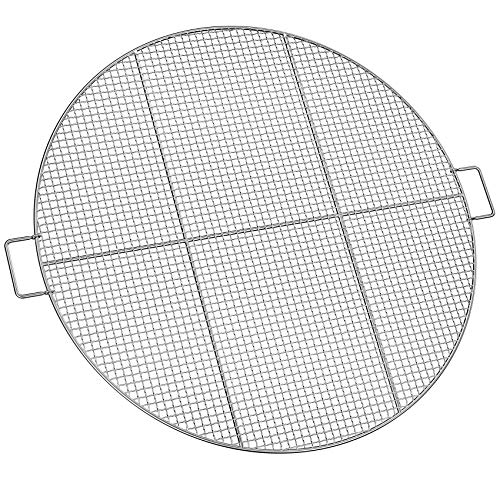
Stanbroil Stainless Steel Fire Pit Cooking Grate
Stainless rods skip the coating, so nothing burns off and no seasoning routine begins. Rain and dew leave surface discolouration rather than flaking rust, which suits a pit parked on an open patio. Round sizes cover common backyard rings, and bar spacing holds burgers without dropping them.
Pros
- Survives outdoors without a cover
- Ready to cook on from the first fire
- Cleans up with a wire brush
Cons
- Holds less heat than cast iron
- Thinner rods flex under heavy pots

Onlyfire Stainless Steel Hinged Cooking Grate, 22.5 in
Two hinged flaps lift so wood or charcoal goes in without sliding food around. Diameter is fixed at 22.5 inches, the standard for kettle pits and converted grills. Stainless rods take direct flame contact with no finish to worry about.
Pros
- Add fuel mid cook through the flaps
- Drops into common 22.5 inch kettles
- No seasoning before the first use
Cons
- One size only, so measure your pit
- Hinges trap ash and need brushing

Camp Chef Lumberjack Over Fire Grill
Four legs push into dirt or sand, so the grill straddles a fire with no ring required. Cooking surface measures roughly 24 by 16 inches, enough for breakfast for a family. Legs detach for transport, and the steel grate takes direct coal heat.
Pros
- Sets up anywhere legs sink into the ground
- Rectangular surface fits pans better than a circle
- Breaks down flat for a truck bed
Cons
- Height above the coals cannot be changed
- Legs sink into soft sand under load

Stansport Heavy Duty Steel Camp Grill
Folding legs and a plain steel grate cover occasional campfire cooking. Packed flat, it slides in beside a cooler in the trunk. Bare steel flash rusts after one damp night, so wipe oil across the bars before storing.
Pros
- Simplest way to cook over a campfire
- Folds flat for storage and transport
- Light enough to carry one handed
Cons
- Thin bars sag under a heavy Dutch oven
- Rusts quickly unless oiled and dried

Solo Stove Cast Iron Grill Top
Cast iron stores heat, so a steak keeps searing instead of cooling the surface on contact. Pairing happens through the Solo Stove hub attachment, which sets the grate height without improvised spacers. Seasoning and drying after every cook come with the material.
Pros
- Sears better than thin steel or stainless rods
- Purpose built fit for Solo Stove bowls
- Weight keeps it planted in wind
Cons
- Needs the matching hub, sold separately
- Heavy, and rusts fast if stored damp

Sunnydaze Adjustable Campfire Cooking Swivel Grill
A ground stake carries an arm that raises, lowers and swings the grate clear of the flames. Height control is the point here. Pull food off searing heat without lifting a pan, then swing it back over embers. Rocky or frozen ground limits where the stake will drive.
Pros
- Adjust height without rebuilding the fire
- Swings aside for adding wood
- Works over in ground pits with no rim
Cons
- Stake needs soft ground to hold
- Cooking surface is smaller than flat grates
How they stack up
| # | Model | Material | Best for | Score | Price |
|---|---|---|---|---|---|
| 1 | Sunnydaze X-Marks Fire Pit Cooking Grate | Heavy gauge steel, high temp finish | Best overall | 9.3 | Check price |
| 2 | Stanbroil Stainless Steel Fire Pit Cooking Grate | Stainless steel rod | Best rust resistance | 9.0 | Check price |
| 3 | Onlyfire Stainless Steel Hinged Cooking Grate, 22.5 in | Stainless steel | Best for kettle style pits | 8.8 | Check price |
| 4 | Camp Chef Lumberjack Over Fire Grill | Steel | Best for campfires | 8.6 | Check price |
| 5 | Stansport Heavy Duty Steel Camp Grill | Steel | Best budget | 8.4 | Check price |
| 6 | Solo Stove Cast Iron Grill Top | Cast iron | Best for Solo Stove pits | 8.2 | Check price |
| 7 | Sunnydaze Adjustable Campfire Cooking Swivel Grill | Steel | Best adjustable height | 8.0 | Check price |
What to look for
Sizing a grate to your fire pit Measure the outer rim, not the inner bowl. A grate should overlap that rim by at least an inch on each side, so it cannot tip into the fire when someone leans on it. Round steel bowls usually take 24 to 30 inches. Masonry rings often need 36 inches or more, which is where the Sunnydaze X-Marks size range earns its place. Kettle style pits are the exception, since they use fixed diameters such as 22.5 inches. In ground pits with no rim support nothing at all, so a staked design is the only workable answer.
Cast iron, stainless and painted steel Every metal trades something. Cast iron, as on the Solo Stove grill top, stores heat and leaves proper sear marks, yet it weighs a lot and rusts within days if stored wet. Stanbroil and Onlyfire use stainless, which survives rain and skips seasoning, though it holds less heat and thin rods flex. Painted steel is the plainest option, and its high temperature coating smokes off during the first burn. That is expected behaviour rather than a defect. Afterwards, treat painted steel exactly like bare steel: oil it, cover it, keep it dry.
Backyard pits and patio cooking Permanent pits reward a grate you can leave in place. Stainless makes sense here, because nobody wants to carry steel indoors after every fire. Bar spacing matters if shrimp, skewers or sliced vegetables are on the menu, since wide gaps swallow food. Flat grates fix the height, so build a low fire and cook over embers instead of flame. Keep a sheet pan on a side table too. There is nowhere to rest hot food on the grate itself, and hunting for a landing spot with a full pan goes badly.
Camping, in ground fires and adjustable setups Campsites change the problem entirely. Camp Chef Lumberjack Over Fire Grill and the Stansport camp grill both stand on their own legs, which works where a fire ring is only a circle of stones. Staked designs like the Sunnydaze swivel grill add height control, useful when a fire runs hotter than planned. Pack a welding glove and a long handled tool either way, because adjusting any of these means reaching over live coals. Check local fire rules before loading the truck, since many areas restrict open fires through dry months.
Common questions
What size cooking grate do I need for a fire pit?
Measure the outer rim, then add at least two inches overall so the grate rests securely. Steel bowls commonly take 24 to 30 inches. Masonry rings usually need 36 inches or more.
Can you cook food directly on a fire pit grate?
Yes, once the wood burns down to coals. Open flame deposits soot and scorches the outside before the centre cooks. Wait for the fire to settle, then cook over embers.
Is stainless steel or cast iron better for a fire pit grate?
Stainless wins on maintenance and rain exposure. Cast iron wins on heat retention and searing. Choose stainless for a grate that lives outside, cast iron if it gets stored under cover.
Do fire pit cooking grates rust?
Painted and bare steel rust quickly once the coating burns away. Oil the bars after cleaning and store them dry. Stanbroil and Onlyfire stainless grates discolour instead of flaking.
How do you season a cast iron fire pit grate?
Scrub it clean, dry it fully over the fire, then wipe a thin layer of high smoke point oil over every surface. Heat until the oil stops smoking. Repeat after each wash.
Can you use any grate on a Solo Stove fire pit?
Not reliably. Solo Stove bowls use a hub attachment that holds the grill top at the right height above the flame. The matching cast iron grill top is the straightforward fit.
How high should a grate sit above the fire?
Roughly six to twelve inches over glowing coals covers most grilling. Any closer scorches the surface, much higher slows cooking to a crawl. Staked swivel grills let you adjust rather than guess.
Which fire pit grate works best for camping?
Camp Chef Lumberjack Over Fire Grill, since its legs stand in dirt wherever the fire is. Stansport folds smaller for a packed trunk. Neither depends on a ring to sit on.
How do you clean a fire pit cooking grate?
Burn off residue while the fire is still hot, then scrape with a wire brush. Skip soap on cast iron. Dry stainless and steel fully before storage to stop overnight rust.
What firewood is safe to cook over?
Seasoned hardwoods such as oak, hickory and maple. Avoid painted, treated or manufactured lumber entirely. Go easy on resinous softwoods like pine, which coat food in soot.
The bottom line
Sunnydaze X-Marks Fire Pit Cooking Grate is the one to buy for a typical backyard ring, mostly because its diameter range actually matches real pits and the crossed bars carry a Dutch oven. Pick Stanbroil stainless instead when the grate will live outdoors uncovered, since rust ruins painted steel faster than heat ever does. Campers should skip both and pack Camp Chef Lumberjack Over Fire Grill, which stands on its own legs wherever the fire ends up.
Sierra Daniels
Sierra's background is in landscape design and nursery retail. She focuses on lawn and garden equipment, outdoor furniture and gear durability, weighing published specs against how materials actually hold up outside.