Film Developing Tanks: Plastic Reels vs Steel Spirals
Paterson Super System 4 fits most home darkrooms, since its ratcheting reels widen for 35mm and 120 alike. Ars-imago Lab-Box spools film in room light, so no changing bag is needed. Samigon stainless suits weekly volume, reaching 20C fast on roughly 475ml per pair.
Paterson Super System 4 suits most people developing black and white at home. Ball bearings walk film inward as you rock the flanges, which forgives a shaky first load inside a changing bag. One body swallows two 35mm rolls or a single 120 roll on 600ml. Drying time between sessions is its weak point.
Tank choice looks simple until developer costs and jammed reels enter the picture. We compared published capacity figures, stated chemistry volumes, cross-brand reel compatibility, and recurring owner reports about film binding, weeping lids and light leaks.
What we recommend

Paterson Super System 4 Universal Tank with 2 Reels
Two adjustable spirals cover 35mm, 127 and 120 from one ABS body. Ball bearings ratchet film onto the spiral, so loading runs by feel rather than force. Owners credit the funnel lid for pouring chemistry without breaking the light seal, though reels want a full dry cycle before reloading.
Pros
- Reels resize from 35mm to 120 with no extra parts
- Funnel lid pours chemistry while the tank stays sealed
- Spare reels and columns stay widely stocked
Cons
- Damp reels bind film halfway along the spiral
- Uses more developer than steel at equal capacity
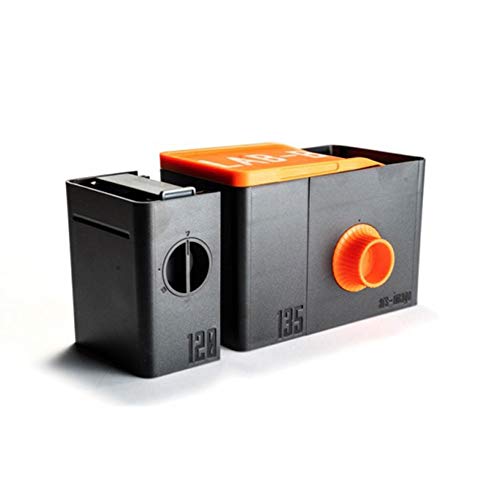
Ars-imago Lab-Box Daylight Developing Tank
An internal cutter and crank draw film from the cassette onto the spiral under room light. Apartment developers gain most, since the changing bag drops out of the workflow entirely. Modules for 35mm and 120 are sold apart, and each cycle processes a single roll on about 200ml.
Pros
- Cuts and spools 35mm in full room light
- About 200ml per run suits one-shot developers
- Crank agitation avoids inversion splashes
Cons
- Medium format needs a second module bought separately
- One roll per cycle slows a five-roll backlog
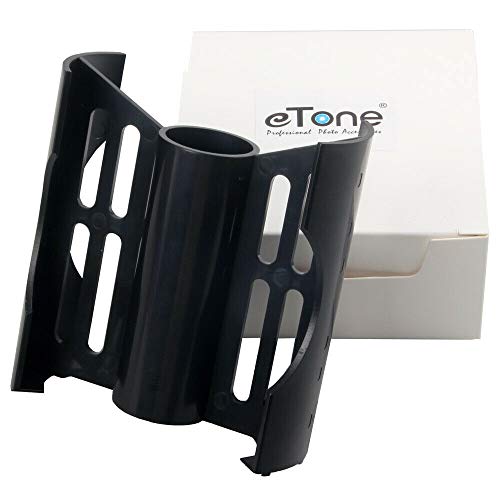
AP Compact Developing Tank with 2 Reels
Layout copies the Paterson pattern: centre column, funnel lid, two width-adjustable reels. Reels move freely between the two systems, so a mixed drying rack causes no confusion. Body plastic feels thinner in hand, and the lid wants a firm press before you invert.
Pros
- Takes Paterson-style reels and centre columns
- Light body inverts comfortably one-handed
- Handles 120 like heavier plastic tanks
Cons
- Lid seal takes practice to seat every time
- Thinner plastic scuffs sooner around the rim

Samigon Stainless Steel Developing Tank, 2-Reel
Steel walls move heat quickly, so a water bath pulls the tank to 20C in minutes instead of a slow soak. Two 35mm reels run on roughly 475ml, under what plastic bodies of matching capacity need. Hand-loading a steel spiral is a learned skill, and a crooked start creases a whole roll.
Pros
- Hits processing temperature far faster than plastic
- Lower developer volume per roll trims one-shot waste
- Wipes dry in seconds between back-to-back batches
Cons
- Steel spirals take many rolls to load confidently
- Fixed-width reels mean buying separate 120 spirals

Jobo 1520 Developing Tank with 1500 Reel
Designed to sit on Jobo CPE and CPP processors, where motorised rotation replaces hand inversion. Continuous rotation holds C-41 and E-6 temperatures tightly on roughly 140ml of chemistry. By hand on a bench it still develops film, yet that low-volume advantage largely disappears.
Pros
- Rotary mode runs on about 140ml per roll
- Extension modules stack for extra 1500 reels
- Steady temperature hold suits colour chemistry
Cons
- Needs a rotary base to show its advantage
- Accessory range is narrower than Paterson’s

Arista Premium Developing Tank with 2 Reels
Beginner darkroom bundles usually ship this plastic tank with both reels already in the box. Range matches costlier plastic rivals: two 35mm rolls or one 120 roll on about 600ml. Moulding tolerances vary more, so reels occasionally bind on humid days until fully dry.
Pros
- Lowest cost entry into two-roll batch developing
- Both reels included rather than sold singly
- Flanges widen to 120 with no extra parts
Cons
- Reel tolerances are less consistent than Paterson
- Lid gasket can weep during vigorous inversion

Kalt Stainless Steel Developing Tank, 4-Reel
Four 35mm reels stack inside one seamless steel body, clearing an event backlog in a single run. Filled to about 950ml, it grows heavy and the inversion stroke gets long. Listings differ on how many reels arrive in the box, so confirm the bundle before ordering.
Pros
- Processes four 35mm rolls in one cycle
- Seamless steel tolerates hot tempering baths
- No plastic column to warp or stain
Cons
- Close to a litre of chemistry makes inversion awkward
- Reel count in the box varies between listings
How they stack up
| # | Model | Reel type | Best for | Score | Price |
|---|---|---|---|---|---|
| 1 | Paterson Super System 4 Universal Tank with 2 Reels | Adjustable plastic auto-load | Best overall | 9.4 | Check price |
| 2 | Ars-imago Lab-Box Daylight Developing Tank | Integrated module spiral | Best for developing without a darkroom | 9.2 | Check price |
| 3 | AP Compact Developing Tank with 2 Reels | Adjustable plastic auto-load | Best value | 9.0 | Check price |
| 4 | Samigon Stainless Steel Developing Tank, 2-Reel | Stainless steel spiral, fixed width | Best for high-volume developing | 8.7 | Check price |
| 5 | Jobo 1520 Developing Tank with 1500 Reel | Jobo 1500 series adjustable | Best for rotary processing | 8.5 | Check price |
| 6 | Arista Premium Developing Tank with 2 Reels | Adjustable plastic auto-load | Best budget pick | 8.3 | Check price |
| 7 | Kalt Stainless Steel Developing Tank, 4-Reel | Stainless steel spiral | Best for batch sessions | 8.0 | Check price |
How to pick the right one
What to look for in a film developing tank Reel material decides most of the experience, so settle that question first. Plastic spirals ratchet film inward and tolerate clumsy hands. Steel spirals reward practice and punish a bad start at the core. Capacity comes next: a two-reel body takes a 35mm pair or one 120 roll, while four-reel steel bodies clear a backlog in one go. Read the stated chemistry volume before buying, because one-shot developers drain a thirsty tank fast. Lid design matters as well, and a funnel top moves chemistry in and out without breaking the light seal. Budget for spare reels too, since one wet reel stalls an entire session.
Plastic reels vs stainless steel reels For the first fifty rolls, plastic wins. Ratcheting flanges walk film onto the spiral, and a jam usually signals moisture rather than poor technique. Steel takes over later. Muscle memory turns steel loading into a ten second job, and each roll then uses less developer and reaches 20C within minutes of hitting the water bath. Humidity often settles the argument: a bathroom that never dries makes plastic reels a waiting game. Colour work pushes the same direction, because thin steel walls track a tempering bath closely. Many darkrooms simply keep both and choose per session.
Developing 120 and medium format film Medium format changes the arithmetic. Adjustable plastic reels from Paterson, AP and Arista slide their flanges apart for 120, and that single roll occupies the room of two 35mm reels. Steel systems rarely adjust, so you buy a dedicated 120 spiral instead. Chemistry volume climbs with the larger film area, which leaves a 600ml plastic tank running close to full. Anyone shooting 6×7 or 6×9 should own a spare reel from day one. Loading differs too: there is no cassette to grip, so peel the backing paper slowly and hold the film by its edges.
Can you develop film without a darkroom? Apartment developers keep hitting the same wall, since no room goes truly dark. Ars-imago Lab-Box sidesteps it by cutting the leader and spooling film in room light through a sealed crank. Convenience trades against throughput, because one roll runs per cycle and 120 costs another module. Processing several rolls a week? A changing bag plus a two-reel plastic tank batches far better and costs less to expand. Occasional developers who dread fumbling inside a bag should take the opposite view. A bathroom sealed at night also works, provided you sit inside for five minutes with adjusted eyes and find no light around the door.
Questions worth asking
How much developer does a film developing tank need?
Volume tracks reel count and body size. One 35mm roll in a Paterson-style tank takes about 290ml, and two rolls need roughly 600ml. Stainless tanks of matching capacity sit near 475ml, which saves chemistry when developer gets discarded after every run.
Can you develop 120 film in a 35mm tank?
Only where the reels adjust. Paterson, AP and Arista flanges slide wider for 120, and that roll then fills the space of two 35mm reels. Fixed-width steel spirals cannot resize, so those systems need a separate 120 reel bought alongside.
Which is better for beginners, plastic or stainless steel reels?
Plastic loads more forgivingly, which matters during the first dozen rolls. Steel uses less chemistry, dries instantly and reaches processing temperature much faster. A common path starts with a plastic tank, then adds steel once colour work or weekly volume arrives.
Do you need a changing bag to load a developing tank?
Conventional tanks require total darkness, because film has to leave the cassette unexposed. Ars-imago Lab-Box is the exception, cutting and spooling in daylight through a sealed crank. A windowless bathroom at night substitutes for a bag once every light leak is taped.
What size film developing tank is best for several rolls at once?
Two-reel tanks cover most home shooters comfortably. Event and wedding photographers clearing a backlog benefit from a four-reel steel body, which runs four 35mm rolls in one cycle. Remember the weight: a full four-reel tank holds close to a litre during inversion.
Why does film get stuck halfway onto the reel?
Moisture causes it on plastic reels almost every time. Slight dampness makes the emulsion grab the spiral track and stop dead. Dry reels fully with a hairdryer on cool, handle film by its edges, and keep finger oils off the surface.
Is a Jobo tank worth buying without a rotary processor?
It develops film by hand, but the main reason to own one disappears. Rotation is what drops chemistry to around 140ml and holds colour temperatures steady. Without a processor or roller base, a plastic or steel tank does the same work for less outlay.
How long do developing tanks and reels last?
Steel bodies run for decades on nothing more than a rinse. Plastic tanks stain and can warp after repeated hot tempering baths, with the centre column usually failing first. Owners report reels wearing out before tanks, which makes spare reels the smarter recurring purchase.
Can you develop colour film in a standard developing tank?
Yes, C-41 and E-6 both work in plastic and steel tanks. Temperature discipline is the hard part, since C-41 runs near 38C and drifts quickly in a plastic body. Steel tracks a tempering bath better, and rotary processing like the Jobo 1520 holds it steadiest.
The verdict
Take the Paterson Super System 4 if you develop black and white at home and want reels that load without drama, because its adjustable spirals cover 35mm and 120 from one body. No dark space at all? Ars-imago Lab-Box is the answer, provided one roll per cycle fits your pace. Shooters clearing several rolls a week should move to the Samigon stainless tank instead, for faster tempering and less developer per roll.
Marcus Chen
Marcus covered consumer electronics for enthusiast tech publications for six years before joining ChoiceCrest. He specializes in translating manufacturer spec sheets into plain-language buying advice, with a focus on audio, computing accessories and smart-home gear.
You might also need

Nintendo Game & Watch: Super Mario Bros Review: Still Worth It as a Collectible?

Ray-Ban Meta (Gen 2) Wayfarer Smart Glasses: Worth $379 for Clear Lenses?
AlyKets Nikon UC-E6 Replacement USB Cable: Does a $7.95 Cord Work as Well as the Original?
