Choosing Farm Fencing That Holds Up to Livestock
For most working farms, the Red Brand Non-Climb Horse Fence offers the sturdiest physical barrier for mixed herds. The Zareba ESP10M-Z energizer delivers steady AC-powered charging across long fence runs. Where no electrical line reaches the pasture, the Parmak Magnum Solar Pak 12 keeps working off-grid through cloudy stretches.
Red Brand Non-Climb Horse Fence handles mixed livestock best for most farms, while the Zareba ESP10M-Z and Parmak Magnum Solar Pak 12 cover powered and off-grid pastures. Premier1 netting rounds out poultry and rotational needs, and YARDGARD keeps small-animal runs affordable.
One product rarely fits every animal, terrain, or power setup, and an undersized energizer or thin wire fails fast under real pressure. We compared mesh spacing, joule ratings, and coverage claims against owner feedback and use-case fit so the shortlist matches how a working farm actually fences.
Our top picks
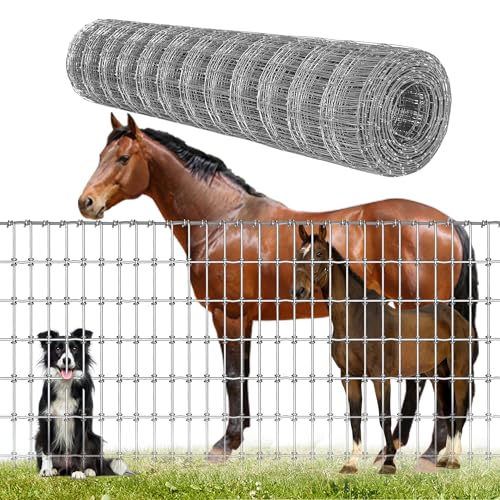
Red Brand Non-Climb Horse Fence
Galvanized woven wire forms a tight 2 by 4 inch mesh that stops hooves, heads, and predators from pushing through. Owners report it keeps its shape across uneven pasture ground for years without sagging. Horses, goats, and mixed herds hold better behind this pattern than behind wider-spaced field fence.
Pros
- Tight mesh blocks hooves and predators
- Galvanized coating resists corrosion for years
- Holds tension across rolling terrain
Cons
- Stretching the roll takes more labor than field fence
- Costs more per roll than lighter wire

Zareba ESP10M-Z Solar Electric Fence Charger
This plug-in energizer pushes a low-impedance pulse across up to 10 miles of fence line. Based on specifications it draws power from a standard 110V outlet, so no battery or panel is needed. Owners describe steady performance even with light weed contact on the line.
Pros
- Covers long fence runs at low cost
- Handles moderate weed load without dropping charge
- Two-terminal setup wires in minutes
Cons
- Requires a nearby AC outlet
- No battery backup during a power outage

Parmak Magnum Solar Pak 12 Fence Charger
A built-in sealed battery lets this energizer run pastures with no electrical line nearby. Solar charging keeps that battery topped off, and owners in remote fields report weeks of runtime through cloudy stretches. Rotational grazing setups far from any barn outlet suit this charger well.
Pros
- Operates fully off-grid
- Keeps charging through overcast weather
- Rated for a long 30-mile range
Cons
- Battery needs eventual replacement
- Mounting bracket is bulkier than plug-in models
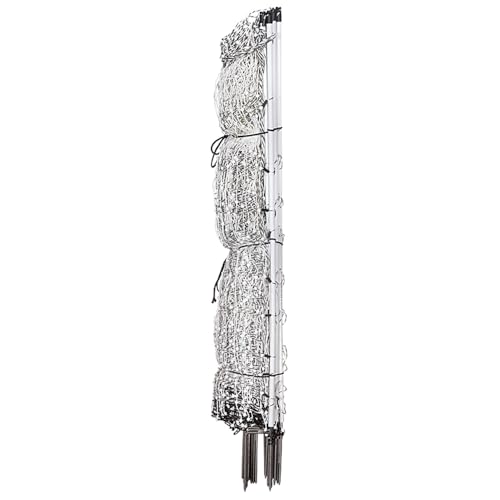
Premier1 PoultryNet Plus Electric Netting
Prefab netting with built-in double-spike posts sets a movable barrier for chickens, ducks, and young goats in minutes. Closer mesh spacing near the bottom keeps small birds from squeezing through, according to the listing. Rolling it up for rotational moves takes little effort with any low-impedance energizer powering the line.
Pros
- Sets up and relocates quickly
- Bottom mesh contains small poultry well
- Posts are built into the netting
Cons
- Needs frequent repositioning to protect grass
- Tall grass can short the lower strands
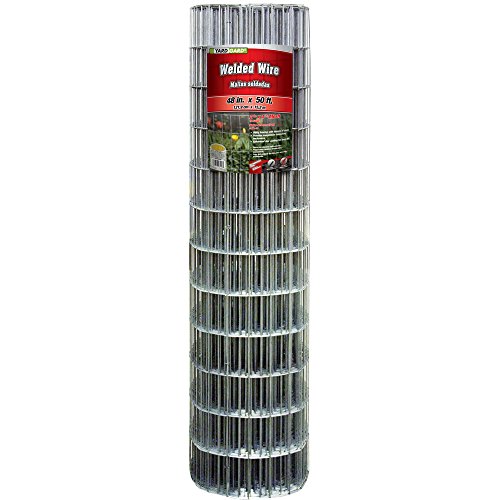
YARDGARD Galvanized Welded Wire Fence
Welded 14 gauge wire in a 1 by 2 inch pattern gives gardens, rabbit runs, and coop perimeters an affordable barrier. Galvanized coating limits rust on outdoor runs, and owners use it as a predator guard around poultry areas. Cutting and shaping the roll takes one person and basic tools.
Pros
- Low cost per roll
- Cuts and bends easily by hand
- Suits small-animal enclosures well
Cons
- Not rated for large livestock pressure
- Welded joints can pop under heavy force

Patriot PMX50 Fence Energizer
A compact plug-in design suits hobby farms and paddocks that do not need long mileage. Indicator lights show fence voltage at a glance, which owners note simplifies troubleshooting. Poly wire, tape, or a few strands of steel all run fine off this 0.5 joule output for horses and cattle.
Pros
- Voltage lights show status instantly
- Mounts easily in a small footprint
- Fits small acreage budgets
Cons
- Range tops out around 5 miles
- Weeds drain voltage faster than on higher-output units
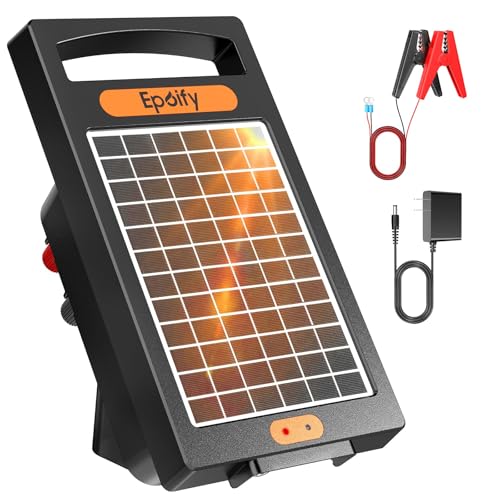
Fi-Shock ESP2M-FS Electric Fence Charger
New farmers get a straightforward entry point with this 2-mile AC energizer. Two-terminal hookup takes little wiring experience, and owners describe the setup as beginner-friendly. Garden protection, single paddocks, and short training runs all fall within its low-impedance output.
Pros
- Wires up with minimal experience
- Priced for a first fence setup
- Small enough to mount almost anywhere
Cons
- Range is limited to about 2 miles
- Best mounted indoors or under shelter
Before you buy
What are the main types of farm fencing? Woven wire, welded wire, and electric netting each solve a different problem. Woven wire like the Red Brand Non-Climb pattern gives permanent strength for mixed herds. Welded rolls cost less but suit smaller animals and garden borders better than large livestock. Netting moves with rotational grazing and sets up fastest for poultry.
How do you match fencing to your livestock? Horses need smooth or tight mesh that will not trap a hoof. Goats climb and push against a barrier, so close spacing matters more than overall height. Cattle generally respect a well-charged hot wire without needing dense mesh at all. List every animal the fence must hold, then build around the most demanding one.
What do energizer joules and mileage claims really mean? Advertised range assumes a clean single strand with no weeds or extra wires attached. Real pastures rarely match that setup, so effective coverage often drops below the stated miles. Joule output reflects how hard the pulse pushes through vegetation and long lines, which matters more than mileage alone. Buying more capacity than the raw distance suggests helps avoid a weak shock later.
Which power source and grounding setup keeps the charge reliable? AC plug-in chargers stay cheapest and steadiest when an outlet sits close by. Solar units free a pasture from wiring but depend on a battery that ages over several seasons. Grounding causes most weak-shock complaints, not a faulty charger. Several rods spaced apart in moist soil, solid corner braces, and clear vegetation along the line all preserve voltage.
The lineup, side by side
| # | Model | Mesh spacing | Best for | Score | Price |
|---|---|---|---|---|---|
| 1 | Red Brand Non-Climb Horse Fence | 2 by 4 inches | Best overall | 9.4 | Check price |
| 2 | Zareba ESP10M-Z Solar Electric Fence Charger | 10 miles | Best value | 9.2 | Check price |
| 3 | Parmak Magnum Solar Pak 12 Fence Charger | 30 miles | Best for off-grid pastures | 9.0 | Check price |
| 4 | Premier1 PoultryNet Plus Electric Netting | 48 inches | Best for poultry and small stock | 8.8 | Check price |
| 5 | YARDGARD Galvanized Welded Wire Fence | 1 by 2 inches | Best budget | 8.5 | Check price |
| 6 | Patriot PMX50 Fence Energizer | 5 miles | Best for small paddocks | 8.2 | Check price |
| 7 | Fi-Shock ESP2M-FS Electric Fence Charger | 2 miles | Best for beginners | 8.0 | Check price |
Questions worth asking
What is the strongest farm fence for mixed livestock?
Tight-mesh woven wire like the Red Brand Non-Climb pattern handles horses, goats, and cattle together because 2 by 4 inch spacing stops hooves and heads from pushing through where wider field fence fails.
How many miles of fence can one energizer power?
Check the joule rating against your total wire length, not just the advertised mileage. Weeds, multiple strands, and long runs all cut effective range below what the label claims.
Is solar electric fencing reliable during cloudy weather?
Quality solar energizers store charge in a sealed battery and keep pulsing through several overcast days. Owners in cloudy regions report weeks of runtime, though the battery eventually needs replacing.
Do I need permanent fencing or electric netting for poultry?
Netting suits temporary and rotational setups for chickens and small stock since it moves in minutes. Long-term perimeters holding larger animals hold up better with woven or welded wire on braced posts.
Why is my electric fence shock so weak?
Poor grounding causes most weak-shock complaints rather than a bad charger. Add more ground rods spaced several feet apart in damp soil, then clear vegetation off the wire before troubleshooting further.
What gauge wire works best for farm fencing?
Heavier woven wire around 12 to 14 gauge resists stretching and predator pressure, while lighter welded rolls suit small-animal runs. Match gauge to the load the fence must actually survive.
Can a single energizer run multiple paddocks at once?
Yes, as long as its joule rating covers the total wire length across every section. Cut-off switches let you isolate one paddock for repairs while the rest of the line stays hot.
How far apart should farm fence posts be spaced?
Line posts spaced roughly 12 to 16 feet apart suit most woven-wire runs. Hillsides need closer spacing, and every direction change calls for a braced corner post to hold tension.
Is woven wire better than welded wire for goats?
Woven wire generally holds up better against goats because it flexes under pressure instead of popping at a weld point. Welded rolls still work for smaller stock like rabbits or poultry runs.
The verdict
Red Brand Non-Climb Horse Fence remains the barrier most working farms should build around, since its tight mesh contains nearly every animal on the property. Pair it with the Zareba ESP10M-Z near an outlet, or the Parmak Magnum Solar Pak 12 when pastures sit off-grid.
Sierra Daniels
Sierra's background is in landscape design and nursery retail. She focuses on lawn and garden equipment, outdoor furniture and gear durability, weighing published specs against how materials actually hold up outside.
You might also need

Simpeak Hand Crank Solar Flashlight (2-Pack): A Legit Emergency Backup?

DR&Co 32-Inch Rectangle Planter Box: A Smart Fit for Narrow Spaces

Grill Covers That Actually Block Rain, Not Just Dust
