Family Games That Work for Mixed Ages and Group Sizes
Ticket to Ride tops this list for five minute rules and strategy that holds up across ages. Codenames suits larger groups and party nights best, and Sushi Go Party gets younger children playing something adults enjoy too, fast and cheaply.
Five minutes of setup and an hour of real decisions make Ticket to Ride the overall pick here. Larger groups fare better with Codenames, since it scales past six players with ease. Younger children get into Sushi Go Party fastest and cheapest, without losing adult interest at the table.
Family games fail in two directions: some grow so simple that adults check out after one round, others carry a rulebook that kills the evening before it starts. Titles worth owning teach quickly, run 30 to 60 minutes, and hand younger players real choices instead of dice rolls alone. We compared publisher age recommendations, teaching and play times, player counts, and rules complexity, then weighed those against what owners report about repeat play and shelf life past the first month.
The top picks, ranked

Ticket to Ride
Collecting coloured train cards and claiming routes across a map sounds simple, and it is. Secret destination tickets add the only twist needed to keep decisions interesting. Watching a rival grab the route you needed creates tension that children read instantly and adults keep arguing about after the box closes.
Pros
- Genuinely simple rules with real strategic depth
- Map artwork and components hold attention at the table
- Multiple map expansions extend the box’s shelf life
Cons
- Route blocking can feel harsh to younger players
- Two player games run less dynamic than a full table

Codenames
Two teams take turns giving one word clues to guess words off a shared grid. Nearly any group size works, since every teammate helps guess. Rounds run short enough that nobody sits waiting, which keeps energy high across mixed ages.
Pros
- Handles large groups better than almost any card game
- Short rounds keep energy up throughout the night
- Compact box travels well for trips
Cons
- Vocabulary demands can leave younger children behind
- Needs at least four players to feel balanced

Sushi Go Party
Passing a hand of cards and keeping one repeats until scoring, simple enough for a seven year old. Adults still calculate optimal picks well into the later rounds. This party edition widens the card selection, so repeat games rarely feel identical.
Pros
- Fast to teach and even faster to play
- Customisable card mix keeps repeat games fresh
- Charming artwork appeals to younger players
Cons
- Scoring takes a moment to explain up front
- Offers less depth than heavier family games
Azul
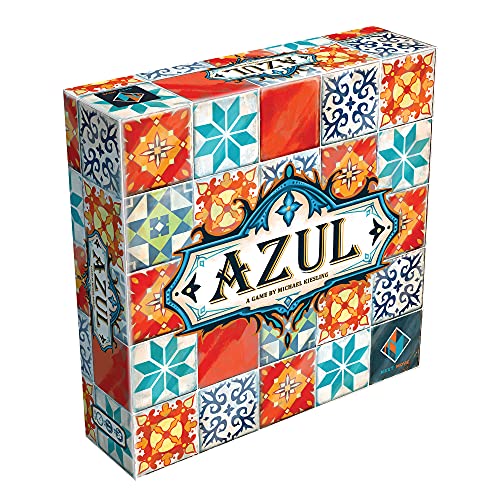
Drafting coloured tiles and placing them on a personal board earns points, with penalties for grabbing more than you can use. One page covers the entire rulebook, yet the decisions get genuinely sharp. Heavy resin tiles are the reason this game keeps coming back off the shelf.
Pros
- Satisfying, tactile physical components
- Deep strategy built from very simple rules
- Plays well even at just two players
Cons
- Caps out at four players
- Penalty scoring can frustrate younger children

Catan
Resource gathering and trading between players built the modern family game category, and Catan still leads it. Negotiation is where the game comes alive, teaching kids real bargaining instincts. Dice-driven luck plays a bigger part here than in most games on this list, and matches run longer too.
Pros
- Player trading creates genuine table interaction
- Variable board layout changes every game setup
- Large expansion ecosystem extends replay value
Cons
- Runs longer than most family games here
- Poor dice luck can sideline a player
Telestrations
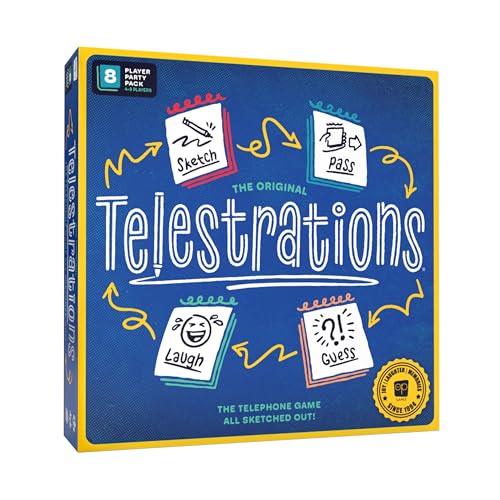
Each player draws a prompt, passes it along, and the next person guesses, distorting the chain hilariously by the final reveal. No strategy exists here, and that omission is deliberate. Mixed ages and attention spans all land on the same joke within minutes.
Pros
- Almost nothing to teach before playing
- Consistently funny across mixed age groups
- Drawing skill genuinely does not matter
Cons
- Offers no strategic depth at all
- Marker pens and boards need replacing eventually

Kingdomino
Dominoes crossed with territory building sums up Kingdomino, and a full match fits inside 15 to 20 minutes. Dinner hour filler or a last game before bed both suit it well. Younger children handle the basic rules while adults track scoring more carefully.
Pros
- Very short play time fits busy evenings
- Simple enough for younger children to grasp
- Small box stores and travels easily
Cons
- Limited depth across many repeat plays
- Four player maximum limits bigger groups
What matters most
How strict are age ratings on board games really? Publisher age ratings mostly reflect reading ability and rules comprehension, not genuine interest. A confident seven year old often handles a game rated eight and up, especially alongside an adult. Whether a game demands reading, arithmetic, or abstract planning matters more than the printed number. Games built on symbols rather than text stretch down the age range more easily.
Why does teaching time matter as much as play time? A 25 minute rules explanation has already used up the evening before a single turn happens. Games worth buying teach in five minutes or less, usually because one core action repeats with variation. Groups that play rarely should weight teaching simplicity heavily, since the alternative is a box that never opens twice.
Which games handle a large group without dead time? Check the player range honestly, not the maximum printed on the box. Several games technically support six players yet leave people waiting minutes between turns, and that wait is where younger players disengage. Team-based and simultaneous-play designs like Codenames or card drafting games keep everyone acting at once, which is why they scale better to a full table.
How much luck should a family game have? Pure skill games let adults dominate, which discourages children fast. Pure luck games bore adults just as quickly. Games that hold a family together for years blend both, giving children a real shot at winning while still rewarding smarter decisions over time. Hidden objectives and drafting mechanics do this well, since a lucky draw can shift a position without deciding the whole game.
How they stack up
| # | Model | Players | Best for | Score | Price |
|---|---|---|---|---|---|
| 1 | Ticket to Ride | 2 to 5 | Best overall | 9.4 | Check price |
| 2 | Codenames | 2 to 8 plus, more in teams | Best for big groups | 9.2 | Check price |
| 3 | Sushi Go Party | 2 to 8 | Best for younger children | 9.0 | Check price |
| 4 | Azul | 2 to 4 | Best for strategy | 8.8 | Check price |
| 5 | Catan | 3 to 4, more with expansion | Best for negotiation | 8.6 | Check price |
| 6 | Telestrations | 4 to 8 | Best party game | 8.3 | Check price |
| 7 | Kingdomino | 2 to 4 | Best short game | 8.0 | Check price |
Questions worth asking
What makes a good family board game?
Short teaching time, a play length under an hour, meaningful choices for every player, and a mix of luck and skill so a child can beat an adult without the adult losing on purpose. Attractive components help too, since they get the game onto the table in the first place.
What age can children start playing board games?
Simple matching and memory games work from around three or four. Real decision making usually starts around six to eight. Most picks in this roundup sit at eight and up, the point where reading and planning ability make modern family games enjoyable rather than frustrating.
Which games work best with a large group?
Team-based and simultaneous-play games scale best. Codenames handles eight or more comfortably, and card drafting games such as Sushi Go Party keep everyone acting at once. Heavy turn-based games struggle with large groups, since downtime rises sharply with each extra player.
How long should a family game session run?
Thirty to sixty minutes suits most families, long enough to feel substantial and short enough to finish before attention fades. Keeping one game under 20 minutes in the collection helps on evenings without time for a full session.
Are cooperative games better for younger children?
They can be, since nobody gets eliminated and adults can guide without appearing to take over. Competitive games teach different lessons about losing gracefully. Most families benefit from owning at least one of each rather than picking a side.
What if my child cannot read yet?
Choose games driven by symbols, colours, and pictures rather than text. Tile laying and pattern games work well. Many text-heavy games still play fine with an adult reading aloud, though pace slows noticeably with more than one pre-reader at the table.
How do you stop game night from ending in tears?
Pick games with a luck element so outcomes are not purely a measure of ability, keep sessions short enough that attention holds, and lean on team-based games when emotions run high. Explaining the full rule set up front, including how the game ends, removes the surprise that often triggers upset.
Are game expansions worth buying?
Only once a game has proven itself over many plays. Expansions typically add variety rather than fixing anything, and they often push rules complexity past a family-friendly range. Play the base game a dozen times first.
Ticket to Ride vs Catan, which is the better first family game?
Ticket to Ride teaches faster and runs shorter, making it the easier first pick. Catan adds deeper negotiation and a longer runtime, better suited once a family already enjoys sitting through a 60 to 90 minute game.
Is Codenames appropriate for a mixed adult and child group?
Yes, once children are around ten and comfortable with vocabulary-based clues. Younger children can still participate on a team, though the wordplay works better once reading skills are solid.
Our take
Buy Ticket to Ride first among family games, since it teaches in minutes and holds up across a wide age range without feeling patronising. Codenames earns a spot once gatherings regularly hit six or more people, scaling where most games do not. Younger children and short evenings are better served by Sushi Go Party and Kingdomino, both of which finish a complete game before attention runs out.
Rachel Simmons
Rachel previously worked in child-product retail and brings a practical, detail-first eye to gear reviews, focusing on safety standards, ease of use and the fine print that matters most for new caregivers.


