Which Fabric Measuring Tool Fits Your Sewing Kit
For most sewists, the Dritz 9410 60-inch tape measure handles everyday body and pattern measuring at low cost. Quilters get more mileage from the Omnigrid 6 x 24 inch ruler on long rotary cuts, while the Dritz Sew-It-Yourself Seam Gauge nails seam allowances and hems in tight spots.
Fabric measuring covers more than one task, from body shape to hemlines to pattern curves. A 60-inch tape measure such as the Dritz 9410 fits most everyday sewing jobs. Quilters often reach for a longer gridded ruler, like the Omnigrid 6 x 24 inch, for straight rotary cuts.
Picking the right tool gets tricky because sewing, quilting, and garment fitting each call for different precision. We compared listed specifications, materials, and owner feedback from Amazon listings to rank these seven picks by real use case.
What to look for
What to Look for in a Fabric Measuring Tool Material affects durability more than most sewists expect. Fiberglass tape measures resist stretching better than plain vinyl. Acrylic rulers need enough thickness to survive rotary blade contact without nicking. Units matter too, since many tapes print inches on one edge and centimeters on the other for patterns from different countries. Rigidity settles the last question: a flexible tape wraps around curves for body measurements, while a rigid ruler holds a straight edge for cutting.
Tape Measures vs Gridded Rulers Tape measures excel at wrapping around a body or a dress form. A gridded ruler instead lies flat against fabric for straight, repeatable cuts. Quilters lean on rulers, since printed grid lines mark quarter-inch seam allowances directly on the fabric. Dressmakers reach for a soft tape when fitting a garment on someone. Neither tool replaces the other in a well-stocked sewing kit.
Which Tools Work Best for Garment Fitting and Hemming? Hemming a skirt evenly by hand is hard without help. A pin-style skirt marker, like the Dritz model, lets one person mark a level line while standing still. Seam gauges solve a smaller problem, since their sliding marker locks at a repeat measurement for turning under multiple hems at the same depth. Owners report that a hot hem ruler speeds up pressing curved hems on sleeves and circle skirts, because the metal resists a hot iron.
Which Tools Work Best for Quilting and Pattern Drafting? Quilting relies on long, accurate straight cuts across yardage. A 6 x 24 inch acrylic ruler with angle lines speeds up cutting triangles and strips for blocks. Pattern drafting calls for a different shape entirely, since French curve rulers like the Fairgate model trace armholes and necklines that a straight ruler cannot follow. Choosing between the two comes down to whether the project pieces fabric or drafts a garment shape from scratch.
The best picks, ranked

Dritz 9410 Tape Measure, 60-Inch
This fiberglass tape measure handles body, pattern, and yardage measuring in one tool. Numbers run in inches along one edge and centimeters along the other. Metal end caps resist fraying through years of folding and unrolling.
Pros
- Fiberglass core resists stretching over time
- Reads in both inches and centimeters
- Metal end tips reduce fraying
Cons
- No locking mechanism since it is not retractable
- Printed numbers can fade after years of heavy use
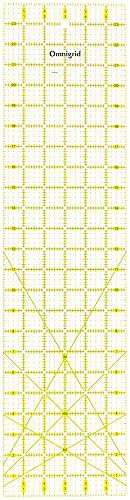
Omnigrid 6 x 24 Inch Ruler
Quilters rely on this acrylic ruler for long rotary cuts across yardage. Grid lines mark quarter-inch and eighth-inch increments, plus 30, 45, and 60 degree angle lines. Its 24-inch length spans a folded fabric width in a single pass.
Pros
- Long enough to cut fat quarters and yardage in one pass
- Angle lines simplify triangle and bias cutting
- Thick acrylic resists nicks from a rotary blade
Cons
- Six-inch width limits use on very wide fabric
- Bulkier to store than a tape measure or gauge

Dritz Sew-It-Yourself Seam Gauge
A sliding marker on this six-inch aluminum gauge locks at any measurement. Sewists check seam allowances, buttonhole spacing, and hem depth with one tool. Its small size fits inside a sewing basket or travel kit.
Pros
- Compact enough for a sewing kit or pocket
- Sliding marker holds a repeat measurement across multiple hems
- Metal body resists bending
Cons
- Six-inch length limits it to short spans
- Small printed scale is hard to read in dim light
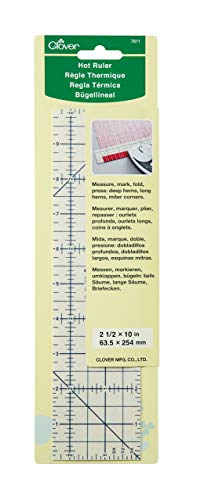
Clover Hot Hem Ruler
This aluminum ruler doubles as a pressing guide, since it withstands direct iron heat. A curved edge shapes rounded hems on sleeves and circle skirts. A sliding gauge along the straight edge marks consistent seam width before pressing.
Pros
- Heat-resistant surface allows ironing directly on the ruler
- Curved edge shapes rounded hems evenly
- Sliding gauge marks a consistent seam width
Cons
- Serves pressing tasks more than general measuring
- Costs more than a basic ruler of similar size

Fairgate 18-Inch French Curve Ruler
Pattern drafters trace armholes, necklines, and other curved seams with this ruler. Several curve radii run along one edge, and a straight inch scale runs along another. Clear plastic construction shows the fabric or paper pattern underneath.
Pros
- Multiple curve radii cover most garment pattern shapes
- Straight edge doubles as a standard ruler
- Durable plastic withstands repeated tracing
Cons
- Not intended for general fabric or body measuring
- Larger footprint makes it less portable than a tape
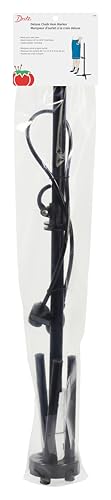
Dritz Skirt Marker
A weighted, adjustable stand holds this pin-style marker upright while a second person marks the hem. Spring-loaded pins release chalk or pins at a consistent height around the entire hem. Its stand adjusts to fit different skirt and dress lengths.
Pros
- Marks a level hemline without hand measuring
- Adjustable height suits different skirt and dress lengths
- Reusable for future alterations
Cons
- Works best with a second person operating it
- Takes up more storage space than a ruler or tape

Singer 60-Inch Sewing Tape Measure
This vinyl tape measure spans the same 60-inch range as pricier fiberglass versions. Dual inch and centimeter markings run along its full length. It folds flat for storage in a sewing box or drawer.
Pros
- Lower cost than fiberglass tape measures
- Flexible enough to wrap around curves easily
- Familiar Singer branding for sewing basics
Cons
- Vinyl stretches faster than fiberglass over time
- Printed numbers are smaller and harder to read in dim light
The lineup, side by side
| # | Model | Length | Best for | Score | Price |
|---|---|---|---|---|---|
| 1 | Dritz 9410 Tape Measure, 60-Inch | 60 inches (152 cm) | Best Overall | 9.4 | Check price |
| 2 | Omnigrid 6 x 24 Inch Ruler | 6 x 24 inches | Best for Quilting and Long Straight Cuts | 9.1 | Check price |
| 3 | Dritz Sew-It-Yourself Seam Gauge | 6 inches | Best for Seam Allowances and Hems | 8.9 | Check price |
| 4 | Clover Hot Hem Ruler | About 12 inches | Best for Pressing Curved Hems | 8.7 | Check price |
| 5 | Fairgate 18-Inch French Curve Ruler | 18 inches | Best for Pattern Drafting Curves | 8.5 | Check price |
| 6 | Dritz Skirt Marker | Pin-style hem marker with adjustable stand | Best for Hemming Skirts and Dresses | 8.2 | Check price |
| 7 | Singer 60-Inch Sewing Tape Measure | 60 inches | Best Budget Pick | 8.0 | Check price |
Questions worth asking
What is the best fabric measuring tool for beginners?
A 60-inch tape measure, such as the Dritz 9410, covers most beginner tasks like body and pattern measuring. It requires no setup and works for garment sewing, quilting, and craft projects alike.
How do I measure fabric accurately for sewing?
Lay the fabric flat before measuring to avoid stretching the numbers off. Use a rigid ruler for straight cuts and a flexible tape for curves or body measurements. Mark with chalk or a fabric pen rather than pins alone.
Which ruler is best for quilting, Omnigrid or a standard ruler?
A gridded acrylic ruler like the Omnigrid 6 x 24 inch works better for quilting than a standard wooden or metal ruler. Printed seam lines and angle marks speed up cutting strips and triangles for blocks.
Can a seam gauge replace a tape measure?
A seam gauge handles short, repeat measurements like hems and seam allowances well but cannot span a full body measurement. Most sewing kits keep both tools since each covers a different range.
Is a skirt marker worth buying for occasional sewing?
For a single hemming project, borrowing one may make more sense than buying. Frequent dressmakers or alteration hobbyists get more use from owning a pin-style marker like the Dritz model.
What is the difference between a hem gauge and a hot hem ruler?
A hem gauge, like the Dritz seam gauge, measures and marks fabric before sewing. A hot hem ruler, such as the Clover model, withstands ironing heat and shapes the hem during pressing.
How long should a sewing tape measure be?
60 inches suits most garment and craft sewing since it wraps around a full body or a wide piece of fabric. Shorter 45-inch tapes exist but limit use on larger projects.
What tool do pattern makers use to draft curved seams?
Pattern makers reach for a French curve ruler, such as the Fairgate 18-inch model, to draft armholes and necklines. Its multiple curve radii replace freehand sketching with a repeatable line.
Do you need both a tape measure and a ruler for sewing?
Yes, since each covers a different task. A tape measure wraps around curves and bodies, while a rigid ruler holds a straight edge for cutting and drafting. Most sewing kits keep at least one of each.
Our pick
No single tool measures everything a sewing project needs. A tape measure and a gridded ruler cover most everyday tasks, while a seam gauge, skirt marker, hot hem ruler, and French curve solve narrower problems. Matching the tool to the task, instead of buying one all-purpose option, delivers more accurate results.
Dana Whitfield
Dana spent eight years buying and merchandising for a regional kitchenware retailer before moving into editorial work. She has handled thousands of SKUs across cookware, small appliances and kitchen organization, and focuses on the practical differences that matter once a product is actually in daily use.


