Extension Cords That Match the Job, Not Just the Length
The Southwire 2308SW0002 is the best overall extension cord for most outdoor and garage use, built with a heavy enough gauge for real power tools. Contractors running demanding equipment should look at the US Wire 74050 instead, while light indoor use fits better with the AmazonBasics 16AWG cord.
The Southwire 2308SW0002 covers most outdoor power tool needs well, using a thick enough gauge to avoid the voltage drop that overheats thinner cords under load. It is not rated for the heaviest contractor-grade equipment, so anyone running demanding tools daily should choose the US Wire 74050 instead. Light indoor tasks, like running a lamp or charger, need far less cord than either of these, which is where the AmazonBasics 16AWG option fits.
Extension cords differ most in wire gauge, amperage capacity, and whether the jacket resists cold, sun, and moisture. We compared published gauge and amperage specs, insulation type, and owner feedback on jacket durability to match each cord to the right job.
The top picks, ranked

Southwire 2308SW0002 Outdoor Extension Cord
Southwire uses a 12 gauge wire in this cord, thick enough to minimize voltage drop when running power tools at a distance from the outlet. A bright orange jacket stays visible on a jobsite and resists cracking in cold weather better than basic vinyl. Molded plug ends add strength at the connection points most likely to fail first.
Pros
- 12 gauge wire handles power tools with minimal voltage drop
- Jacket resists cracking in cold outdoor conditions
- Molded plug ends add durability at failure-prone points
Cons
- Thicker gauge makes the cord heavier to carry
- Costs more than light duty indoor cords
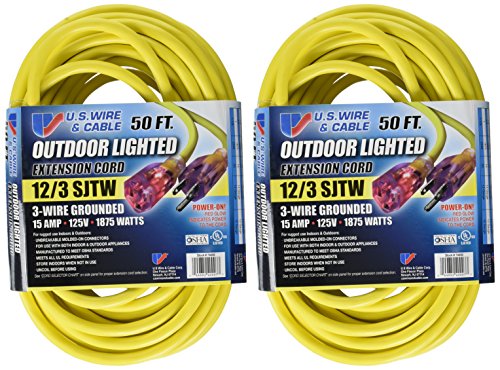
US Wire 74050 Heavy Duty Extension Cord
US Wire built this cord with a 10 gauge conductor, supporting higher amperage equipment that thinner cords would overheat under. A lighted plug end confirms power is flowing without needing to check the tool itself first. The jacket resists abrasion from being dragged across concrete or gravel on an active site.
Pros
- 10 gauge wire supports higher amperage equipment safely
- Lighted plug confirms power without checking the tool
- Jacket holds up to dragging across rough surfaces
Cons
- Heavier and bulkier than lighter gauge cords
- Overkill for small household appliance use

AmazonBasics 16 AWG Outdoor Extension Cord
This cord uses a lighter 16 gauge wire suited to lower amperage devices like lamps, fans, or small chargers rather than power tools. An outdoor rated jacket still resists light rain and sun exposure despite the lighter gauge. The lower cost makes it reasonable for anyone who just needs reach, not heavy load capacity.
Pros
- Lower cost for occasional light duty extension needs
- Still carries an outdoor weather resistant rating
- Lightweight and easy to coil and store
Cons
- Not rated for power tools or heavy equipment
- Thinner gauge risks overheating if overloaded

Clear Power CP10005 Extension Cord
Clear Power balances a mid gauge wire against a price below premium contractor brands, suiting moderate outdoor tasks. A triple tap plug end on some versions lets multiple devices run from one cord without a separate splitter. The jacket holds up reasonably well to sun exposure during seasonal outdoor projects.
Pros
- Reasonable gauge for moderate outdoor power needs
- Triple tap option powers multiple devices at once
- Lower cost than premium contractor grade cords
Cons
- Not rated as high as true heavy duty 10 gauge cords
- Jacket is less abrasion resistant than contractor options

Iron Forge Cable 25ft Extension Cord
Iron Forge Cable uses a 12 gauge wire sized for workshop tools like table saws and drill presses run at a moderate distance from the outlet. A lighted end helps confirm the circuit is live before starting a cut. The jacket stays flexible even after repeated coiling and uncoiling around a garage.
Pros
- 12 gauge wire suits common workshop power tools
- Lighted end confirms live power before use
- Stays flexible through repeated coiling in a garage
Cons
- Not rated for the heaviest contractor equipment
- Jacket is less rugged than true outdoor jobsite cords
Coleman Cable 02548 Contractor Grade Extension Cord
Coleman Cable built this cord to the specifications contractors expect on a daily commercial jobsite, using a thick 10 gauge wire. The jacket resists oil and chemical exposure better than standard vinyl, useful around vehicles and equipment. Reinforced strain relief at both ends reduces the chance of internal wire breakage from repeated bending.
Pros
- Thick 10 gauge wire handles heavy equipment reliably
- Jacket resists oil and chemical exposure well
- Reinforced strain relief reduces internal wire breakage
Cons
- Heavier and less flexible than lighter gauge cords
- More capacity than most homeowners actually need
DEWALT DXCE010025 Extension Cord
DEWALT sized this cord’s gauge specifically to match the amperage draw of common corded power tools without excessive voltage drop. A bright yellow jacket stands out clearly against dirt and debris on an active job. The cord stays functional in a wider temperature range than basic hardware store options.
Pros
- Gauge matched well to common power tool amperage draw
- High-visibility jacket is easy to spot on a jobsite
- Performs reliably across a wide temperature range
Cons
- Not the thickest gauge available for the heaviest equipment
- Costs more than basic big-box store cords
What matters most
What to look for in an extension cord Wire gauge, shown as a lower AWG number for a thicker wire, determines how much amperage a cord can carry without overheating. Matching cord length and gauge to the actual tool matters, since a long run of thin wire causes voltage drop that can damage motors. Outdoor rated jackets resist UV, cold, and moisture that would crack a basic indoor cord over time. A lighted plug end, found on several models here, offers a quick visual confirmation that power is flowing.
Extension cords for power tools and workshop use A 12 gauge cord, like the Southwire 2308SW0002 or Iron Forge Cable, covers most common power tools without significant voltage drop at typical workshop distances. The DEWALT DXCE010025 matches this same gauge specifically with power tool amperage draw in mind. Heavier equipment with higher amperage draw needs to step up to a 10 gauge cord instead.
Extension cords for contractor and heavy equipment use Daily commercial use calls for a 10 gauge cord like the US Wire 74050 or Coleman Cable 02548, both built to handle higher amperage without overheating. Jacket resistance to oil, chemicals, and abrasion matters more on a commercial site than it does in a home garage. Reinforced strain relief at the plug ends, found on the Coleman Cable model, reduces a common failure point under daily bending.
Extension cords for light household and indoor tasks A lighter 16 gauge cord, like the AmazonBasics option, handles lamps, chargers, and other low amperage devices without the bulk of a heavy duty cord. The Clear Power CP10005 splits the difference with a mid gauge wire, suiting moderate outdoor tasks like holiday lighting or a leaf blower. Never use a light duty cord for a power tool, since the thinner wire can overheat and become a fire risk under that load.
Side by side
| # | Model | Wire Gauge | Best for | Score | Price |
|---|---|---|---|---|---|
| 1 | Southwire 2308SW0002 Outdoor Extension Cord | 12 AWG | Best Overall | 9.0 | Check price |
| 2 | US Wire 74050 Heavy Duty Extension Cord | 10 AWG | Best Heavy Duty | 9.2 | Check price |
| 3 | AmazonBasics 16 AWG Outdoor Extension Cord | 16 AWG | Best Budget | 8.2 | Check price |
| 4 | Clear Power CP10005 Extension Cord | 14 AWG | Best Value Outdoor | 8.6 | Check price |
| 5 | Iron Forge Cable 25ft Extension Cord | 12 AWG | Best for Garage and Workshop | 8.7 | Check price |
| 6 | Coleman Cable 02548 Contractor Grade Extension Cord | 10 AWG | Best Contractor Grade | 9.1 | Check price |
| 7 | DEWALT DXCE010025 Extension Cord | 12 AWG | Best for Power Tools | 8.9 | Check price |
Frequently asked questions
What does AWG mean on an extension cord?
AWG stands for American Wire Gauge, and a lower number means a thicker wire capable of carrying more amperage without overheating.
What gauge extension cord do I need for power tools?
Most common power tools run safely on a 12 gauge cord like the Southwire 2308SW0002, though heavier equipment may need a 10 gauge cord instead.
Can an indoor extension cord be used outdoors?
No, outdoor rated cords use a jacket designed to resist UV, moisture, and cold that an indoor-only cord’s jacket is not built to handle.
Why does extension cord length affect performance?
Longer cords increase resistance, which causes voltage drop, and that drop becomes more significant on thinner gauge wire over longer distances.
What is a lighted end on an extension cord for?
It is a small indicator light, found on cords like the US Wire 74050 and Iron Forge Cable, that confirms the circuit is live before a tool is plugged in.
Is a 10 gauge extension cord overkill for home use?
For most homeowners, yes, since a 10 gauge cord like the Coleman Cable 02548 is built for contractor-grade equipment beyond typical household tool amperage.
How do I know if an extension cord is overloaded?
A cord that feels warm to the touch during use is a warning sign, and running a device beyond the cord’s rated amperage risks overheating and fire.
Can extension cords be left outside permanently?
No, even outdoor rated cords should be stored indoors when not in use to extend the jacket’s resistance to sun and moisture damage over time.
What is strain relief on an extension cord plug?
It is reinforced material at the plug end, found on cords like the Coleman Cable 02548, that reduces internal wire breakage from repeated bending near the connector.
Does extension cord color matter beyond appearance?
Bright colors like orange or yellow, used on several cords here, improve visibility on a jobsite, reducing the chance of a trip hazard or accidental cut.
Our take
The Southwire 2308SW0002 remains the strongest overall pick for most outdoor and power tool use, with a gauge that avoids voltage drop under real load. Contractors running heavier daily equipment should choose the US Wire 74050 or Coleman Cable 02548 instead, for their thicker 10 gauge wire. Anyone powering light indoor devices gets more practical value from the simpler AmazonBasics 16AWG cord.
Jake Monroe
Jake worked as a residential contractor for over a decade before shifting to full-time writing. He evaluates power tools, hand tools and workshop gear through the lens of someone who has actually used them on job sites, not just read the box.


