An Exercise Mat for Every Floor and Workout Style
Manduka PRO suits anyone wanting a long-lasting mat that resists compression over years of use. Liforme fits yoga practitioners wanting printed alignment guides. Gorilla Mats Premium Large works for home gyms needing full floor coverage under heavier equipment.
Manduka’s PRO uses a dense, closed-cell PVC that resists the compression and wear that thinner mats develop within a year, which explains its reputation among long-term yoga practitioners despite a higher cost. Liforme shifts the focus toward alignment, printing guide lines directly onto the mat surface to help with pose positioning. Gorilla Mats’ Premium Large Exercise Mat solves an entirely different problem, covering enough floor area to protect hardwood under a full home gym setup rather than a single yoga practice.
Exercise mats differ mainly in material, thickness and surface texture, and a mat built for gentle yoga stretches differently under a dropped kettlebell than one built for home gym flooring. We compared material, thickness, surface grip and intended use before ranking these seven.
How to pick the right one
What to look for in an exercise mat Material drives durability and feel, with closed-cell PVC and natural rubber generally outlasting basic foam. Thickness affects comfort under joints but trades off against stability for balance-focused poses. Surface texture and intended use, whether yoga, high-impact training or home gym flooring protection, should narrow the choice further.
Yoga mats versus home gym floor mats A yoga mat like the Manduka PRO or Liforme focuses on grip and cushioning for poses and stretching, sized for one person’s practice area. A home gym mat like the Gorilla Mats Premium Large instead prioritizes covering a wider floor area to protect flooring under equipment, with less emphasis on the softer feel yoga requires.
Thickness and its tradeoffs A thicker mat, like the Gaiam Essentials or ProsourceFit puzzle tiles, cushions knees and joints better but can feel less stable during balance poses that need firm ground contact. A thinner mat, like the Liforme at 4.2mm, offers more stability for standing poses at the cost of some joint comfort during floor work.
Matching material to workout intensity Natural rubber mats like the Liforme and Lululemon option grip well without synthetic feel but wear differently than closed-cell PVC like the Manduka PRO under heavy daily use. High-impact training benefits more from the dense EVA foam tiles in the ProsourceFit mat, which absorb repeated jumping and bodyweight movement better than a standard yoga mat.
The best picks, ranked

Manduka PRO Yoga Mat
Manduka’s PRO uses a closed-cell PVC construction dense enough to resist the compression marks and wear that thinner mats develop within months of regular use. The surface grips better the longer a session runs, as body heat and light moisture improve traction. It carries one of the longest warranty periods in the category, reflecting the brand’s confidence in its lifespan.
Pros
- Resists compression and wear far longer than thinner mats
- Surface grip improves during a sweaty session
- Long warranty reflects genuine build quality
Cons
- Heavier and less portable than thinner travel mats
- Costs more upfront than basic foam mats

Liforme Yoga Mat
Liforme prints subtle alignment guide lines directly onto the mat surface, helping practitioners position hands and feet consistently across poses without guessing. The natural rubber base grips well without the synthetic feel of a PVC mat. It suits practitioners working on form and alignment more than those needing maximum floor protection for other workouts.
Pros
- Printed alignment guides help with consistent pose positioning
- Natural rubber base grips well during practice
- Polyurethane top layer resists moisture buildup
Cons
- Thinner cushioning than mats built for floor exercises
- Higher cost than standard PVC yoga mats

BalanceFrom GoYoga All-Purpose Mat
BalanceFrom’s GoYoga uses NBR foam, a lower-cost material that still provides reasonable cushioning for yoga, stretching and light floor exercises. It comes with a carrying strap, making it easier to transport than the heavier Manduka PRO. The lower price makes it an easy starting point for anyone unsure how often they will actually use a mat.
Pros
- Low cost entry point for casual or occasional use
- Includes a carrying strap for portability
- Reasonable cushioning for yoga and light stretching
Cons
- Less durable long-term than closed-cell PVC mats
- Thicker foam compresses faster under regular use

Gorilla Mats Premium Large Exercise Mat
Gorilla Mats sizes the Premium Large Exercise Mat well beyond a standard yoga mat’s footprint, covering enough floor area to protect hardwood or tile under a squat rack, bench or dropped dumbbells. Dense material resists denting under heavier equipment better than a folded yoga mat would. It suits a dedicated home gym corner more than portable yoga practice.
Pros
- Large size protects a full equipment area, not just one spot
- Dense material resists denting under heavier gear
- Easier to clean than carpet under home gym equipment
Cons
- Too large and heavy for portable yoga use
- Thinner cushioning than a dedicated yoga mat

ProsourceFit Extra Thick Puzzle Exercise Mat
ProsourceFit’s puzzle mat uses interlocking EVA foam tiles that fit together to cover an irregular room shape, unlike a single fixed-size mat. The extra thickness absorbs impact from jumping or high-intensity floor exercises better than a standard yoga mat. Tiles can be added or removed individually, which a one-piece mat cannot offer.
Pros
- Interlocking tiles fit irregular room shapes
- Extra thickness cushions high-impact movements well
- Individual tiles can be replaced if damaged
Cons
- Seams between tiles can shift under heavy equipment
- Less suited to yoga poses needing a single flat surface
Gaiam Essentials Thick Yoga Mat
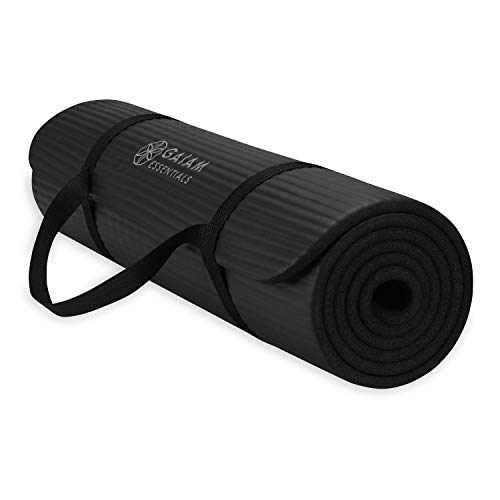
Gaiam’s Essentials Thick mat adds extra cushioning compared to a standard thin yoga mat, which makes beginners more comfortable with a softer surface under knees and hips. It costs less than premium rubber or PVC options while still covering basic yoga and stretching needs. The tradeoff is less long-term durability than the Manduka PRO under daily use.
Pros
- Extra cushioning comforts knees and hips
- Low cost for beginners testing out a yoga practice
- Lightweight and easy to roll up for storage
Cons
- Less durable than denser PVC or rubber mats
- Grip weakens faster during sweaty sessions
Lululemon The Mat 5mm
Lululemon’s The Mat pairs a natural rubber base for grip with a softer top layer for cushioning, aiming for a studio-quality feel at home. It sits at a middle thickness that suits both yoga and light floor exercises without feeling as thin as a travel mat or as bulky as the Gorilla Mats option. The design targets practitioners who want one versatile mat rather than separate mats for separate workouts.
Pros
- Natural rubber base grips well on most floor types
- Balanced thickness suits yoga and general exercises
- Moisture-resistant top layer handles sweat well
Cons
- Costs more than basic foam yoga mats
- Natural rubber base carries a noticeable rubber smell at first
How they compare
| # | Model | Material | Best for | Score | Price |
|---|---|---|---|---|---|
| 1 | Manduka PRO Yoga Mat | Closed-cell PVC | Best for long-term durability | 9.1 | Check price |
| 2 | Liforme Yoga Mat | Natural rubber with polyurethane top | Best for alignment-focused practice | 8.9 | Check price |
| 3 | BalanceFrom GoYoga All-Purpose Mat | NBR foam | Best value all-purpose mat | 8.3 | Check price |
| 4 | Gorilla Mats Premium Large Exercise Mat | Dense rubber-foam composite | Best for full home gym floor coverage | 8.8 | Check price |
| 5 | ProsourceFit Extra Thick Puzzle Exercise Mat | EVA foam, interlocking tiles | Best for high-impact floor protection | 8.5 | Check price |
| 6 | Gaiam Essentials Thick Yoga Mat | NBR foam | Best budget beginner yoga mat | 8.0 | Check price |
| 7 | Lululemon The Mat 5mm | Natural rubber base, polyurethane top | Best for studio-style grip and cushioning | 8.7 | Check price |
Questions worth asking
What thickness is best for a yoga mat?
Most yoga mats range from about 3mm to 6mm, with thinner mats offering more stability for standing poses and thicker mats offering more cushioning for floor work and joints.
Is PVC or natural rubber better for an exercise mat?
PVC mats like the Manduka PRO tend to resist compression longer under heavy daily use, while natural rubber mats like the Liforme offer a more natural grip without synthetic materials.
Can a yoga mat protect flooring under home gym equipment?
A standard yoga mat is too thin and small to protect flooring under heavier equipment, which is why a larger format mat like the Gorilla Mats Premium Large exists specifically for that purpose.
What are interlocking puzzle exercise mats good for?
Interlocking foam tiles, like the ProsourceFit mat, work well for high-impact floor exercises and fit irregular room shapes better than a single fixed-size mat.
How often should an exercise mat be replaced?
A mat used daily for intense workouts may need replacement within a year or two as cushioning compresses, while a less frequently used mat can last several years.
Why do some yoga mats have printed lines on them?
Printed alignment guides, like on the Liforme, help practitioners position their hands and feet consistently across different poses without having to guess placement.
Does a thicker mat always mean more comfort?
Not always, since a very thick mat can feel less stable during standing balance poses even though it cushions joints better during floor work.
How do I clean a rubber or foam exercise mat?
Most mats can be wiped down with a mild soap and water solution or a dedicated mat cleaner, then air dried fully before rolling up to prevent mildew.
The verdict
The Manduka PRO remains the strongest long-term choice for a dedicated yoga practice, given its resistance to compression and grip that improves during use. Practitioners focused on alignment and form should choose the Liforme instead, since its printed guide lines solve a different problem entirely. Anyone building a home gym corner rather than a yoga space should skip both and go with the Gorilla Mats Premium Large for proper floor coverage.
Derek Holt
Derek has a background coaching recreational and amateur athletes and has worked the sales floor at specialty fitness retailers. He focuses on equipment durability, ergonomics and realistic use cases rather than marketing claims.