Ethnic Wear Brands Worth Adding to Your Wardrobe
The Libas Women’s Cotton Kurta Set leads this list for its breathable fabric and everyday fit at an accessible price. Buyers wanting a festive statement piece should choose the Biba printed kurta instead, while anyone wanting a complete matched set fits better with the Anouk kurta set.
Libas’ Women’s Cotton Kurta Set leads this list because its breathable cotton fabric suits daily wear in warm climates better than the heavier festive fabrics below. Its main limitation is a plainer print selection than dedicated festive brands, which matters for buyers shopping specifically for occasions. The rest of this list covers festive, matched-set and layered styles for different wardrobe needs.
We compared listed fabric content, print style and set composition across each piece rather than trying them on in person.
How to pick the right one
What to look for in ethnic wear Fabric determines comfort in different climates, with pure cotton staying breathable and blends like rayon or cotton-silk adding drape or sheen. Set composition varies from a single kurti to a full three-piece set with bottom and dupatta, which affects how much coordinating is needed. Print and detailing should match the occasion, since festive prints suit celebrations better than daily errands. Fit style, from loose straight cuts to fitted contemporary silhouettes, should match personal comfort and body type.
Everyday cotton versus festive statement pieces Libas and Sojanya both focus on breathable cotton suited to daily wear, while Biba leans into bold festive prints meant for celebrations. Buyers building a daily wardrobe should prioritize the cotton-focused options, while those shopping for a specific occasion fit better with Biba’s detailed festive kurtas. Rangriti sits between the two with simple prints at a lower price.
Complete sets versus mix-and-match pieces Anouk’s three-piece set and Indo Era’s layered set both include more coordinated pieces than Sojanya’s standalone kurti or Biba’s kurta-only option. Complete sets suit buyers who want a ready-to-wear outfit without extra coordination. Standalone pieces instead suit buyers who already own bottoms or dupattas and want to mix new tops into an existing wardrobe.
Traditional cuts versus contemporary styling W for Woman’s contemporary, fitted silhouettes stand apart from the traditional straight cuts used by Libas and Rangriti. Contemporary cuts suit work or semi-formal settings where a modern look fits better than a loose traditional kurta. Traditional straight cuts remain more universally comfortable across body types and daily activities.
The best picks, ranked

Libas Women’s Cotton Kurta Set
Pure cotton fabric keeps this set breathable for all-day wear, a priority for buyers in warmer climates. The set typically pairs a kurta with matching bottoms, cutting down on the need to shop separately for coordinating pieces. Libas has built its catalog specifically around accessible, everyday cotton ethnic wear rather than heavier festive fabrics.
Pros
- Breathable cotton suits daily wear in warm weather
- Matched set removes the need to coordinate pieces separately
- Accessible price point compared to festive-focused brands
Cons
- Simpler prints than dedicated festive wear brands
- Less structured fit than tailored ethnic wear pieces
Anouk Women’s Kurta Set
Anouk coordinates kurta, bottom and dupatta as a full three-piece set, more complete than Libas’ two-piece kurta and bottom combination above. A rayon or viscose blend gives the fabric more drape than pure cotton. Anouk, part of the Myntra-owned house of brands, focuses specifically on complete ready-to-wear ethnic sets.
Pros
- Three-piece set includes a coordinated dupatta
- Rayon or viscose blend drapes more than plain cotton
- Suits both casual outings and semi-festive occasions
Cons
- Blended fabric runs warmer than pure cotton in hot weather
- Dupatta adds an extra piece to manage and style

Indo Era Women’s Kurta Set
Indo Era’s sets often include a jacket or shrug layered over the main kurta, a styling detail not found in the simpler Libas or Anouk sets. The layered piece adds visual depth without requiring a separate purchase. Indo Era focuses its line on fusion styling that blends traditional kurta shapes with contemporary layering.
Pros
- Layered jacket piece adds depth without a separate purchase
- Fusion styling suits buyers who want a modern ethnic look
- Set composition offers more pieces than basic two-piece kurta sets
Cons
- Extra jacket layer adds warmth, less ideal in hot climates
- Fusion styling may feel less traditional than classic kurta sets

Biba Printed Kurta
Biba’s printed kurtas lean toward bolder, more detailed prints suited to festive occasions rather than daily wear. The brand often uses a straight-cut silhouette with detailed hemlines or embroidery accents. Biba has built decades of recognition specifically around festive and occasion-focused ethnic wear in its home market.
Pros
- Bolder festive prints stand out from everyday cotton sets
- Recognized brand name adds trust for occasion wear
- Detailed hemlines add visual interest beyond basic kurtas
Cons
- Bottoms sold separately, unlike the complete sets above
- Detailed prints suit festive occasions more than daily wear
Rangriti Women’s Kurta Set
Rangriti keeps its kurta sets priced below the Anouk and Indo Era options above while still including a matching bottom. A straightforward cotton blend and simple print selection reflect its focus on affordability over festive detailing. Rangriti markets itself as an accessible entry point into ethnic wear for younger buyers.
Pros
- Costs less than the layered or three-piece sets above
- Matching bottom included without needing a separate purchase
- Simple prints suit a younger, casual wardrobe
Cons
- Fewer festive or detailed print options than Biba
- Fabric feels less substantial than pure cotton alternatives
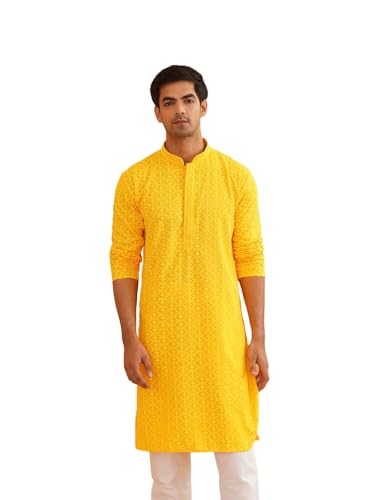
Sojanya Cotton Kurti
A single-piece kurti without a matching bottom or dupatta keeps this option simpler than the full sets above, letting buyers pair it with existing bottoms. Sojanya focuses on solid colors and subtle prints rather than bold festive patterns. The brand built its catalog specifically around minimalist, mix-and-match kurtis.
Pros
- Single-piece design pairs easily with existing bottoms
- Solid colors and subtle prints suit a minimalist wardrobe
- Pure cotton stays breathable for daily wear
Cons
- No matching bottom or dupatta included
- Lacks the statement styling of festive-focused brands

W for Woman Kurta Set
W for Woman favors more contemporary cuts, including asymmetric hems and fitted silhouettes, compared to the traditional straight cuts of Libas or Rangriti. A cotton-silk blend gives the fabric a slightly dressier sheen than plain cotton. The brand targets buyers who want ethnic wear styled closer to contemporary fashion trends.
Pros
- Contemporary cuts suit buyers wanting a modern ethnic silhouette
- Cotton-silk blend adds a dressier sheen than plain cotton
- Works well for work or semi-formal settings
Cons
- Fitted silhouettes fit a narrower body range than loose kurtas
- Costs more than Rangriti’s budget-focused sets
Side by side
| # | Model | Fabric | Best for | Score | Price |
|---|---|---|---|---|---|
| 1 | Libas Women’s Cotton Kurta Set | Pure cotton | Best Overall | 8.9 | Check price |
| 2 | Anouk Women’s Kurta Set | Rayon or viscose blend | Best Matched Set | 8.7 | Check price |
| 3 | Indo Era Women’s Kurta Set | Cotton or rayon blend | Best for Layered Styling | 8.5 | Check price |
| 4 | Biba Printed Kurta | Cotton or crepe, print dependent | Best Festive Statement | 8.6 | Check price |
| 5 | Rangriti Women’s Kurta Set | Cotton blend | Best Value | 8.2 | Check price |
| 6 | Sojanya Cotton Kurti | Pure cotton | Best for Minimalist Everyday Wear | 8.3 | Check price |
| 7 | W for Woman Kurta Set | Cotton-silk blend | Best for Contemporary Cuts | 8.4 | Check price |
Questions worth asking
Which ethnic wear brand is best for everyday use?
Libas’ Women’s Cotton Kurta Set uses breathable cotton and a matched bottom suited to daily wear.
What is included in a typical ethnic wear set?
Sets vary from a single kurti, as with Sojanya, to a full three-piece kurta, bottom and dupatta set, as with Anouk.
Which brand focuses on festive or occasion wear?
Biba’s printed kurtas lean toward bolder, detailed prints built specifically for festive occasions.
Is cotton or a blended fabric better for ethnic wear?
Pure cotton, used by Libas and Sojanya, stays more breathable in warm weather, while blends like rayon or cotton-silk, used by Anouk and W for Woman, add more drape or sheen.
Which kurta set includes a layering piece?
Indo Era’s kurta sets often include a jacket or shrug layered over the main kurta for added styling depth.
What is the most budget-friendly ethnic wear set on this list?
Rangriti’s Women’s Kurta Set costs less than the layered or three-piece options above while still including a matching bottom.
Does Sojanya’s kurti come with matching bottoms?
No, it ships as a single kurti piece meant to pair with bottoms already in the buyer’s wardrobe.
Which brand offers a more contemporary or modern cut?
W for Woman favors contemporary cuts, including asymmetric hems and fitted silhouettes, over traditional straight cuts.
Are these kurta sets suitable for work settings?
W for Woman’s contemporary cuts and Libas’ simple cotton sets both suit work or semi-formal settings better than heavily embellished festive pieces.
The bottom line
For most buyers who want a comfortable everyday option, Libas’ Women’s Cotton Kurta Set is the strongest overall pick thanks to its breathable fabric and matched bottom. Anyone shopping specifically for a festive occasion should choose Biba’s printed kurta instead, since its detailed prints suit celebrations better than everyday cotton. Buyers wanting a complete ready-to-wear outfit without extra coordination should go with Anouk’s three-piece kurta set.
Priya Nathan
Priya spent years in apparel buying and merchandising for a multi-brand retailer before moving into editorial work. She focuses on fit, fabric and construction quality across everyday wear, activewear and accessories, reading past marketing copy to the details that affect how a garment actually wears and holds up.


