5 Energy Gels That Keep Marathon Runners Fueled
Maurten Gel 100 leads for high carbohydrate intake, thanks to its hydrogel format and neutral taste. GU Energy Original remains the most practical everyday gel with the widest flavor range. SIS GO Isotonic is the pick for runners who cannot take gels with water.
Maurten Gel 100 suits a plan that calls for high carbohydrate intake over several hours. GU Energy Original is the versatile everyday gel that fits most training. SIS GO Isotonic answers for runners who find thick gels hard to swallow without a drink.
A gel’s carbohydrate count says little about how a stomach will handle it at race pace, and what works for one athlete causes cramping in another. We compared carbohydrate content, sugar ratios, texture, water requirements, caffeine variants and packet design, alongside what endurance athletes report about tolerance during long efforts. Nutrition needs vary, so treat this as a starting point rather than individual advice.
The shortlist, ranked

Maurten Gel 100
Maurten encapsulates carbohydrate in a hydrogel that forms in the stomach, letting athletes tolerate higher hourly intakes than conventional gels allow. Its taste sits almost neutral, which becomes a real advantage past hour three. Cost runs highest here, and the unusual jelly-like texture divides opinion.
Pros
- Supports higher hourly carbohydrate intake
- Neutral taste avoids flavour fatigue
- Widely used at elite level in marathons
Cons
- Most expensive gel in this group
- Unusual jelly like texture divides opinion

GU Energy Original Sports Nutrition Energy Gel
Most runners meet this gel first, thanks to a huge flavour range, caffeine and non-caffeine options, and near-universal availability. Texture runs thicker than isotonic gels, so it wants water alongside. Sodium, potassium and amino acids add a genuine convenience on long efforts.
Pros
- Very wide flavour and caffeine selection
- Stocked almost everywhere including race expos
- Litter tab stays attached to the packet
Cons
- Thick texture needs water
- Sweetness can become cloying over long races
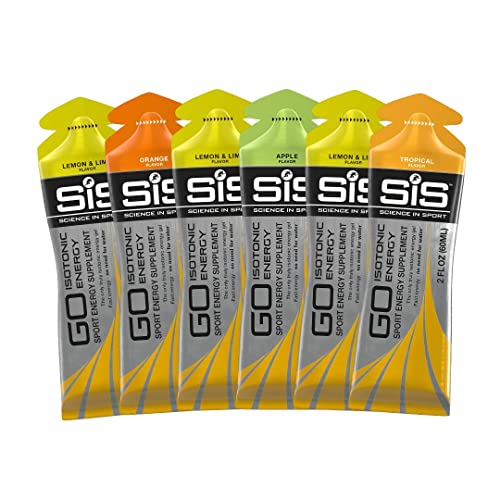
SIS GO Isotonic Energy Gel
Isotonic formulation means this gel goes down without a drink, useful on a bike where reaching for a bottle at the wrong moment gets awkward. Consistency runs thinner than conventional gels and slips down easily. Packets grow bulkier as a tradeoff for the added fluid.
Pros
- Genuinely works without drinking water
- Easy to swallow at pace
- Mild flavours avoid palate fatigue
Cons
- Bulkier packets for the same carbs
- Lower carbohydrate density per gram carried

Precision Fuel and Hydration PF 30 Gel
Thirty grams of carbohydrate per gel in a two to one glucose to fructose ratio means fewer packets to open on a high-intake fuelling plan. Texture stays smooth and mild rather than intensely sweet. A stomach untrained for that dose is the most common cause of trouble here.
Pros
- Highest carbohydrate per packet here
- Dual source ratio supports higher absorption
- Not overly sweet
Cons
- Large dose needs a trained stomach
- Fewer stockists than the big brands

Honey Stinger Organic Energy Gel
Organic honey replaces the maltodextrin syrup base here, appealing to athletes who prefer recognisable ingredients and find synthetic gels sit heavily. Flavour reads noticeably more natural, less chemical. Honey runs thicker and stickier than typical gel bases, so it needs water and can turn messy if left half finished.
Pros
- Simple recognisable ingredients
- More natural flavour than syrup based gels
- Available with caffeine in some flavours
Cons
- Sticky texture is messy if not finished
- Thicker consistency requires water
Clif Shot Energy Gel
This dependable organic gel costs less per unit than specialist options and turns up in most sports shops. A litter leash design keeps the torn tab attached, which race organisers appreciate. Flavours lean sweet and texture runs thick, so plan on a mouthful of water after each one.
Pros
- Good value per gel
- Wide caffeine range including strong options
- Attached tab reduces course litter
Cons
- Thick and sweet, needs water
- Flavours can be intense late in a race

Huma Chia Energy Gel
Real fruit and ground chia seeds give this gel a texture closer to a thin puree than a syrup, which athletes with a history of stomach trouble often find easier to handle. Chia adds a small amount of fibre and slower-release carbohydrate. Fibre during hard efforts does not suit everyone, so test it in training first.
Pros
- Gentle on stomachs that reject syrup gels
- Real fruit flavour without artificial sweetness
- Dual carbohydrate sources for absorption
Cons
- Seed texture is off putting for some
- Fibre content does not suit every athlete
Side by side
| # | Model | Carbohydrate | Best for | Score | Price |
|---|---|---|---|---|---|
| 1 | Maurten Gel 100 | 25g per gel | Best overall | 9.4 | Check price |
| 2 | GU Energy Original Sports Nutrition Energy Gel | 22g per gel | Best for everyday training | 9.2 | Check price |
| 3 | SIS GO Isotonic Energy Gel | 22g per gel | Best without water | 9.0 | Check price |
| 4 | Precision Fuel and Hydration PF 30 Gel | 30g per gel | Best for high intake plans | 8.8 | Check price |
| 5 | Honey Stinger Organic Energy Gel | 24g per gel | Best natural option | 8.6 | Check price |
| 6 | Clif Shot Energy Gel | 24g per gel | Best value | 8.3 | Check price |
| 7 | Huma Chia Energy Gel | 21g per gel | Best for sensitive stomachs | 8.0 | Check price |
What matters most
How to work out your carbohydrate target per hour General endurance guidance sits between thirty and sixty grams of carbohydrate an hour for efforts over ninety minutes, with trained athletes on dual-source products going higher. Once a target is set, gel choice becomes arithmetic, since a twenty two gram gel and a thirty gram gel need different frequencies to hit the same number. Building intake gradually over weeks of training beats attempting a high dose for the first time on race day.
Why glucose to fructose ratios matter Glucose and fructose absorb through different transporters in the gut, which is why products using both can deliver more carbohydrate per hour before the gut becomes the limiting factor. Ratios around two to one glucose to fructose are the common formulation, with some newer products going closer to one to one for very high intakes. A gel that seems to sit unabsorbed is a sign to try a dual-source product.
Which gels need water and which do not Concentrated gels draw fluid into the gut as they dilute, which is why taking them without water often causes discomfort. Isotonic gels arrive pre-diluted and go down alone, at the cost of a bulkier packet. On a bike with two bottles, concentrated gels work efficiently. Between water stops on a trail run, an isotonic gel or a soft flask often serves better.
Why practising fuelling before race day matters The most common fuelling failure is not choosing the wrong gel, it is using a new gel for the first time during an event. Repeated exposure trains the gut to handle carbohydrate intake, so long training sessions should rehearse the exact products, timing and volumes planned for race day. Caffeine content deserves the same testing, since a strong caffeine gel late in a race affects people very differently. Anyone with a medical condition or on medication should discuss high carbohydrate fuelling with a qualified professional first.
Good to know
How many energy gels should I take during a marathon?
Most plans work out at one gel every twenty to forty minutes after the first hour, landing between four and eight gels for a marathon. The right number depends on hourly carbohydrate target and finishing time, and it should be rehearsed in training.
Do I need water with an energy gel?
Concentrated gels need water to dilute for comfortable absorption. Isotonic gels such as SIS GO are formulated to go down without water, which is why they carry a bulkier packet for the same carbohydrate content.
When should I take my first gel during a race?
Common practice is thirty to forty five minutes into an effort, ahead of any drop in energy. Waiting until you feel empty is too late, since absorption takes time and steady topping up works far better than reacting.
Are caffeinated gels better than non-caffeinated ones?
Caffeine can reduce perceived effort and sees wide use in endurance racing, but tolerance varies enormously and it can upset stomachs. A sensible approach uses non-caffeinated gels early and saves caffeine for later stages, after testing the response in training.
Why do energy gels upset my stomach?
Usually a combination of concentration, insufficient water and a gut untrained for that intake. Switching to a dual-source or isotonic product, adding more fluid alongside, and building intake gradually over weeks resolves it for most people.
What is the difference between energy gels and chews?
Chews deliver similar carbohydrate in solid form, taken in small portions, which suits cycling and slower running better. Gels go down faster and work better at high running paces where chewing gets difficult. Many athletes use both across a long event.
Do energy gels expire?
Yes, they carry a best-before date, typically a year or two out. Past that date the carbohydrate remains, but texture, flavour and packet seal reliability degrade. Check dates on gels bought in bulk before a race.
Can I use energy gels for everyday exercise?
For sessions under about an hour they are generally unnecessary, since stored glycogen covers the effort. They earn their place on long runs, rides and races, or during back-to-back training days with limited recovery.
Which energy gel is best for a sensitive stomach?
Huma Chia Energy Gel uses real fruit and a thinner puree texture that many athletes with stomach trouble tolerate better than syrup-based gels. SIS GO Isotonic is a second option for anyone who reacts badly to thick, concentrated formulas.
Maurten vs GU: which energy gel should I use?
Maurten Gel 100 suits high hourly carbohydrate targets and a neutral taste over long races. GU Energy Original costs less, comes in far more flavours, and works fine for most training runs and shorter events.
Our take
Maurten Gel 100 earns its cost when the goal is a high carbohydrate intake across a long race. GU Energy Original stays the sensible default for everyday training, since it is proven, widely available and comes in enough variants to suit most athletes. SIS GO Isotonic earns its place for anyone who cannot reliably take gels with water.
Derek Holt
Derek has a background coaching recreational and amateur athletes and has worked the sales floor at specialty fitness retailers. He focuses on equipment durability, ergonomics and realistic use cases rather than marketing claims.
You might also need

Core Products Soft Foam Neck Brace: Gentle Support for $16.49?

Why Does a Punching Bag Need to Be the Right Weight for Your Size?

Why Does a Jump Rope’s Weight Change the Workout Difficulty?
