What Makes an Emergency Whistle Loud Enough to Be Heard?
The Fox 40 Classic stays the dependable pick with a pealess, freeze-resistant design, the HyperWhistle reaches the loudest output for open terrain, and the SOL Slim Rescue Howler wins on everyday portability. Loudness matters less than reliability and how likely you are to actually carry it.
Most people should default to the Fox 40 Classic, since its pealess design will not jam when wet or cold. The HyperWhistle goes louder for open terrain, and the SOL Slim Rescue Howler is the one small enough to actually carry every day.
Grabbing the loudest whistle on the shelf is not the safest choice, since pealess reliability, size, and weather resistance decide whether it works when you actually need it. We compared these seven whistles on manufacturer-rated loudness, freeze-proof construction, portability, and durability, then checked what owners report after real field use.
The best picks, ranked

Fox 40 Classic Official Whistle
No cork pea sits inside the Fox 40 Classic, so nothing can stick or freeze when the whistle gets wet or cold. Three internal chambers produce a piercing tone that carries across background noise. Referees and rescue teams both rely on it, making it the benchmark most rivals get measured against.
Pros
- Pealess design never jams or freezes
- Piercing tone cuts through background noise
- Trusted widely across referees and rescuers
Cons
- Not the loudest whistle on this list
- Lanyard sold separately on some packs

HyperWhistle The Original
Raw output defines the HyperWhistle, which the maker rates far above a standard whistle for reaching across open ground. Multiple internal chambers and directional tone shape help the sound travel further. Its larger size trades pocketability for sheer carrying distance.
Pros
- Extremely loud across open terrain
- Pealess construction resists jamming
- Sound carries an unusually long distance
Cons
- Bulkier than everyday-carry whistles
- Too loud for close-quarters use
Storm All-Weather Safety Whistle
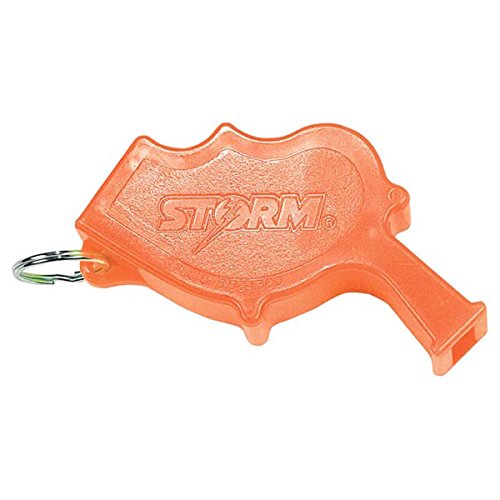
Boaters and paddlers favor the Storm because it stays loud even soaked or briefly underwater. A wide, flat chamber produces a low, powerful tone built to travel over open water. Wettest conditions are exactly where owners report reaching for this one first.
Pros
- Stays loud even when fully soaked
- Low tone carries well over water
- Rugged, all-weather build quality
Cons
- Flat shape sits larger in a pocket
- Tone runs lower than piercing whistles

SOL Slim Rescue Howler Whistle
Flat and featherweight, the Slim Rescue Howler slips into a wallet, pocket, or pack strap unnoticed. Its pealess build still produces a surprisingly loud tone for backup signaling despite the small size. Hikers and travelers often clip one to a zipper pull so it stays on hand at all times.
Pros
- Extremely light and easy to pack
- Pealess and dependably loud for its size
- Clips onto almost anything
Cons
- Quieter than full-size whistles
- Small size makes it easy to misplace

Vargo Titanium Emergency Whistle
Corrosion-proof titanium gives this whistle a compact, flat shape that gram-counting backpackers appreciate. Rough handling and years of use leave it largely unaffected. Higher cost buys a no-pea whistle durable enough to forget about in a kit until it is actually needed.
Pros
- Corrosion-proof titanium body
- Light and easy to pocket
- Built to last for years of use
Cons
- Costs more for the material
- Not the loudest option here

Windstorm Safety Whistle
An open-barrel design channels air for a powerful, penetrating blast on the Windstorm, which the maker says carries a long way, including over water. Its unusual shape is the reason for that reach. Maximum distance matters more here than fitting neatly in a pocket.
Pros
- Carries sound over long distances
- Performs well over open water
- Powerful, penetrating blast
Cons
- Bulky open-barrel shape
- Awkward to carry in a pocket

LuxoGear Emergency Whistles
A two-pack of aluminum whistles with lanyards lets one household outfit multiple kits or bags at once from LuxoGear. Each whistle stays pealess, light, and loud enough for reliable signaling. Outfitting several bags at once is where the multi-pack pricing pays off most.
Pros
- Two whistles and lanyards included
- Pealess and reliably loud
- Strong price per whistle
Cons
- Falls short of the loudest performers here
- Metal body feels cold in winter
What to look for
Why a pealess design should be non-negotiable Traditional whistles rely on a small cork or plastic pea that can swell, stick, or freeze, exactly when reliability matters most. Pealess whistles use shaped chambers instead, so they sound consistently wet or cold. For any emergency use, this is the single feature worth insisting on.
How loudness and tone work together A higher decibel rating helps a signal carry farther, but pitch also decides how well sound travels and through what. High, piercing tones cut through general background noise, while lower tones carry better across open water. Match the tone to where you will actually use it instead of chasing the biggest number alone.
Best emergency whistle for everyday carry vs open terrain A small, quiet whistle you actually carry beats a loud one left in a drawer. Ultralight flat whistles like the SOL Slim Rescue Howler clip to a zipper or ride in a wallet unnoticed. Larger high-output whistles like the HyperWhistle reach farther across open ground but get left behind more often, so many people carry one of each.
Where to attach it so it is reachable in a hurry A whistle buried in a bag helps nobody during a panic. Clip it to a lanyard, a pack strap, or a life jacket where cold hands can still grab it fast. On the water, securing a whistle to a PFD is standard practice and often required, so plan the attachment as carefully as the whistle itself.
The lineup, side by side
| # | Model | Design | Best for | Score | Price |
|---|---|---|---|---|---|
| 1 | Fox 40 Classic Official Whistle | Pealess three-chamber | Best overall | 9.4 | Check price |
| 2 | HyperWhistle The Original | Pealess multi-chamber | Best for maximum volume | 9.1 | Check price |
| 3 | Storm All-Weather Safety Whistle | Pealess flat-chamber | Best for wet conditions | 8.9 | Check price |
| 4 | SOL Slim Rescue Howler Whistle | Pealess flat profile | Best for everyday carry | 8.7 | Check price |
| 5 | Vargo Titanium Emergency Whistle | Pealess flat profile | Best premium build | 8.5 | Check price |
| 6 | Windstorm Safety Whistle | Open-barrel chamber | Best for long range | 8.2 | Check price |
| 7 | LuxoGear Emergency Whistles | Pealess dual-chamber | Best value multi-pack | 8.0 | Check price |
Common questions
Why is a whistle better than shouting for help?
A whistle produces a louder, more consistent sound than a human voice and takes almost no energy, so you can signal repeatedly without tiring. Its distinct tone also stands out from natural noise, helping rescuers pinpoint your location.
What is a pealess whistle and why does it matter?
No internal cork or ball sits inside a pealess whistle, since shaped air chambers replace it. Nothing can swell, stick, or freeze, so it sounds reliably wet or cold. That reliability is the key feature to look for in an emergency whistle.
How loud should an emergency whistle be?
Louder generally helps a signal reach farther, and many strong whistles rate around 100 to 120 decibels. Very high output helps most in open terrain, though tone and how sound carries matter too. A well-designed pealess whistle in that range covers most situations.
What is the standard whistle signal for help?
Three sharp blasts in a row is the widely recognized distress signal. Repeat the pattern with pauses so rescuers can pinpoint your direction. Resting between sets saves breath better than blowing continuously.
Are metal or plastic whistles better?
Both work well. Quality plastic stays light, does not conduct cold, and resists corrosion. Metal and titanium run more rugged and long-lasting but can feel cold in winter. Chamber design matters more than material for actual sound.
Will a whistle still work wet or underwater?
A pealess whistle keeps working when soaked, and flat-chamber marine models like the Storm are built to be heard even wet. Peaed whistles can muffle or stick once water gets inside, which is why pealess stays the safer choice near water.
Where should I keep an emergency whistle?
Keep it somewhere reachable instantly, such as clipped to a pack strap, a zipper pull, a keychain, or a life jacket. Carrying a small one on your body and a louder one in your kit covers both everyday reach and long-range signaling.
Do I need a whistle for hiking or boating?
Strongly recommended for both. Hikers use one to signal if lost or injured, and boating safety gear often requires a whistle attached to a personal flotation device. It weighs almost nothing for a meaningful safety margin.
Fox 40 Classic vs HyperWhistle: which should I actually buy?
The Fox 40 Classic covers most situations with proven, all-weather reliability in a pocketable size. Choose the HyperWhistle instead only if maximum reach across open terrain matters more to you than size and portability.
The verdict
The Fox 40 Classic remains the dependable all-round pick, since its pealess design sounds off reliably in any weather. Choose the HyperWhistle when the loudest possible signal across open ground matters most, and pick the SOL Slim Rescue Howler as the whistle you will actually carry daily. Whatever you choose, confirm it is pealess and keep it within easy reach.
Sierra Daniels
Sierra's background is in landscape design and nursery retail. She focuses on lawn and garden equipment, outdoor furniture and gear durability, weighing published specs against how materials actually hold up outside.