Elevated Raised Garden Beds Ranked by Soil Depth
Keter Urban Bloomer 12.7 Gallon Raised Garden Bed suits most patios, since a base reservoir wicks moisture upward for days and resin ignores frost. Vego Garden 32 Inch Tall gives carrots and potatoes a full soil column. VegTrug Wallhugger squeezes a crop onto a narrow balcony.
Keter Urban Bloomer 12.7 Gallon Raised Garden Bed fits most patio and deck growers, because its reservoir covers three or four missed waterings and resin never rots or warps. Soil depth stops near 10 inches, so carrots and parsnips are out. Root crop growers should start with the 32 inch Vego Garden bed instead.
Elevated soil behaves nothing like ground soil, and that catches new gardeners out. Raised mix drains faster, warms earlier and dries from all four sides by mid afternoon. We compared soil depth, rim height, drainage and reservoir design, frame material, footprint and the cubic feet each bed swallows. Owner reports on frame wobble, liner life and sharp panel edges settled the close calls.
What we recommend

Keter Urban Bloomer 12.7 Gallon Raised Garden Bed
Water held in a base reservoir wicks up into the mix, so salad crops ride out a long weekend alone. Resin panels carry a wood grain texture but skip the staining, warping and rot that fir brings. At 19.4 inches front to back, it tucks against a wall, and a lower shelf keeps a trowel and gloves in reach.
Pros
- Reservoir stretches watering to three or four days
- Resin needs no staining, sealing or rot treatment
- Shelf underneath stores hand tools and spare mix
Cons
- Around 10 inches of soil rules out carrots
- Reservoir must be drained before a hard freeze
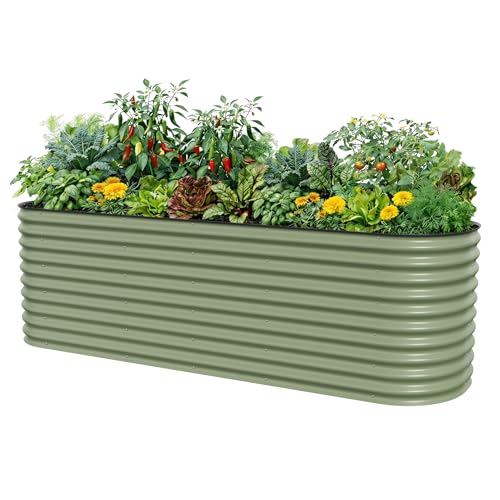
Vego Garden 32 Inch Tall Modular Metal Raised Garden Bed
Aluzinc coated panels bolt into oval, rectangular or L shaped layouts, so the bed can follow a fence line. Rim height of 32 inches puts planting and harvesting at waist level, whether you stand or work from a chair. Depth is the real draw: potatoes, parsnips and staked tomatoes all get a full soil column.
Pros
- Depth suits potatoes and long rooted carrots
- Coated steel resists rot, termites and warping
- Waist high rim removes kneeling and bending
Cons
- Filling it takes a large volume of soil
- Panels heat up under strong afternoon sun

FOYUEE Galvanized Raised Garden Bed with Legs
Galvanised legs raise the planter box to roughly 32 inches and keep every component clear of damp decking. Holes in the base handle drainage, while open space underneath stops slugs climbing in. Panel edges arrive sharp, so gloves belong on the assembly checklist.
Pros
- Legs lift the planter clear of wet decking
- Zinc coating outlasts painted steel outdoors
- Modest soil volume makes filling quick
Cons
- Panel edges are sharp during assembly
- Shallow box favours greens over root crops

Greenes Fence Cedar Elevated Garden Bed
Cedar heartwood carries natural oils that slow rot without preservatives, which matters when children pick from the bed. Boards ship raw and fade to silver grey unless oiled each spring. Realistic service life runs five to seven seasons, shorter in a wet climate than coated steel would manage.
Pros
- Natural oils resist rot with no chemicals added
- Timber suits a front garden or patio visually
- Single boards can be swapped as they age
Cons
- Wood greys and eventually softens
- A liner is needed to shield the base

VegTrug Wallhugger Medium Planter
One flat side lets this planter sit flush to a wall, fence or balcony rail, wasting no depth behind it. Its V shaped trough runs deep down the centre for tomatoes, while shallow edges take lettuce, radish and herbs. A fabric liner comes fitted and needs swapping every few seasons.
Pros
- Flat back reclaims space on a tight balcony
- V profile adds depth without huge soil volume
- Rim near 30 inches suits standing work
Cons
- Liner wears through and needs replacing
- Untreated fir wants oiling once a year

Keter Easy Grow 31.7 Gallon Raised Garden Bed
Almost 32 gallons of mix sit above a reservoir fitted with a level gauge, so topping up stops being guesswork. Width of 29.8 inches leaves room for two planting rows rather than one. Several large bags of soil go in before it is full, which is worth planning around.
Pros
- Gauge shows reservoir level without digging
- Two rows fit across the 29.8 inch width
- Resin shell skips all seasonal maintenance
Cons
- Filling takes several large bags of mix
- Footprint is too deep for a narrow balcony

Yaheetech Elevated Wooden Raised Garden Bed with Legs
Fir boards, four legs and a fabric liner cover standing height growing with nothing extra. A lower shelf takes watering cans, seedling trays or an open bag of compost. Owners report the liner gives out well before the frame does, so plan a replacement after two seasons.
Pros
- Cheapest route into standing height gardening
- Lower shelf adds usable storage space
- Light enough for one person to reposition
Cons
- Liner fails within a couple of seasons
- Untreated fir rots faster than cedar
Side by side
| # | Model | Capacity | Best for | Score | Price |
|---|---|---|---|---|---|
| 1 | Keter Urban Bloomer 12.7 Gallon Raised Garden Bed | 12.7 gallons of soil | Best overall | 9.4 | Check price |
| 2 | Vego Garden 32 Inch Tall Modular Metal Raised Garden Bed | 32 inches tall | Best for deep rooted crops | 9.2 | Check price |
| 3 | FOYUEE Galvanized Raised Garden Bed with Legs | Galvanised steel box and legs | Best metal legged bed | 9.0 | Check price |
| 4 | Greenes Fence Cedar Elevated Garden Bed | Untreated North American cedar | Best cedar bed | 8.8 | Check price |
| 5 | VegTrug Wallhugger Medium Planter | V shaped trough with flat back panel | Best for balconies and narrow spaces | 8.6 | Check price |
| 6 | Keter Easy Grow 31.7 Gallon Raised Garden Bed | 31.7 gallons of soil | Best large self watering bed | 8.4 | Check price |
| 7 | Yaheetech Elevated Wooden Raised Garden Bed with Legs | Fir wood frame with fabric liner | Best budget | 8.0 | Check price |
What to look for
What to look for in an elevated garden bed Three numbers decide how a bed performs. Soil depth sets the crop list, with 6 to 8 inches covering salad and herbs while roots want 12 or more. Rim height should match your body, and most standing designs land between 29 and 32 inches. Drainage governs everything else, because a box without holes or an overflow turns to sludge after one storm. Anyone gardening from a wheelchair also needs clear space beneath the bed, which legged frames give and solid resin bodies do not.
Resin, steel or cedar: which material lasts Resin never rots, holds a reservoir cleanly and asks for no seasonal work, which is why both Keter beds sit near the top. Aluzinc and galvanised steel last longest outdoors and stay rigid under wet soil, though panels radiate heat in full sun. Cedar carries its own rot resisting oils and looks warmest on a patio, yet it still softens after several seasons of moisture. Untreated fir costs least and fails first, usually at the liner rather than the frame.
Best elevated beds for balconies and small patios Weight is the constraint most shoppers skip. Wet mix runs roughly 75 to 100 pounds per cubic foot, so a filled 31.7 gallon bed can push a balcony past its load rating. Narrow, wall hugging shapes such as the VegTrug Wallhugger cut the footprint and the load together. Check building rules before you install anything. Siting the bed near a tap also saves carrying cans up stairs every evening in July.
Soil mix, watering and the first season Elevated soil dries from every side, so summer watering runs daily unless a reservoir helps. Fill with a blend rather than garden soil: roughly two parts compost to one part topsoil, plus perlite or coarse bark for drainage. Deep beds like the 32 inch Vego can be part filled with logs and leaf litter, a hugelkultur trick that cuts the soil bill and feeds the bed as it breaks down. Expect the mix to settle 2 or 3 inches by spring, then top up with compost.
Good to know
How deep should an elevated garden bed be?
Lettuce, spinach and herbs thrive in 6 to 8 inches. Tomatoes, peppers and beans want 12. Carrots, parsnips and potatoes need 18 or more, which is the whole reason the 32 inch Vego Garden bed exists.
Can you grow tomatoes in an elevated raised bed?
Yes, given at least 12 inches of soil and something to stake against. Deeper mixes also hold moisture longer, which cuts the blossom end rot that irregular watering causes.
How much soil does an elevated garden bed need?
Multiply length by width by depth in feet for cubic feet, then add about 25 percent for settling. A 4 by 2 foot bed with 10 inches of soil takes roughly 7 cubic feet.
Do elevated garden beds need drainage holes?
Every one of them does. Self watering designs such as the two Keter beds pair a reservoir with an overflow plug, so heavy rain still has a route out.
Which is better for a raised bed, metal or wood?
Metal lasts longer and never rots, while wood insulates roots better and looks softer on a patio. Galvanised steel suits hot, wet climates. Cedar suits gardeners who want no coatings near edible crops.
Are raised garden beds with legs good for back problems?
That is their main purpose. A rim at 30 inches lets you sow and harvest standing upright. Wheelchair users should choose an open legged frame so knees fit under the box.
Can an elevated garden bed stay outside in winter?
Resin and coated steel handle frost without trouble. Drain any reservoir first, since trapped water expands and can split a plastic base. Wooden beds last longer lifted onto pavers or feet.
How often should you water an elevated garden bed?
Shallow legged beds often need water daily through summer heat. Reservoir designs stretch that to three or four days. Mulching the surface with bark or straw cuts evaporation noticeably.
What is the best elevated garden bed for a small balcony?
VegTrug Wallhugger, because its flat back sits against the rail and the V trough needs far less mix than a full rectangle. Keter Urban Bloomer is the next narrowest option at 19.4 inches deep.
Our pick
Buy the Keter Urban Bloomer 12.7 Gallon Raised Garden Bed for a patio or deck, since the reservoir forgives missed waterings and resin asks for nothing seasonally. Vegetable growers chasing potatoes or parsnips should spend up on the 32 inch Vego Garden bed and accept the soil volume, because depth cannot be added later. Balcony gardeners with one narrow strip along a wall will get more crop from the VegTrug Wallhugger than from any full depth rectangle.
Sierra Daniels
Sierra's background is in landscape design and nursery retail. She focuses on lawn and garden equipment, outdoor furniture and gear durability, weighing published specs against how materials actually hold up outside.


