Top Electrical Wire Picks for DIY Projects
For most DIY home wiring, the Southwire 14/2 NM-B is the top pick because it is the standard for 15 amp circuits and easy to work with. Its main advantage is durability and code compliance, but its limitation is that it is only for dry indoor locations. For automotive or electronics, consider the GearIT 14 AWG primary wire.
Choosing the right electrical wire for your DIY project can be confusing. Different gauges, insulation types, and ratings matter.
This roundup compares top-rated wires for home, automotive, electronics, and more. We focused on quality and value.
The top picks, ranked

Southwire 14/2 NM-B Wire
Southwire’s 14/2 NM-B is the standard for residential branch circuits. It is a 14 gauge copper wire with two conductors plus a bare ground. It is rated for 600 volts and can handle 15 amps. It is perfect for lighting and outlet circuits in dry locations.
Pros
- Code compliant for residential
- Easy to strip and pull
- Trusted brand
Cons
- Not for wet locations
- Stiff in cold weather
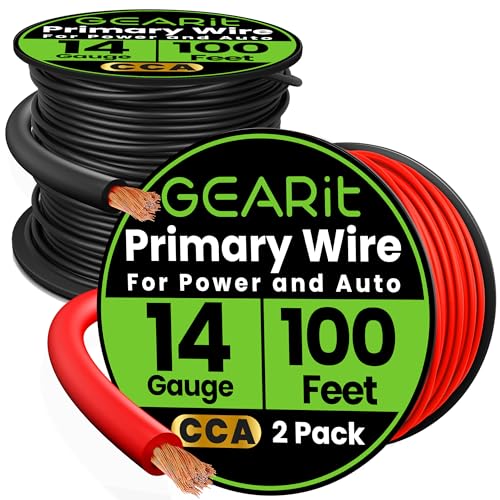
GearIT 14 AWG Primary Wire
GearIT primary wire is a 14 gauge copper wire with a PVC insulation that resists oil, gas, and water. It is flexible and UV resistant. It comes in a 100 foot spool and is ideal for car audio, trailers, and marine projects.
Pros
- Flexible and easy to route
- Resists chemicals
- Many color options
Cons
- Not rated for in-wall use
- Thinner insulation

Wirenco 12/2 NM-B Wire
Wirenco 12/2 NM-B is a 12 gauge wire for 20 amp circuits. It is used for kitchens, bathrooms, and garages. The copper conductors are annealed for flexibility. It is UL listed and meets national code.
Pros
- Handles higher loads
- UL listed
- Good flexibility
Cons
- Thicker and harder to bend
- Overkill for lighting

BingPower 18 AWG Hookup Wire
BingPower hookup wire is a 18 gauge stranded wire with silicone insulation. It is very flexible and can handle high temperatures. It is perfect for DIY electronics, LED lights, and prototypes. The spool contains 6 colors, 33 feet each.
Pros
- Very flexible
- High temperature tolerance
- Multiple colors
Cons
- Not for line voltage
- Silicone can tear

Cerrowire 14/2 UF-B Wire
Cerrowire 14/2 UF-B is a direct burial cable. It is rated for underground use and damp locations. The insulation is moisture resistant. It is ideal for outdoor lighting, sheds, and landscape power.
Pros
- Direct burial allowed
- Moisture resistant
- Durable jacket
Cons
- Harder to strip
- More expensive than NM-B

Tuff-Seal THHN Wire
Tuff-Seal THHN wire is a single conductor 12 gauge wire. It is used inside conduit for commercial or industrial projects. The nylon jacket makes pulling easy. It is rated for 600 volts and can be used in dry or wet locations.
Pros
- Smooth pulling
- Wet rating
- Long spool
Cons
- Need to buy conduit
- Single conductor only

Plusivo 22 AWG Wire
Plusivo 22 AWG wire is a flexible stranded wire with PVC insulation. It comes in a 6 pack of different colors, each 33 feet. It is great for breadboards, Arduino projects, and sensors. It is not for high power.
Pros
- Very affordable
- Color coded
- Easy to solder
Cons
- Thin for power
- PVC can melt
How they compare
| # | Model | Gauge | Best for | Score | Price |
|---|---|---|---|---|---|
| 1 | Southwire 14/2 NM-B Wire | 14 AWG | Home circuits and outlets | 9.4 | Check price |
| 2 | GearIT 14 AWG Primary Wire | 14 AWG | Automotive and marine | 9.1 | Check price |
| 3 | Wirenco 12/2 NM-B Wire | 12 AWG | Heavy duty circuits | 9.0 | Check price |
| 4 | BingPower 18 AWG Hookup Wire | 18 AWG | Electronics and low voltage | 8.8 | Check price |
| 5 | Cerrowire 14/2 UF-B Wire | 14 AWG | Underground and outdoor | 9.2 | Check price |
| 6 | Tuff-Seal THHN Wire | 12 AWG | Conduit installations | 8.9 | Check price |
| 7 | Plusivo 22 AWG Wire | 22 AWG | Breadboarding and signal | 8.6 | Check price |
What matters most
Frequently asked questions
What is the difference between NM-B and UF-B wire?
NM-B is for indoor dry locations. UF-B is for outdoor and direct burial, with a moisture resistant jacket.
Can I use 14 gauge wire for outlets?
Yes, if the circuit is protected by a 15 amp breaker. For 20 amp circuits, use 12 gauge.
What is THHN wire used for?
THHN is a single conductor wire used inside conduit. It is common in commercial and industrial installations.
Is stranded wire better than solid for DIY?
Stranded is more flexible and better for moving applications. Solid is easier to terminate in outlets and switches.
Can I use speaker wire for electrical?
No, speaker wire is not rated for line voltage. It lacks proper insulation and can cause fires.
What does AWG mean?
American Wire Gauge. The lower the number, the thicker the wire. Thicker wire can carry more current.
How do I know which wire to buy?
Consider your project’s voltage, current, location, and flexibility needs. For home circuits, NM-B. For car, primary wire. For electronics, hookup wire.
Can I run NM-B wire outdoors?
Only if it is in conduit or protected. NM-B is not rated for wet or direct sunlight exposure.
Do I need a permit for DIY wiring?
Most areas require a permit for new circuits. Check local codes. Hiring a professional is safer for complex work.
What is the maximum temperature rating for PVC wire?
Usually around 60 to 90 degrees Celsius. Silicone can handle up to 200 C.
Our take
For most home DIY electrical projects, choose the Southwire 14/2 NM-B for indoor circuits. If you need outdoor or underground, go with the Cerrowire 14/2 UF-B. For automotive work, GearIT is the best. For electronics, the BingPower silicone wire offers flexibility and heat resistance.
Jake Monroe
Jake worked as a residential contractor for over a decade before shifting to full-time writing. He evaluates power tools, hand tools and workshop gear through the lens of someone who has actually used them on job sites, not just read the box.