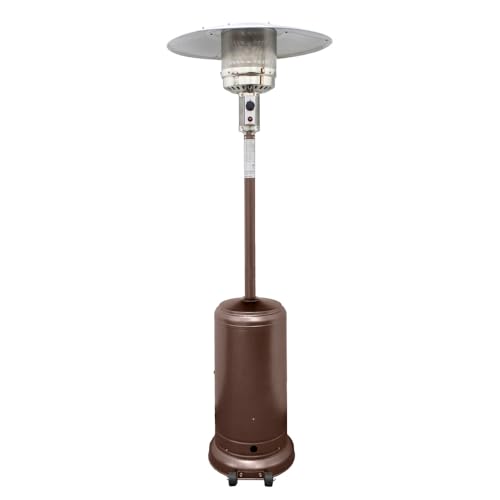
Electric Patio Heaters: Wattage, Mount and Coverage
Dr. Infrared Heater’s DR-P1500S leads with quartz infrared heat, a remote and roughly 170 square feet of coverage. Simple Deluxe’s freestanding heater trades the remote for a lower price at the same wattage. Star Patio’s wall mounted infrared unit suits balconies and covered porches with no floor space to spare.
Cold decks need heat that starts in seconds, not a propane exchange run. Dr. Infrared Heater’s DR-P1500S covers about 170 square feet with dual quartz tubes and a remote, making it the strongest all-around pick for a mid-size patio. Its tripod base wants a level, wind-sheltered spot, so cramped balconies do better with a wall mounted unit like the Star Patio SPC-1500.
Manufacturer coverage numbers rarely survive an open patio, since wind and uncovered seating cut effective range fast. We compared wattage, heating element type, mounting style and stated coverage area from each Amazon listing’s published specifications. Owner feedback flagged recurring complaints like uneven heat and failed thermostats, weighed against the raw spec sheet.
What we recommend
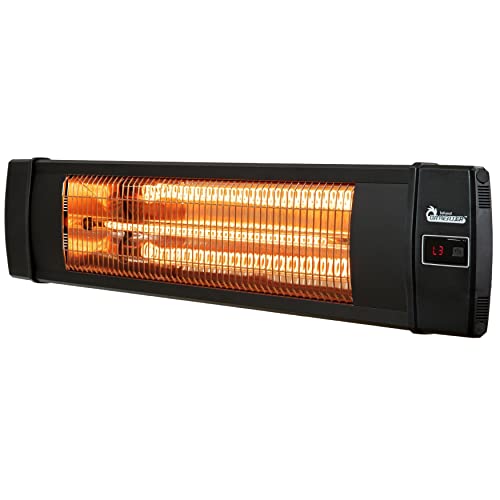
Dr. Infrared Heater DR-P1500S Portable Infrared Patio Heater
Dual quartz infrared tubes sit inside a tripod stand that adjusts for standing or seated use. A remote flips between three heat settings, so no one leaves their chair to change it. Coverage reaches about 170 square feet, enough for a mid-size patio or small deck, and a fitted weather cover ships in the box for storage.
Pros
- Remote adjusts heat without getting up
- Weather cover included for storage between uses
- Tip-over and overheat shutoffs help on uneven pavers
Cons
- Tripod base needs level ground to stay stable
- Heat stays fixed in one direction with no oscillation

Simple Deluxe Freestanding Electric Patio Heater
A halogen infrared bulb sits inside an 89 inch adjustable stand, tall enough to clear a standing crowd rather than aim down at seated guests. Three manual power levels adjust with a twist of the dial, no remote or pairing required. Dropping the remote keeps the price below competitors at the same 1500 watt output.
Pros
- Costs less than remote-equipped competitors
- Tall stand spreads heat above a standing crowd
- Dial control needs no batteries or pairing
Cons
- No remote for adjusting heat from a seat
- Narrower base can tip in gusty conditions
Star Patio SPC-1500-BLK-N Wall and Ceiling Mount Infrared Heater
A wall or ceiling bracket holds this heater off the ground, aiming its carbon fiber infrared tube at one fixed seating zone. Covered porches and tight patios benefit most, since the floor stays clear for furniture. Heat runs directional instead of 360 degrees, so placement above the seating area matters more than with a freestanding model.
Pros
- Mounting clears the floor for furniture and foot traffic
- Directional heat concentrates warmth on one seating zone
- Low profile fits under a covered patio roof
Cons
- Installation means drilling into a wall or ceiling
- Angle locks in place once mounted, limiting later moves

Trustech Electric Patio Heater with Remote Control
A PTC ceramic element pairs with infrared output, and 65 degree auto oscillation spreads heat across a wider seating area than fixed heaters manage. A digital remote sets timer and temperature from across the patio. Its larger housing reads more like a design piece than the slimmer tripod heaters on this list.
Pros
- Oscillation spreads warmth wider than fixed heaters
- Digital timer shuts the unit down automatically
- Remote display makes temperature adjustment easier
Cons
- Fan operation adds faint background noise
- Bulkier footprint takes up more floor space
Comfort Zone CZPH11 Deluxe Indoor/Outdoor Infrared Patio Heater
An ETL listing covers both indoor and outdoor use, so this heater runs on a covered porch, in a garage or on an open patio. Its amber quartz tube reaches full heat within seconds. A three-setting dial keeps operation simple, backed by a tip-over switch that cuts power if the unit gets knocked over.
Pros
- ETL rating covers both indoor and outdoor placement
- Tip-over switch adds safety around pets and kids
- Reaches noticeable heat within seconds of startup
Cons
- No timer, so shutoff has to happen manually
- Standard cord may fall short of an outdoor outlet

Antarctic Star Outdoor Electric Patio Heater
A quartz infrared tube and rotary switch offer 750 or 1500 watt settings, kept simple to hold down the price. Its lightweight body carries easily between a patio and garage for storage. Skipping a remote and timer makes this an entry point rather than a full-featured model.
Pros
- Costs less than remote-equipped freestanding heaters
- Lightweight design makes repositioning easy
- Dual wattage setting trims power use on mild nights
Cons
- Shorter stand puts the heating element closer to the ground
- No remote or digital timer
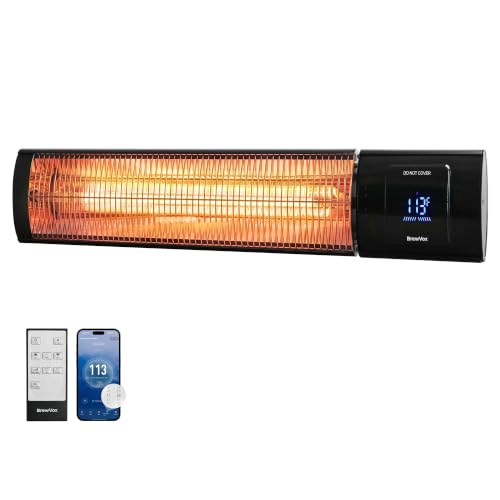
Kismile 1500W Electric Patio Heater
A base under 18 inches wide targets balconies and small patio corners where a full tripod won’t fit. Wattage switches between 900 and 1500 depending on outdoor temperature. A remote adds a 24-hour timer, a feature usually reserved for pricier models.
Pros
- Slim base fits tight balcony corners
- Dual wattage setting saves power on milder nights
- Remote and 24-hour timer add convenience at a lower price
Cons
- Heat radius runs shorter than larger freestanding models
- Plastic base feels less stable in gusty wind
Before you buy
How Electric Patio Heaters Work Infrared quartz tubes, carbon fiber elements and PTC ceramic panels each generate heat differently. Infrared models warm people and surfaces directly, similar to sunlight, so open air cuts their output less than air-based heaters. Most units plug into a standard 120V outlet and draw between 1200 and 1500 watts. No propane tank, refill or venting comes into play, and there is no open flame near furniture or plants.
Freestanding or Wall-Mounted: Match It to Your Patio Freestanding models sit on a weighted base or tripod and move between a patio, deck or driveway. Wall or ceiling mounted units, like the Star Patio SPC-1500, clear the floor entirely but need drilling into a permanent structure. Renters or anyone sharing a patio should lean freestanding, since it needs no installation. A fixed seating area under a covered porch gets steadier aim from a mounted heater that never gets bumped.
How Much Wattage Covers Your Space A 1500 watt heater typically covers 100 to 170 square feet, depending on how open the space is and whether wind interrupts the heat. Fully open patios lose more warmth to moving air than a space with a windbreak or overhang. Some models, including the Kismile unit, add a lower 900 watt setting for milder evenings, trimming power draw without a second heater. Save the higher end of a heater’s coverage range for seating with walls or a railing on at least two sides.
Safety Features Worth Checking Before You Buy Tip-over switches cut power automatically if wind or foot traffic knocks a heater over, worth confirming on any freestanding model. Weather resistance ratings matter too, since a heater rated only for covered areas can corrode faster if left exposed to direct rain. Match cord length to your nearest outdoor-rated outlet, because a standard indoor extension cord isn’t built for continuous outdoor use. Overheat protection, separate from tip-over protection, shuts the unit down if internal temperatures climb too high.
How they compare
| # | Model | Wattage | Best for | Score | Price |
|---|---|---|---|---|---|
| 1 | Dr. Infrared Heater DR-P1500S Portable Infrared Patio Heater | 1500W | Best overall | 9.4 | Check price |
| 2 | Simple Deluxe Freestanding Electric Patio Heater | 1500W | Best value | 9.0 | Check price |
| 3 | Star Patio SPC-1500-BLK-N Wall and Ceiling Mount Infrared Heater | 1500W | Best for wall or ceiling mounting | 8.8 | Check price |
| 4 | Trustech Electric Patio Heater with Remote Control | 1500W | Best for large patios | 8.6 | Check price |
| 5 | Comfort Zone CZPH11 Deluxe Indoor/Outdoor Infrared Patio Heater | 1500W | Best for indoor and outdoor use | 8.4 | Check price |
| 6 | Antarctic Star Outdoor Electric Patio Heater | 1500W, dual setting with 750W | Best budget | 8.2 | Check price |
| 7 | Kismile 1500W Electric Patio Heater | 1500W, adjustable to 900W | Best for small patios and balconies | 8.0 | Check price |
Questions worth asking
Are electric patio heaters worth it compared to propane?
Electric models skip fuel costs, open flame and tank exchanges, which suits patios near flammable structures or without ventilation. Propane heaters generally push out more total heat and don’t need a nearby outlet. Outlet access near the seating area usually decides which type makes sense.
How many square feet does a 1500 watt patio heater cover?
Most 1500 watt electric patio heaters cover between 100 and 170 square feet, based on manufacturer listings. Open, windy patios shrink that range since moving air carries heat away faster. A space with a wall or railing on at least two sides holds heat closer to the higher end.
Can electric patio heaters get wet or run in the rain?
Check the specific weather rating before leaving a heater exposed, since ratings vary by model. The Comfort Zone CZPH11 carries an ETL listing for outdoor use but still recommends covering it during heavy rain. Unplugging and covering any heater during storms extends its lifespan regardless of rating.
Do electric patio heaters work well in windy conditions?
Infrared models hold up better in wind than heaters that warm surrounding air, since infrared heats people and surfaces directly. Strong gusts still cut effective range, especially on fully open patios. A windbreak, railing or overhang improves performance more than switching heater brands.
What’s the difference between infrared and ceramic patio heaters?
Infrared heaters, including quartz and carbon fiber models, warm objects and people directly through radiant heat. Ceramic or PTC models heat the surrounding air instead, which loses effectiveness faster outdoors. Trustech’s heater blends both approaches, pairing a PTC element with infrared output.
Can I mount an electric patio heater under a covered porch?
Wall and ceiling mounted models, like the Star Patio SPC-1500, are built for exactly this setup. Freestanding heaters also work under cover as long as the base sits on stable, dry ground. Avoid mounting any heater directly beneath flammable eaves or fabric awnings.
How much does it cost to run an electric patio heater?
Running cost depends on local electricity rates and how many hours per night the heater runs, since wattage translates directly into energy use. A 1500 watt heater draws more power per hour than a 900 watt setting. Check your utility rate against the heater’s wattage for a real estimate instead of a generic figure.
Do electric patio heaters need a special outdoor outlet?
Most 1500 watt models need a standard 120V outlet rated for outdoor or wet-location use rather than an indoor circuit. A GFCI-protected outlet adds shock protection in damp conditions. Any extension cord should carry an outdoor rating matched to the heater’s wattage.
Which electric patio heater is best for small balconies?
The Kismile 1500W trims its base to under 18 inches wide, built for balconies and tight patio corners where a tripod won’t fit. Its remote adds a 24-hour timer rarely found at this price. Wall mounted options like the Star Patio SPC-1500 work too, if drilling into a rail or wall is allowed.
The verdict
Dr. Infrared Heater’s DR-P1500S suits most patios best, pairing quiet quartz infrared heat with a workable 170 square foot range and remote control. Renters or anyone without floor space to spare should pick the Star Patio SPC-1500 wall mount instead, since it clears the seating area completely. Antarctic Star’s model works as a starting point on a tight budget, though it drops the remote and taller stand that make the DR-P1500S easier to live with day to day.
Sierra Daniels
Sierra's background is in landscape design and nursery retail. She focuses on lawn and garden equipment, outdoor furniture and gear durability, weighing published specs against how materials actually hold up outside.