FSC Wood or Bamboo: Which Learning Toy Teaches Best?
Baby Einstein’s Magic Touch Piano leads with FSC-certified beechwood and true piano notes for babies six months and up. Cubetto teaches screen-free coding through wooden blocks. Tonies Toniebox handles language and story listening on a rechargeable battery instead of disposables.
Baby Einstein’s Magic Touch Piano tops this list for parents of infants six months to three years old. Its FSC-certified beechwood body and touch keys that ring real piano notes justify the top spot. One tradeoff stands out: it still runs on disposable AAA batteries rather than a rechargeable pack.
Green marketing rarely names a material, so we filtered out toys that only claim eco-friendly without specifics. We compared listed materials, power sources, and age ranges from each product page, then checked owner feedback on durability before ranking all seven below.
Before you buy
What Counts as an Eco-Friendly Electronic Toy A real eco claim names a specific material or certification, not just a green logo. FSC certification confirms the wood came from a responsibly managed forest. Bamboo and recycled plastic cut reliance on virgin materials. A built-in rechargeable battery reduces disposable cells over years of play. Toys that skip these details are usually leaning on marketing, not substance.
Matching Wood, Bamboo, and Plastic to a Child’s Age Infants mouth everything, so material thickness matters more than the eco label itself. Hape’s solid beechwood in the Magic Touch Piano and Curious Cosmos cube shrugs off chewing and drops. Move2Play’s bamboo shell holds up fine under supervised play but dents faster under repeated gnawing. Past the mouthing stage, toddlers handle lighter bamboo or recycled plastic without that risk. B. toys and Move2Play both target this older, past-teething range.
Screen-Free Coding and STEM for Older Kids Cubetto introduces sequencing logic around age three using wooden blocks instead of a tablet app. KiwiCo’s Tinker Crate raises the difficulty for nine-year-olds, adding motors, circuits, and real engineering problems each month. Neither relies on a screen, keeping the learning tactile instead of passive. Choosing between them comes down to a one-time robot purchase versus an ongoing monthly subscription.
Rechargeable Batteries Versus Disposable Cells Only the Toniebox and Cubetto run on built-in batteries charged over USB in this lineup. Both Baby Einstein toys and the Whirled Explorer globe still take AA or AAA cells. Rechargeable designs cut long-term battery waste but usually raise the toy’s upfront cost. Parents who replace batteries often should weigh that tradeoff before picking a wood or bamboo toy with disposable power.
The best picks, ranked
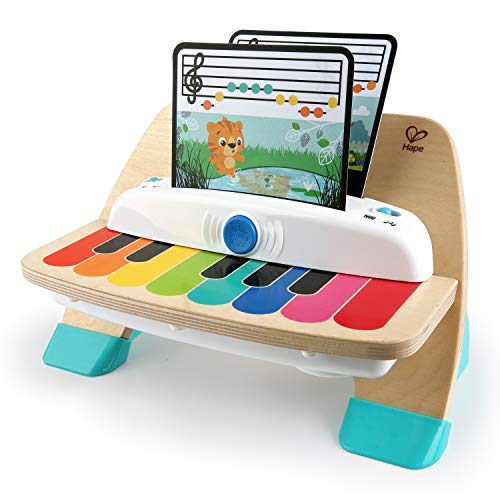
Baby Einstein Magic Touch Piano Wooden Musical Toy
Hape builds this piano’s frame from FSC-certified beechwood and tunes its touch keys to ring real piano notes. Babies as young as six months get instant sound feedback from a single press. Auto shutoff spares the battery when nobody’s playing.
Pros
- Real piano notes support early pitch recognition
- FSC-certified wood holds up to teething and drops
- Auto shutoff conserves battery between play sessions
Cons
- Runs on disposable AAA batteries, not rechargeable
- Volume is fixed, with no adjustment dial

Cubetto Coding Robot by Primo Toys
Cubetto teaches programming logic without a single screen. Kids snap colored blocks into a wooden control board that routes a small robot across a felt map. Primo Toys builds the shell from sustainably sourced beech wood and charges it over USB.
Pros
- Teaches sequencing logic with zero screen time
- USB-rechargeable battery skips ongoing battery waste
- Wooden blocks and board hold up over years of handling
Cons
- Fewer built-in stories than screen-based coding apps
- Felt map needs open floor space before first use

Tonies Toniebox Starter Set
Setting a figurine called a Tonie on top triggers the Toniebox to play a story. There’s no screen and no ads, just a rechargeable speaker that stores hours of narrated audio. Its fabric-covered foam shell survives drops that would crack a tablet.
Pros
- Rechargeable battery skips disposable AA waste entirely
- No screen or ads, distraction-free story listening
- Figurine library keeps growing as a child ages
Cons
- Each Tonie figurine is sold separately
- No coding or STEM content included

KiwiCo Tinker Crate
Tinker Crate ships a new engineering project every month, from a solar buggy to a working pinball machine. KiwiCo prints its guides on FSC-certified paper and ships parts in recycled cardboard. Kids wire the motorized builds themselves using AA batteries they install.
Pros
- New monthly project keeps STEM skills advancing
- Guides and packaging use certified, recycled paper stock
- Hands-on wiring reinforces each engineering lesson
Cons
- Ongoing subscription required to keep receiving crates
- Some builds need adult help with small parts

Baby Einstein Curious Cosmos Wooden Activity Cube
Five wooden play sides wrap around a light-up star panel on this activity cube, including gears, a maze, and a spinning rocket. Hape certifies the wood under FSC standards. A light and sound module on two AA batteries reacts to a baby’s touch.
Pros
- Five separate panels extend interest over time
- FSC-certified wood suits the teething age range
- Light-up star rewards touch with instant feedback
Cons
- Bulkier than most electronic toys, needs floor space
- Light module can’t be removed for panel-only play

B. toys Whirled Explorer Interactive Globe
Spinning this talking globe triggers names for continents, oceans, and animals. B. toys packages it in FSC-certified paperboard and molds the shell from BPA-free, phthalate-free plastic. Three volume settings suit quiet solo play or group time.
Pros
- Introduces continent and ocean names before school age
- BPA-free and phthalate-free plastic construction
- Adjustable volume works for solo or shared play
Cons
- Vocabulary content is fixed and can’t expand later
- Relies on disposable AA batteries, no rechargeable option

Move2Play Bamboo Baby Piano
A bamboo shell wraps around light-up keys on this piano instead of standard plastic. Pressing a key plays a note, a number, or an animal sound across three modes. Move2Play markets the bamboo body as a lower-waste alternative to fully molded plastic toys.
Pros
- Bamboo shell cuts plastic content versus rivals
- Three play modes add variety for early learners
- Compact size suits travel and small play spaces
Cons
- Bamboo panel is less impact-resistant than solid wood
- No rechargeable version currently offered
The lineup, side by side
| # | Model | Age Range | Best for | Score | Price |
|---|---|---|---|---|---|
| 1 | Baby Einstein Magic Touch Piano Wooden Musical Toy | 6 months to 3 years | Best overall | 9.4 | Check price |
| 2 | Cubetto Coding Robot by Primo Toys | 3 to 6 years | Best for screen-free coding basics | 9.1 | Check price |
| 3 | Tonies Toniebox Starter Set | 3 to 8 years | Best for language and story listening | 8.9 | Check price |
| 4 | KiwiCo Tinker Crate | 9 to 16 years | Best for hands-on STEM building | 8.6 | Check price |
| 5 | Baby Einstein Curious Cosmos Wooden Activity Cube | 6 months to 3 years | Best for infant sensory play | 8.4 | Check price |
| 6 | B. toys Whirled Explorer Interactive Globe | 18 months to 4 years | Best for toddler geography and vocabulary | 8.2 | Check price |
| 7 | Move2Play Bamboo Baby Piano | 12 months to 3 years | Best budget bamboo pick | 8.0 | Check price |
Good to know
Are electronic learning toys ever actually eco-friendly?
Some are, when they name a specific material like FSC-certified wood, bamboo, or recycled plastic and pair it with a rechargeable battery. Skip claims that never name a material or certification.
What materials make a learning toy more sustainable?
FSC-certified wood, bamboo shells, and recycled or plant-based plastics reduce virgin plastic use. A built-in rechargeable battery also cuts down on disposable batteries thrown out over the toy’s life.
Is bamboo safe for babies to chew on?
Untreated bamboo in toys like the Move2Play piano is generally considered safe for supervised chewing, though it dents more easily than solid hardwood. Check for a food-safe finish before handing it to a teething baby.
Can rechargeable batteries replace AA batteries in kids’ toys?
Yes. Tonies Toniebox and Cubetto already run on built-in rechargeable batteries charged over USB. Most wooden musical toys in this category still rely on replaceable AA or AAA cells.
Which eco-friendly toy teaches coding without a screen?
Cubetto by Primo Toys teaches sequencing and coding logic with wooden blocks and a felt map, no screen required. It suits children roughly three to six years old.
Do wooden electronic toys still need batteries?
Yes, wood only replaces the outer shell or panels. Baby Einstein’s Magic Touch Piano and Curious Cosmos cube both still need AA or AAA batteries for lights and sound.
What age fits a talking globe or listening toy best?
B. toys’ Whirled Explorer suits toddlers from about 18 months with simple vocabulary content. Tonies Toniebox fits slightly older kids, roughly three and up, who can follow longer audio stories.
Is a KiwiCo subscription worth it for STEM learning?
For kids nine and older who enjoy building, the monthly Tinker Crate delivers a new motorized or mechanical project with recycled packaging. It requires an ongoing subscription rather than a single purchase.
Our pick
Baby Einstein’s Magic Touch Piano stays the top pick for real piano notes and FSC-certified wood built for infants under three. Parents chasing screen-free coding by age four should pick Cubetto instead, since its wooden interface skips screens entirely. Anyone focused on cutting battery waste should grab the Tonies Toniebox, the only fully rechargeable option here.
Rachel Simmons
Rachel previously worked in child-product retail and brings a practical, detail-first eye to gear reviews, focusing on safety standards, ease of use and the fine print that matters most for new caregivers.


