How to Choose Eco-Friendly Building Blocks for Kids
Tegu’s Classic Magnetic Wooden Block Set wins overall thanks to magnets that let toddlers connect pieces without balancing them. Green Toys Stack & Nest Blocks delivers the best value from recycled milk jugs, and Melissa & Doug’s 100-piece set gives budget shoppers the most build volume.
Toddlers who struggle to balance blocks do best with Tegu’s Classic Magnetic Wooden Block Set, since hidden magnets snap pieces together from any angle. Each block costs more than a plain wooden piece, which is the tradeoff for that ease of use.
Sourcing claims differ sharply between wood, recycled plastic, and plant-based bioplastic, so a single label like eco-friendly does not tell the full story. We compared certifications, piece counts, material origin, and age recommendations listed on each product page to rank these seven sets.
Our top picks

Tegu Classic Magnetic Wooden Block Set
Hidden rare-earth magnets sit inside blocks cut from sustainably harvested hardwood. Any two faces click together, so toddlers build upward without stacking skill. A canvas pouch holds the 24-piece set for travel.
Pros
- Magnetic connection lets pieces click together from any angle
- Smooth, sanded edges suit small hands
- Canvas pouch keeps pieces organized for travel
Cons
- Higher cost per block than plain wooden sets
- Magnets require adult supervision for children under 3

Green Toys Stack & Nest Blocks Set
Recycled milk jugs, not virgin resin, form this six-piece set. Blocks nest inside one another for stacking games and double as bath toys. Green Toys states its US manufacturing runs on wind-powered energy.
Pros
- Dishwasher safe for easy cleaning
- No small magnets or metal parts
- Lightweight design suits infant hands
Cons
- Fewer building configurations than wooden sets
- Six pieces limit tower height

Melissa & Doug Wooden Building Blocks Set (100 Blocks)
One hundred pieces give kids enough volume for large structures without repeating a handful of shapes. Arches, cylinders, and triangles round out a dozen basic forms. A wooden storage crate keeps everything contained between uses.
Pros
- High piece count for the price point
- Wide shape variety supports complex builds
- Wooden crate doubles as a cleanup tool
Cons
- Unfinished portions of some pieces show scratches over time
- Small parts make it unsuitable for children under 3
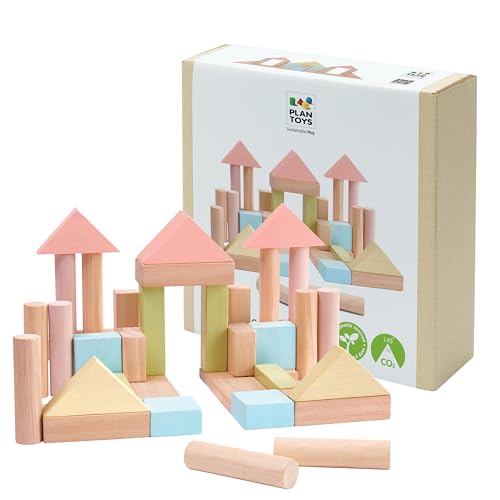
PlanToys Original Wooden Blocks Set
PlanToys harvests rubberwood only after trees stop producing latex, so no new logging happens for this set. Rounded edges suit hands as young as 12 months. A water-based dye replaces solvent-based paint on every piece.
Pros
- Rounded corners reduce pinch and scrape risk
- Rubberwood sourcing avoids virgin forest logging
- Simple shapes suit early stacking skills
Cons
- 40 pieces build smaller structures than 100-plus sets
- Natural wood grain shows through lighter dye colors
Bioserie Biobricks Starter Set
Sugarcane-based bioplastic replaces petroleum resin in this 50-piece set. Stud and tube dimensions match standard LEGO System bricks, so pieces snap directly into existing collections. Bioserie credits the sugarcane feedstock with cutting reliance on new plastic production.
Pros
- Works alongside existing LEGO-compatible collections
- Sugarcane feedstock reduces petroleum use
- Available in multiple base colors
Cons
- Small parts create a choking hazard for children under 4
- Color selection is narrower than mainstream brick lines

Uncle Goose Classic Wooden ABC Blocks
Each letter pairs with a matching image, printed in water-based, non-toxic ink on basswood from managed forests. Twenty-eight blocks cover the alphabet plus a few punctuation marks. Uncle Goose builds the set in its Grand Rapids, Michigan workshop.
Pros
- Letters paired with images support early literacy
- Domestic manufacturing shortens the supply chain
- Smooth-sanded corners feel finished
Cons
- 28 pieces limit large-scale building compared to shape sets
- Higher per-block cost than mixed-shape sets

Hape Rainbow Blocks 30-Piece Wooden Set
Water-based lacquer, not solvent paint, colors these 30 rubberwood blocks in six shades. Cubes, cylinders, arches, and triangles support color-sorting games. Hape lists the set as tested to ASTM F963 toy safety standards.
Pros
- Six-color palette supports early color recognition
- Assorted shapes teach basic geometry
- Rubberwood sourcing matches other sustainable-harvest brands
Cons
- Paint can chip after repeated drops on hard floors
- Fewer pieces than the Melissa & Doug 100-piece set
Compared at a glance
| # | Model | Material | Best for | Score | Price |
|---|---|---|---|---|---|
| 1 | Tegu Classic Magnetic Wooden Block Set | Sustainably harvested hardwood | Best overall | 9.4 | Check price |
| 2 | Green Toys Stack & Nest Blocks Set | Recycled HDPE plastic (post-consumer milk jugs) | Best value | 9.1 | Check price |
| 3 | Melissa & Doug Wooden Building Blocks Set (100 Blocks) | New England hardwood | Best budget | 8.8 | Check price |
| 4 | PlanToys Original Wooden Blocks Set | Rubberwood with water-based dye | Best for toddlers | 8.6 | Check price |
| 5 | Bioserie Biobricks Starter Set | Sugarcane-based bioplastic | Best for LEGO-compatible building | 8.4 | Check price |
| 6 | Uncle Goose Classic Wooden ABC Blocks | Basswood, made in USA | Best for learning letters | 8.2 | Check price |
| 7 | Hape Rainbow Blocks 30-Piece Wooden Set | Rubberwood with water-based paint | Best for color and shape sorting | 8.0 | Check price |
What to look for
What Makes a Block Set Eco-Friendly Three distinct materials carry the eco-friendly label: sustainably harvested wood, recycled plastic, and plant-based bioplastic. Rubberwood used by PlanToys and Hape comes from trees that already stopped producing latex, so no new forest gets cleared. Green Toys molds its blocks from recycled milk jugs instead of virgin petroleum plastic, and Bioserie sources bioplastic from sugarcane rather than crude oil. None of these claims require third-party certification, so the specific material and country of manufacture matter more than the phrase itself.
Wood vs Recycled Plastic vs Bioplastic A natural feel and multi-child durability define wooden blocks from Melissa & Doug, PlanToys, Hape, and Uncle Goose. Recycled plastic sets like Green Toys wipe clean and tolerate bath time, something wood cannot handle well. Bioserie’s sugarcane bioplastic sits between the two, pairing LEGO compatibility with a lower petroleum footprint. Families building a collection that mixes with existing LEGO bricks get the most from bioplastic, while households prioritizing water play or easy sanitizing should lean toward recycled plastic.
Best for Toddlers vs Best for Preschoolers Rounded edges and larger pieces define sets rated for 12 months and up, including PlanToys Original and Hape Rainbow Blocks. Around 18 months, toddlers can manage magnetic assembly without help for every connection, which is where Tegu fits. Letter recognition starts closer to age 2, matching Uncle Goose’s target range. Bioserie’s smaller bioplastic studs carry a 4-plus recommendation because of choking risk.
Storage, LEGO Compatibility, and Large Builds Piece count matters most for families chasing maximum building volume, and Melissa & Doug’s 100-piece set outbuilds every other option here. Kids already invested in LEGO collections gain more from Bioserie’s cross-compatible bricks than from a second, incompatible wooden set. Storage differs too: Melissa & Doug ships a wooden crate, while Tegu includes a canvas travel pouch. Weigh how each set gets stored and cleaned before choosing between wood, plastic, or bioplastic.
Questions worth asking
What makes a set of building blocks eco-friendly?
Eco-friendly block sets use sustainably harvested wood, recycled plastic, or plant-based bioplastic instead of virgin petroleum plastic. PlanToys and Hape source rubberwood from trees no longer producing latex. Green Toys molds blocks from recycled milk jugs.
Is wood or recycled plastic better for a toddler’s first blocks?
Wood offers more shape variety and a heavier, more stable base for stacking. Recycled plastic like Green Toys withstands drool, bath water, and dishwasher cleaning better than wood. Plastic suits infants who mouth toys, while wood suits toddlers focused on stacking.
Can Bioserie Biobricks connect with standard LEGO pieces?
Yes. Biobricks match the stud and tube dimensions of standard LEGO System bricks, so they snap into existing collections. Sugarcane replaces petroleum in the bioplastic, but the connection points stay compatible.
Which block set works best for teaching toddlers letters?
Uncle Goose’s Classic Wooden ABC Blocks pair each letter with a matching image using water-based ink on basswood. The 28-block set suits children around 2 years old who are starting to recognize letters and simple words.
How does Green Toys recycled plastic compare to new plastic toys?
Post-consumer milk jugs, not virgin plastic resin, form the Green Toys Stack & Nest set. The material is BPA-free and FDA food-contact grade, and the brand states its US manufacturing runs on wind power.
Do magnetic wooden blocks wear out faster than plain stacking blocks?
Tegu seals its magnets inside the hardwood body, so normal play does not loosen them. The lacquer finish can wear at edges over years of use, similar to any painted wooden block.
Are the paints and dyes on wooden blocks safe for babies who mouth toys?
PlanToys and Hape both use water-based, non-toxic dye or paint instead of solvent-based coatings. Both brands list ASTM F963 or equivalent safety testing for their block lines.
What’s the difference between Uncle Goose and Melissa & Doug wooden blocks?
Uncle Goose focuses on 28 letter and number blocks made in the USA from basswood for early literacy. Melissa & Doug ships 100 plain shape blocks from New England hardwood aimed at open-ended building.
How many pieces should a first block set have?
A first set for infants or young toddlers works well with 6 to 24 pieces, enough variety without overwhelming small hands. Preschoolers building complex structures benefit from 40 pieces or more, like the PlanToys or Melissa & Doug sets.
Which eco-friendly blocks suit a family with a LEGO-loving older sibling?
Bioserie Biobricks fit standard LEGO System bricks, so a younger sibling’s set can mix with an older child’s existing collection. That cross-compatibility makes it a better fit than a second, incompatible wooden set.
Our pick
Tegu’s Classic Magnetic Wooden Block Set takes the top spot because embedded magnets let toddlers build successfully before they master balancing, and the sustainably harvested hardwood holds up across siblings. Families on a tighter budget who want more pieces per set should choose the Melissa & Doug 100-piece set instead. Households already collecting LEGO bricks get more long-term value from Bioserie’s sugarcane-based Biobricks, since that compatibility outweighs owning a second incompatible wooden set.
Rachel Simmons
Rachel previously worked in child-product retail and brings a practical, detail-first eye to gear reviews, focusing on safety standards, ease of use and the fine print that matters most for new caregivers.


