Which dust extractor suits your shop or job site
Festool CT 26 E leads for shop work, combining HEPA filtration, a 6.9 gallon drum and a suction dial that sanding needs. Bosch VAC090AH takes masonry jobs, pulsing its filter clean every 15 seconds at 150 CFM. DeWalt DWV012 covers general renovation with 10 gallons.
Festool CT 26 E is the one to buy for a woodworking shop, where a suction dial stops the machine pinning a sanding pad flat. HEPA media and 6.9 gallons carry a home shop through weeks of sawdust. Its limitation is the consumable chain, since bags and hoses follow Festool sizing rather than generic fittings.
Extractors and shop vacuums share a shape and little else. HEPA rated media, a tool actuated outlet and filter cleaning during use are what separate the two categories. We compared airflow in CFM, water lift, drum volume, cleaning method and hose bore, then read owner feedback on clogging, pulse noise and cartridge life.
The shortlist, ranked

Festool CT 26 E HEPA Dust Extractor
Sanding needs far less suction than cleanup, and a speed dial is what makes that adjustment possible. Festool pairs the dial with a HEPA cartridge and a 6.9 gallon container, so bag changes stay rare in a home shop. Plug a sander into the front outlet and the motor follows the trigger, then runs on briefly to empty the hose.
Pros
- Speed dial keeps sanding pads from sticking
- HEPA cartridge holds back fine wood dust
- Systainer boxes latch onto the lid for transport
Cons
- Bags and hoses follow Festool sizing only
- Filter cleaning happens by hand, not on a cycle

Bosch VAC090AH 9-Gallon Dust Extractor
Every 15 seconds a pulse knocks dust off the filter, holding airflow steady through a long grinding run. Bosch rates the unit at 150 CFM with 97 inches of water lift, a mix aimed at masonry rather than sawdust. Sealed bags and HEPA media let it serve as the collection half of a silica control plan.
Pros
- Cleaning pulse fires four times a minute
- 97 inches of lift drags heavy mineral dust
- Bags seal shut before you lift them out
Cons
- Pulse noise repeats through every cut
- Nine gallon body is awkward on stairs
DeWalt DWV012 10-Gallon Dust Extractor
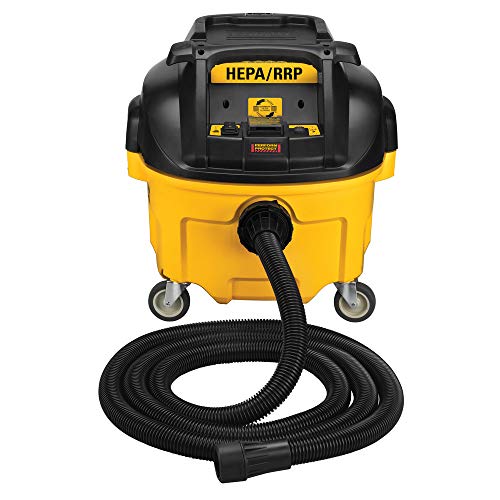
Ten gallons buys fewer interruptions on a remodel, where drywall and offcuts pile up quickly. Cleaning pulses run about every 30 seconds, half the frequency of the Bosch but enough outside masonry work. Cord and hose wrap onto the housing, which matters when the machine follows you room to room all day.
Pros
- Ten gallon drum outlasts every rival here
- Pulse cleaning runs without pausing the tool
- Hose and cord stow on the body
Cons
- 30 second cycle trails the Bosch in silica dust
- Footprint crowds a single bay garage

Festool CT MIDI I HEPA Dust Extractor
Under four gallons and roughly 21 pounds, this one fits a van shelf or the space beneath a bench. Filtration, the suction dial and the tool outlet carry over from the CT 26 E, so only capacity shrinks. Its 27 mm antistatic hose bleeds off the charge that builds as dry dust travels through plastic.
Pros
- Fits a bench corner in a one car garage
- Same HEPA cartridge standard as the CT 26 E
- Antistatic hose stops shocks in dry air
Cons
- Under four gallons needs emptying often
- Supplied hose length limits reach across a room

Fein Turbo II Dust Extractor
Around 66 dBA, this one runs quiet enough to hold a conversation beside a working sander. An 8.4 gallon stainless drum takes wet and dry pickup, so spills and slurry never mean swapping machines. A tool start socket covers the same automation the Festool and DeWalt units offer.
Pros
- Lowest noise figure in this group
- Stainless drum shrugs off dents and rust
- Rated for liquid as well as dry debris
Cons
- Filter cleaning is manual only
- HEPA rating depends on fitting the correct cartridge

Makita VC4210L Wet/Dry HEPA Dust Extractor
About eleven gallons of drum leaves room for tile slurry, a flooded utility room or plain sawdust. Tap the cleaning button between cuts and airflow returns without opening anything up. A float rises with the liquid and shuts suction off at the fill line, keeping water clear of the motor.
Pros
- Biggest liquid capacity of the seven
- Float valve stops water reaching the motor
- Button cleaning takes a second between cuts
Cons
- Nothing cleans the filter unless you press it
- Full of water it becomes a two person lift

Milwaukee M18 FUEL 9 Gallon Dust Extractor 0920-20
M18 packs cut the extension cord out of punch list and second fix work. Nine gallons and a 1-7/8 inch hose cover tool extraction and general cleanup, wet or dry. Battery life sets the ceiling here, so treat it as the finishing machine rather than the grinding machine.
Pros
- Runs with no cord across finished floors
- Takes the same M18 packs as your drills
- Handles liquid spills as well as dust
Cons
- Long grinding sessions drain packs quickly
- Batteries push up the carry weight
Compared at a glance
| # | Model | Container | Best for | Score | Price |
|---|---|---|---|---|---|
| 1 | Festool CT 26 E HEPA Dust Extractor | 6.9 gallon | Best overall | 9.4 | Check price |
| 2 | Bosch VAC090AH 9-Gallon Dust Extractor | 9 gallon | Best for concrete and silica dust | 9.1 | Check price |
| 3 | DeWalt DWV012 10-Gallon Dust Extractor | 10 gallon | Best value | 9.0 | Check price |
| 4 | Festool CT MIDI I HEPA Dust Extractor | 3.9 gallon | Best compact | 8.8 | Check price |
| 5 | Fein Turbo II Dust Extractor | 8.4 gallon | Best for quiet operation | 8.6 | Check price |
| 6 | Makita VC4210L Wet/Dry HEPA Dust Extractor | About 11 gallon | Best for wet pickup | 8.4 | Check price |
| 7 | Milwaukee M18 FUEL 9 Gallon Dust Extractor 0920-20 | 9 gallon | Best cordless | 8.0 | Check price |
How to choose
What makes an extractor different from a shop vacuum Three features do the work, and none of them involve raw horsepower. Filtration leads, since extractors run HEPA rated media that traps particles a paper shop vac filter pushes back into the room. Second comes the tool outlet, which starts the motor from a sander trigger and keeps running long enough to clear the hose. Third is filter cleaning, automatic on the Bosch VAC090AH and DeWalt DWV012, push button on the Makita VC4210L. Shop vacuums win the airflow spec sheet until the filter loads, at which point the gap closes and then reverses.
How to read CFM, water lift and hose bore CFM counts the volume of air moved. Water lift measures the pressure available to drag dust through a restriction. Sanding and routing live on volume, so a wide hose and figures near 150 CFM matter more than lift. Grinding concrete flips that priority, which is why Bosch quotes 97 inches. Bore changes the answer again: 27 mm suits sanders and track saws, while larger diameters suit floor cleanup. Bolting a long narrow hose onto a strong motor throws away most of its capability.
Best for concrete, silica and indoor renovation Crystalline silica is the reason filtration standards exist for masonry at all. Cutting, chasing or grinding concrete releases particles that hang in still air for hours. Connect the extractor straight to a tool shroud and capture happens before dust reaches the room. Automatic pulse cleaning earns its keep here more than anywhere, because mineral dust blinds a cartridge within minutes. Sealed bag disposal finishes the job, since tipping an open drum puts the whole load back into the air.
Small shops, cordless days and wet cleanup Floor space decides more purchases than airflow does. Festool CT MIDI I answers the one car garage with 3.9 gallons and about 21 pounds, trading capacity for a footprint that slides under a bench. Cordless makes sense on punch list days, where the Milwaukee 0920-20 avoids trailing a cord through finished rooms. Wet pickup is a separate branch: only the Fein Turbo II, Makita VC4210L and Milwaukee unit accept liquid. Check the cartridge rating before pulling water, because a dry only filter is ruined by it.
Good to know
What is the difference between a dust extractor and a shop vac?
Extractors add HEPA rated filtration, a tool actuated outlet and a way to clear the filter mid job. Shop vacuums chase raw airflow and bulk debris instead. For sanding or masonry dust, that filtration gap is the entire reason to upgrade.
Do you need a HEPA dust extractor for woodworking?
Occasional cuts in a ventilated space do not demand one. Regular sanding inside a closed garage does, because fine wood dust stays airborne long after the tool stops. Hooking a HEPA unit straight to the sander port catches most of it at source.
How much airflow does a dust extractor need?
Roughly 130 to 150 CFM covers sanders, routers and track saws on a correctly sized hose. Masonry work leans on water lift instead, where figures near 97 inches do the pulling. Long narrow hoses cut both numbers, so match bore to the tool.
What does automatic filter cleaning actually do?
A reverse pulse of air knocks caked dust off the media and drops it into the bag. Bosch fires that pulse about every 15 seconds, DeWalt around every 30. Skip the feature and airflow falls steadily as the cartridge loads.
Can a dust extractor pick up water?
Only models rated for it, which here means the Fein Turbo II, Makita VC4210L and Milwaukee 0920-20. Wet pickup usually needs the right filter plus a float that cuts suction at the fill line. Pulling liquid through a dry only cartridge destroys the media.
Which dust extractor is best for a small garage workshop?
Festool CT MIDI I, since 3.9 gallons and about 21 pounds fit where a ten gallon drum never will. Emptying happens more often, though suction control and filtration match the bigger machines. Hanging the hose on a wall bracket recovers more bench space.
Is a cordless dust extractor powerful enough for site work?
For cleanup, trim and second fix tasks, yes. Milwaukee 0920-20 runs on M18 packs and takes wet or dry debris. All day grinding still points back to a corded unit, because runtime becomes the limiting factor.
How often should you change the bag and filter?
Swap the bag once airflow drops noticeably or the fill line is reached, whichever arrives first. Cartridges last far longer when a bag is always fitted, since the bag catches the bulk. Never tap a HEPA filter against a bin, because that cracks the media.
Festool CT 26 E vs Bosch VAC090AH: which should you buy?
Woodworkers get more from the CT 26 E, where variable suction keeps a sanding pad moving freely. Anyone cutting concrete should take the VAC090AH, whose 15 second cleaning cycle stops mineral dust choking the filter. Capacity is close, at 6.9 gallons against 9.
The bottom line
Buy the Festool CT 26 E if your dust is wood, because suction control and HEPA media matter more in a shop than another three gallons of drum. Masonry changes the answer to the Bosch VAC090AH, since a cleaning pulse every 15 seconds is the only thing keeping airflow alive in silica. Cramped garages should take the Festool CT MIDI I, which sacrifices capacity rather than filtration.
Dana Whitfield
Dana spent eight years buying and merchandising for a regional kitchenware retailer before moving into editorial work. She has handled thousands of SKUs across cookware, small appliances and kitchen organization, and focuses on the practical differences that matter once a product is actually in daily use.
You might also need

Vollum 8 Liter Insulated Beverage Dispenser Review: Does the Spigot Design Deliver?

JH JIEMEI HOME Ramen Bowl Set Review: Real Donburi Bowls or Just Pretty Glaze?

Breaking Bad Los Pollos Hermanos Apron Review: Fun Fan Gear, But How Functional?