How to Set Up Dust Collection for a Home Workshop
The Shop Fox W1685 fits most one car garage shops thanks to strong airflow in a manageable footprint. The Oneida Dust Deputy Deluxe upgrades any existing shop vacuum for little cost. The WEN DC1300 gives the best value entry into real dust collection.
A single bay garage shop gets the most from the Shop Fox W1685, which moves enough air for a table saw and planer while still fitting against a wall. Anyone who already owns a decent shop vacuum gets the cheapest meaningful upgrade from the Oneida Dust Deputy Deluxe.
Marketing airflow numbers mean little here, since rated CFM gets measured at the inlet with no hose attached and real world flow drops sharply through fittings and flex hose. Rated airflow, port diameter, filtration micron ratings, bag or canister type and footprint all factored into this comparison, weighted against owner reports about filter clogging, noise levels and how quickly fine dust escapes cheap bag filters.
The shortlist, ranked

Shop Fox W1685 1.5 HP Dust Collector
Serious airflow comes from a footprint that still works in a single bay garage, and a mobile base lets it move between machines instead of needing full ducting. Owners report it handles a table saw and a jointer well run one machine at a time. Swapping the standard bag for a fine filter canister ranks as a worthwhile early upgrade.
Pros
- Strong airflow for a compact machine
- Rolls between machines without ducting
- Widely supported with upgrade parts
Cons
- Stock bag filtration is coarse for fine dust
- Loud enough to want hearing protection

Oneida Air Systems Dust Deputy Deluxe Cyclone Separator
This cyclone separator sits between a shop vacuum and the tool, dropping the overwhelming majority of chips and dust into a bucket before they reach the filter. Vacuum suction stays constant instead of falling off as the filter clogs. Among small shop upgrades, this delivers the single highest value change most can make.
Pros
- Keeps vacuum suction from dropping off
- Dramatically extends filter life
- Works with almost any shop vacuum
Cons
- Adds a second unit to move around
- Bucket and hoses need static management

JET DC-1100VX-CK Dust Collector
A strong motor pairs with a canister filter rated for fine particles, the part that actually protects lungs rather than just clearing chips off the floor. A vortex cone directs chips into the bag, which keeps the filter cleaner longer. Cost runs higher than entry collectors, and filtration performance is what earns it.
Pros
- Canister filtration captures fine airborne dust
- Vortex cone reduces filter loading
- Solid build with good parts support
Cons
- Higher cost than entry level collectors
- Tall unit needs ceiling clearance

WEN DC1300 Dust Collector
Real airflow reaches a hobby shop here for far less than premium machines cost. Standard bag filtration runs coarse, so treat a canister or fine bag as a planned upgrade down the line. Owners report cleanup after a planer or thickness sander improves dramatically compared with running a shop vacuum.
Pros
- Large airflow jump over a shop vacuum
- Affordable route into real dust collection
- Simple to service and empty
Cons
- Stock bag passes fine dust into the air
- Bag changes are messier than a canister
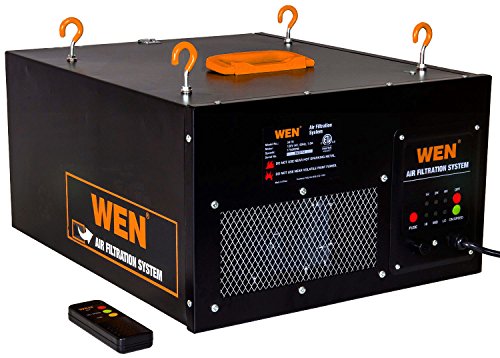
WEN 3410 3-Speed Air Filtration System
Fine dust that escapes and hangs in the air for hours afterward gets scrubbed here rather than collected at the tool. Hung from the ceiling with a remote and timer, it keeps running after the shop empties out. Pairing this with a collector, rather than choosing one over the other, is what a healthy shop looks like.
Pros
- Captures the fine dust collectors miss
- Timer keeps running after you finish
- Frees floor space by hanging overhead
Cons
- Does nothing at the source of the dust
- Needs secure ceiling mounting
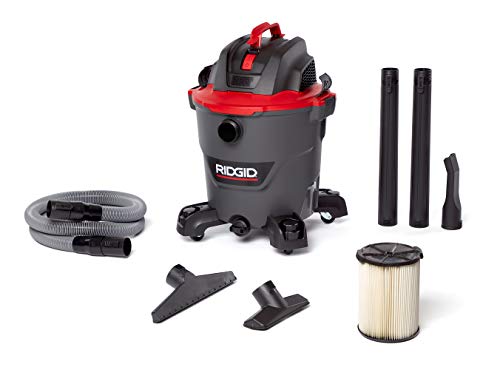
RIDGID NXT 16 Gallon Wet/Dry Shop Vacuum
High suction through a small hose beats high volume airflow for sanders, routers and track saws, which is exactly what this vacuum delivers. Strong sealed suction pairs with a large drum for fewer stops. Adding a separator and a fine filter covers everything a full size collector cannot reach.
Pros
- High suction suits sanders and routers
- Handles wet cleanup as well as dust
- Large drum reduces emptying frequency
Cons
- Airflow too low for a table saw or planer
- Loud without a muffler accessory

CRAFTSMAN CMXEVBE17595 16 Gallon Wet/Dry Vac
General workshop and garage cleanup, rather than machine dust collection, is where this large drum vacuum earns its keep. Sawdust, wet spills and car interiors all get handled equally well. Fitting a fine dust filter still matters if this runs near woodworking machines regularly.
Pros
- Lowest cost large capacity option
- Useful well beyond the workshop
- Simple to maintain and empty
Cons
- Standard filter passes fine dust
- Not a substitute for a dust collector
How they stack up
| # | Model | Motor | Best for | Score | Price |
|---|---|---|---|---|---|
| 1 | Shop Fox W1685 1.5 HP Dust Collector | 1.5 HP | Best overall | 9.4 | Check price |
| 2 | Oneida Air Systems Dust Deputy Deluxe Cyclone Separator | Cyclone separator | Best upgrade | 9.2 | Check price |
| 3 | JET DC-1100VX-CK Dust Collector | 1.5 HP class | Best filtration | 9.0 | Check price |
| 4 | WEN DC1300 Dust Collector | Entry level induction motor | Best value collector | 8.8 | Check price |
| 5 | WEN 3410 3-Speed Air Filtration System | Ceiling mounted air filtration | Best for airborne dust | 8.6 | Check price |
| 6 | RIDGID NXT 16 Gallon Wet/Dry Shop Vacuum | 16 gallon drum | Best for small tools | 8.3 | Check price |
| 7 | CRAFTSMAN CMXEVBE17595 16 Gallon Wet/Dry Vac | 16 gallon drum | Best budget | 8.0 | Check price |
How to pick the right one
Airflow and suction solve different problems Dust collectors move large volumes of air at low pressure, which clears chips from a table saw or planer port. Shop vacuums produce high suction through small hoses, which a random orbit sander actually needs. Buying one for the other job disappoints in both directions, so match the tool category to the dust source first.
Why rated CFM falls off in real ducting Manufacturers measure airflow at the inlet with nothing attached to it. Every foot of flex hose, every elbow and every reduction cuts that number substantially. Keep runs short, use smooth wall pipe where possible, and size the port to the machine rather than necking down to a small hose at the tool.
Filter rating is the health question Standard bags on entry collectors pass fine particles straight back into shop air, and that is the dust that reaches deep into lungs. Canister filters rated for fine particles cost more and deserve priority over extra motor power. Filter micron rating is the number worth comparing first, based on specifications.
Best dust collection setup for a small shop on a budget A cyclone separator ahead of the filter drops most material into a bucket, keeping airflow constant and extending filter life substantially. Owners report it delivers the cheapest change with the largest day to day effect, particularly on shop vacuums where suction otherwise fades within minutes of planing or routing. Adding an air filtration unit afterward catches whatever still escapes into the room.
Good to know
Is a shop vacuum enough for dust collection?
For sanders, routers and track saws, yes. A table saw, planer, jointer or bandsaw needs high volume airflow rather than high suction, so a shop vacuum falls short there. Many shops end up running both types together.
What horsepower do I need for a dust collector?
One and a half horsepower handles a single machine at a time in a small shop. Larger ducted systems serving several machines need more power. Hose length, port size and filter condition affect day to day performance more than motor power alone.
Do I need a cyclone separator?
It is not required but ranks as the highest value addition for most shops. Suction stays stable, filter life extends, and emptying gets far cleaner, since chips land in a bucket rather than packing a filter.
What micron rating should I look for in a filter?
Standard bags often pass particles well above thirty microns, while fine canister filters capture down to a few microns or less. Fine airborne particles pose the real health concern, so a lower micron rating is genuinely better.
Is an air filtration unit worth adding to a shop?
Yes, for anyone working with wood regularly. Collectors capture dust at the source, but fine particles still escape and hang in the air for hours. A ceiling unit running on a timer clears that air after work finishes.
Can I use flexible hose for the whole dust collection run?
Flex hose works but creates far more resistance than smooth pipe. Rigid pipe suits long runs better, with flex reserved for the short final connection at each machine.
Should I ground my dust collection ducting?
Static builds up in plastic ducting and is worth managing, mainly to avoid unpleasant shocks and dust clinging to pipe walls. Metal pipe or a grounding wire run through plastic pipe handles this in most shops.
How often should dust collector filters be cleaned?
Clean or shake filters when airflow noticeably drops, which in a busy shop can mean weekly. An upstream separator extends that interval dramatically, and a clogged filter remains the most common cause of a collector seeming to lose power.
What is the difference between a dust collector and a cyclone separator?
A dust collector is the complete machine, motor, filter and collection bag included. A cyclone separator is an add on that sits ahead of an existing shop vacuum or collector, dropping heavy debris into a bucket before it reaches the filter.
The verdict
The Shop Fox W1685 brings real dust collection to a small shop without needing a dedicated room, and it accepts a fine filter canister for anyone wanting better filtration later. The Oneida Dust Deputy Deluxe stands out as the best value change for anyone already running a shop vacuum, and the WEN DC1300 offers the cheapest way into proper airflow.
Jake Monroe
Jake worked as a residential contractor for over a decade before shifting to full-time writing. He evaluates power tools, hand tools and workshop gear through the lens of someone who has actually used them on job sites, not just read the box.


