Dumbbells for Building Strength Without a Full Gym
Bowflex SelectTech 552 tops this list, replacing fifteen pairs of fixed dumbbells in one footprint. PowerBlock Elite EXP is the most space efficient adjustable option. CAP Barbell Cast Iron Hex dumbbells suit anyone who would rather skip adjustment mechanisms entirely.
Bowflex SelectTech 552 leads this ranking because one pair covers light isolation work through heavier pressing without filling a rack. PowerBlock Elite EXP takes the top spot when floor space runs genuinely tight. CAP Barbell Cast Iron Hex dumbbells stay the simplest, most durable pick for anyone who would rather not adjust anything.
Dumbbells look like a simple purchase until adjustment mechanisms enter the comparison, since a five second dial and a one minute collar change how an entire workout flows. We compared weight ranges and increments, adjustment style, handle diameter and grip texture, footprint, and durability as owners report it. Seven options across adjustable and fixed designs made the final list.
How to pick the right one
Should you buy adjustable or fixed dumbbells? Adjustable dumbbells save enormous space and money once a routine calls for more than three or four weights, which is why they dominate this ranking. Fixed dumbbells win on durability, hand feel, and speed during circuits, where changing weight mid set is not practical. A small rack and repeated weights favor fixed iron. Everything else favors adjustable.
Why do increments matter more than the top weight? A pair that jumps in 5 pound steps works fine for rows and presses but feels coarse for lateral raises and rotator cuff work, where 2.5 pounds matters. Check the smallest available setting too, since some adjustables start at 10 pounds and become useless for rehab or beginner isolation work. The useful range is whatever gets trained regularly, not the number on the box.
How much does dumbbell length and handle feel matter? Adjustable dumbbells run longer than fixed dumbbells of equal weight, which can catch on a bench or on the legs during pressing. Cube style designs keep length constant, a detail many owners prefer for control. Handle diameter and knurling matter too, since a smooth handle turns slippery fast once hands start to sweat.
How do you protect the floor and the adjustment mechanism? Adjustable dumbbells contain moving parts that dislike being dropped, and cast iron dents laminate and tile with ease. A rubber mat under the training area solves both problems and cuts noise for anyone below. Returning adjustables to their tray for every weight change matters too, since the mechanism relies on the cradle to reseat plates correctly.
Our top picks

Bowflex SelectTech 552 Adjustable Dumbbells
A dial at each end selects the plates, so moving from a warm up weight to a working set takes seconds rather than minutes. Its range covers most upper body training for beginners and intermediates in a single pair. Owners report the plastic tray is worth keeping, since the mechanism relies on it to reseat plates correctly.
Pros
- Fast weight changes between working sets
- Fine 2.5 pound increments suit smaller muscle groups
- Major space saving compared to a fixed rack
Cons
- Longer than a fixed dumbbell of equal weight
- Plastic housing dislikes being dropped

PowerBlock Elite EXP Adjustable Dumbbells
A nested cube design keeps the dumbbell the same short length at every weight, easier to store and control near the body than longer adjustable designs. Pin adjustment moves quickly once the pattern becomes familiar. Expansion kits raise the ceiling later without replacing the base set.
Pros
- Smallest footprint among the adjustables here
- Length stays constant regardless of weight
- Expandable rather than a full replacement later
Cons
- Square shape feels unfamiliar at first
- Handle sits inside the block, limiting some grips

CAP Barbell Cast Iron Hex Dumbbells
Solid cast iron with a hex head that will not roll, this is the dumbbell that outlives everything else in a home gym. No mechanism exists to fail, and no plastic exists to crack. Each weight needs its own pair, so storage demand grows fast as the collection expands.
Pros
- Effectively indestructible under normal use
- Hex heads stay put once set on the floor
- Zero adjustment time needed between sets
Cons
- Needs significant storage space for a full range
- Bare iron can rust in a damp garage

Amazon Basics Rubber Encased Hex Dumbbell
Rubber coating protects both floor and dumbbell, which matters most for a spare room or laminate flooring. Its chrome handle stays comfortable without an aggressive knurl. Buying a handful of key weights instead of a full set is the sensible approach with this line.
Pros
- Rubber coating protects floors and cuts noise
- Comfortable handle across higher rep ranges
- Solid price per pound compared to premium hex
Cons
- New rubber carries a strong smell at first
- Handles can loosen under heavy repeated use
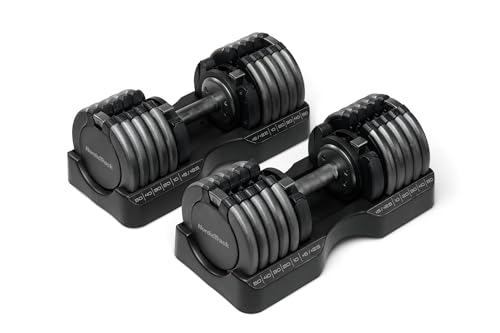
NordicTrack Select-a-Weight 55 lb Dumbbell Set
This set pushes its top weight higher than most adjustables, extending useful life as pressing and rowing strength improve. Sliders on the tray handle adjustment instead of a dial. Owners report it feels solid at heavier settings, where some rival adjustables start to rattle.
Pros
- Higher top weight than most adjustable rivals
- Feels solid and stable at heavy settings
- Storage tray keeps plates organized between uses
Cons
- Starts at 10 pounds, less useful for rehab work
- 5 pound increments run coarser than rivals
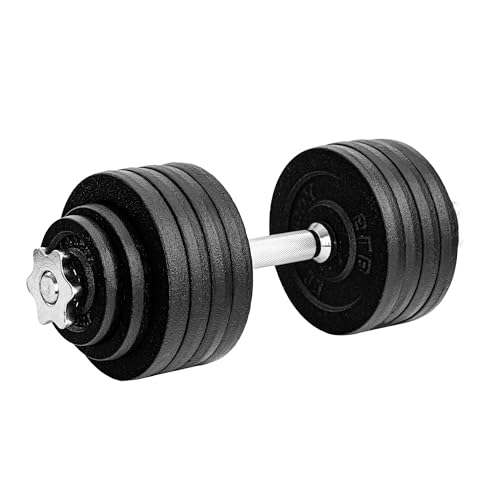
Yes4All Adjustable Cast Iron Dumbbell Set
This is the traditional approach: a threaded handle, loose plates, and spin lock collars. Changing weight runs slower than any dial system, but nothing about it breaks in a way that cannot be fixed. It is also the cheapest route to a genuinely wide weight range.
Pros
- Lowest cost for covering a wide weight range
- Nothing complex exists to fail mechanically
- Extra plates stay cheap to add later
Cons
- Slow to change weight between working sets
- Collars need checking partway through a workout
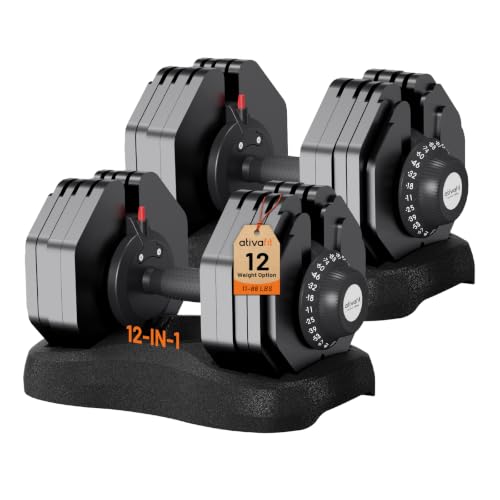
ATIVAFIT Adjustable Dumbbell
A single dial adjustable with a lower top weight, built for people starting out or training mostly at higher repetitions. It handles lighter and costs less than the flagship adjustables above. Stronger lifters tend to outgrow its ceiling within a year or so.
Pros
- Approachable weight range for new lifters
- Dial changes weight quickly between sets
- Smaller size stores away more easily
Cons
- Top weight limits long term use for pressing
- Plastic shell needs careful, gentle handling
Side by side
| # | Model | Weight range | Best for | Score | Price |
|---|---|---|---|---|---|
| 1 | Bowflex SelectTech 552 Adjustable Dumbbells | 5 to 52.5 lb per dumbbell | Best overall | 9.4 | Check price |
| 2 | PowerBlock Elite EXP Adjustable Dumbbells | 5 to 50 lb, expandable | Best for small spaces | 9.2 | Check price |
| 3 | CAP Barbell Cast Iron Hex Dumbbells | Solid cast iron | Best fixed weight | 9.0 | Check price |
| 4 | Amazon Basics Rubber Encased Hex Dumbbell | Rubber encased heads | Best value | 8.7 | Check price |
| 5 | NordicTrack Select-a-Weight 55 lb Dumbbell Set | 10 to 55 lb per dumbbell | Best for heavier lifting | 8.5 | Check price |
| 6 | Yes4All Adjustable Cast Iron Dumbbell Set | Spin lock handle with plates | Best budget adjustable | 8.2 | Check price |
| 7 | ATIVAFIT Adjustable Dumbbell | Up to 27.5 lb per dumbbell | Best for beginners | 8.0 | Check price |
Questions worth asking
Are adjustable dumbbells worth it for a home gym?
For home training with limited space, yes. One pair replaces a dozen or more fixed pairs at a fraction of the cost and floor area. The tradeoff is a mechanism that needs more care than solid iron.
What weight dumbbells should a beginner start with?
Most beginners progress quickly, so an adjustable pair starting around 5 pounds and reaching into the forties covers the first year or two. A single heavy fixed pair usually skips the light weights that shoulder and arm work actually needs.
Can adjustable dumbbells be dropped?
They should not be. Plate selection mechanisms fit together precisely, and a drop can misalign them for good. Fixed rubber coated dumbbells are the safer choice if training involves dropping weights regularly.
How much space does a dumbbell set need?
An adjustable pair with trays takes roughly the footprint of a large suitcase. A fixed set covering the same range needs a rack around six feet wide, the main reason adjustables dominate home setups.
Are rubber coated dumbbells better than bare iron?
Rubber protects flooring, cuts noise, and resists rust, which suits indoor and garage use well. Bare cast iron costs less and stays slightly more compact for the same weight, but it marks floors and can develop surface rust in damp conditions.
How do you stop dumbbell handles from feeling slippery?
Chalk or lifting gloves both help, and a moderately knurled handle grips far better than smooth chrome. Wiping handles down after each session also stops sweat residue from building into a slick film over time.
Can one pair of dumbbells build real strength?
Yes, particularly with a range reaching into the forties or fifties per hand. Progression comes from repetitions, tempo, range of motion, and exercise selection as much as raw load, so one well chosen pair supports years of training.
Do you need a bench along with dumbbells?
A bench widens what gets trained considerably, especially chest and shoulder pressing. It is not essential at the start, since floor presses, rows, squats, and carries cover a lot of ground with dumbbells alone.
Our take
Bowflex SelectTech 552 remains the dumbbell most home gyms should buy, covering a genuinely useful range with fast dial changes and fine increments at the light end. Choose PowerBlock Elite EXP when storage space is the binding constraint, or CAP Barbell Cast Iron Hex dumbbells for equipment that keeps working decades from now.
Derek Holt
Derek has a background coaching recreational and amateur athletes and has worked the sales floor at specialty fitness retailers. He focuses on equipment durability, ergonomics and realistic use cases rather than marketing claims.