Seven DSLRs worth buying while stock still lasts
Canon’s EOS 90D ranks first here, pairing a 32.5MP APS-C sensor with 45 cross-type focus points and 10 fps bursts. Wildlife shooters chasing cleaner ISO 6400 files should look at the Nikon D7500. Beginners learn faster on the Nikon D3500, rated near 1,550 shots per charge.
Canon’s EOS 90D is the pick for most DSLR buyers, and especially for crop-sensor sport, wildlife and 4K work. Its 32.5MP files survive hard crops, and one charge covers roughly 1,300 frames. Weight is the compromise at about 701 grams before you add a lens.
Most DSLR lines stopped getting new models years ago, so listings now mix current bodies with discontinued stock. We compared sensor resolution, focus point spread, frames per second, viewfinder coverage and rated battery life. Owner feedback on focus reliability and lens availability broke the remaining ties. Bodies no longer built new were left out.
Before you buy
What to look for in a DSLR Sensor format drives every other decision. APS-C bodies stay compact and take lighter lenses, while full frame gathers more light per pixel and keeps noise down at high ISO. Autofocus point count comes next, because 9-point arrays lose moving subjects near the frame edges. Viewfinder coverage deserves a check as well: at 100 percent, what you compose matches the recorded file exactly. Lens mount sets your long-term options, and the EF-S and F-mount catalogues run far deeper than K-mount.
Choosing a first DSLR and lens A second lens improves photos more than a better body for almost every new owner. Entry sensors at 24MP already out-resolve anything printed at A3 or posted online. Both the D3500 and Rebel T7 mount enormous used lens catalogues, so a 50mm prime or a telephoto zoom is easy to source. Guide Mode or a touchscreen helps when camera menus feel opaque. Skip weather sealing at this stage, since it adds bulk you will not use yet.
Which DSLR handles wildlife and sport best Frame rate on its own settles nothing. Buffer depth decides how many seconds that frame rate lasts, and point spread decides whether a bird near the edge of the frame stays sharp. Nikon’s D7500 combines 8 fps, 51 points and about 50 raw frames of headroom. Canon’s 90D answers with 10 fps and 32.5MP, useful when a subject sits too far away to fill the frame. Teleconverters cost you light, so a fast prime beats a slow zoom in woodland shade.
Weight, weather sealing and video limits Mirror-box autofocus cannot run during video capture, which is why DSLR video trails mirrorless. Canon works around that with Dual Pixel AF in live view, and that is why the 90D and SL3 lead here on 4K. Travellers should weigh the body first, since 449 grams versus 701 grams changes what is still in the bag by evening. Coastal and winter shooters gain more from the K-70’s 100 seals than from extra megapixels. Anyone whose main output is video should look at mirrorless instead of any body on this page.
The best picks, ranked

Canon EOS 90D
No other crop-sensor DSLR reaches 32.5MP. Viewfinder shooting draws on 45 cross-type phase points, while live view hands focus duty to Dual Pixel AF. Uncropped 4K at 30 fps is unique in this lineup, and the mechanical shutter tops out at 1/8000.
Pros
- 32.5MP allows tight crops without visible mush
- Records 4K at 30 fps with no sensor crop
- Seals cover the card door, buttons and seams
Cons
- 701 grams of body adds up over a long hike
- Rolling shutter skews verticals in fast 4K pans
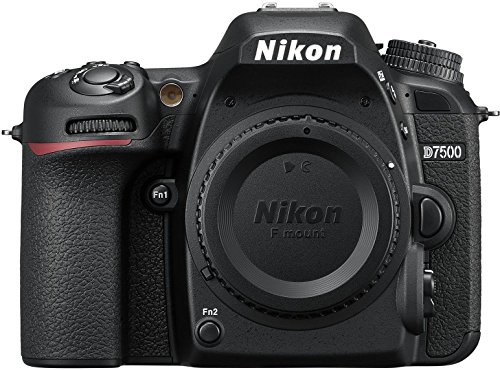
Nikon D7500
Nikon reused the D500 sensor here, favouring clean high ISO output over pixel count at 20.9MP. Bursts run at 8 fps and hold roughly 50 frames of 14-bit raw before the buffer fills. Tracking comes from a 51-point module with 15 cross-type points, which holds birds in flight far better than any entry body listed.
Pros
- ISO 6400 files stay usable with light noise reduction
- Tilting touchscreen sits in a sealed chassis
- Buffer depth outlasts a long action sequence
Cons
- One SD slot rules out in-camera backup
- Nikon offers no vertical grip for this body

Canon EOS Rebel SL3
Canon’s lightest current DSLR weighs about 449 grams with battery and card fitted. Its vari-angle touchscreen rotates to face forward, which suits anyone recording themselves. DIGIC 8 processing brings 4K capture, though that mode crops into the sensor and narrows the view every lens gives you.
Pros
- 449 grams keeps carry-on weight sensible
- Screen flips forward for solo filming
- 1,070 shot rating from a small battery
Cons
- Viewfinder autofocus runs on just 9 points
- 4K crop turns wide lenses into standard ones
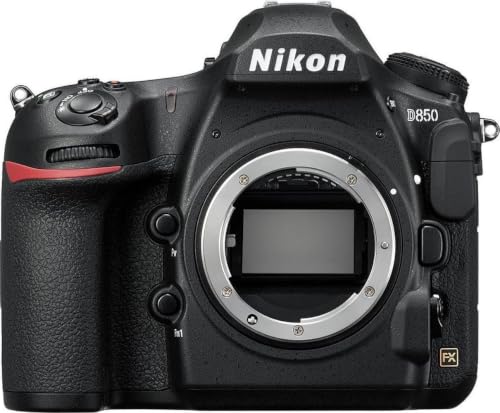
Nikon D850
At 45.7MP across a full-frame sensor, the D850 resolves more than anything else on this page. Nikon left out the optical low-pass filter, so foliage and fabric weave keep their texture at 100 percent view. Storage planning becomes part of the purchase, since raw files are large and the XQD slot expects fast cards.
Pros
- Detail supports gallery prints and severe crops
- Two card slots allow instant duplicate recording
- Battery rated around 1,840 frames per charge
Cons
- Body plus full-frame glass makes a heavy kit
- Large raw files fill cards and drives quickly

Nikon D3500
Nikon stripped the control layout down for first-time owners, leaving few buttons to misread. Guide Mode explains aperture, shutter speed and ISO on screen while you shoot. Battery life leads this group at roughly 1,550 frames, which matters on trips with no charging window.
Pros
- 1,550 shot rating beats every other body here
- Guide Mode turns the menu into a lesson
- 365 gram body fits a small sling bag
Cons
- No touchscreen and no microphone input
- Fixed screen makes waist-level framing guesswork

Canon EOS Rebel T7
Basics only: a 24.1MP sensor, DIGIC 4+ processing and a 9-point focus array. Wi-Fi and NFC push images to a phone with no card reader involved. Continuous shooting stops at 3 fps, so portraits, travel and family photos fit this body better than sport does.
Pros
- Opens access to hundreds of EF-S lenses
- Wi-Fi and NFC transfer built into the body
- Menu tree stays short for a first camera
Cons
- 3 fps cannot follow running children or pets
- Video stops at 1080p with no 4K mode

Pentax K-70
Pentax fits 100 seals around the K-70 chassis and rates the body to minus 10 C. Shake Reduction sits behind the mount, so even manual K-mount lenses from the film era gain stabilisation. Pixel Shift Resolution merges four exposures for extra colour detail on tripod-mounted static subjects.
Pros
- Sealing shrugs off rain, trail dust and frost
- In-body stabilisation works with any K-mount lens
- Vari-angle screen switches to a red night display
Cons
- K-mount lens and flash range trails Canon and Nikon
- Focus hunts in dim, low contrast scenes
Compared at a glance
| # | Model | Sensor | Best for | Score | Price |
|---|---|---|---|---|---|
| 1 | Canon EOS 90D | 32.5MP APS-C CMOS | Best overall | 9.4 | Check price |
| 2 | Nikon D7500 | 20.9MP APS-C CMOS | Best for wildlife and sports | 9.2 | Check price |
| 3 | Canon EOS Rebel SL3 | 24.1MP APS-C CMOS | Best for travel | 9.0 | Check price |
| 4 | Nikon D850 | 45.7MP full-frame CMOS | Best for landscape and studio detail | 8.8 | Check price |
| 5 | Nikon D3500 | 24.2MP APS-C CMOS | Best for beginners | 8.6 | Check price |
| 6 | Canon EOS Rebel T7 | 24.1MP APS-C CMOS | Best budget | 8.3 | Check price |
| 7 | Pentax K-70 | 24.24MP APS-C CMOS | Best for wet and dusty conditions | 8.0 | Check price |
Common questions
Is a DSLR still worth buying?
Yes, if you value an optical viewfinder, long battery life and a deep used lens market. New DSLR development has largely stopped, so treat these bodies as mature rather than cutting edge.
What is the difference between a DSLR and a mirrorless camera?
A DSLR reflects light off a mirror into an optical viewfinder, so you see the scene directly. Mirrorless bodies show an electronic preview instead, which previews exposure but drains the battery faster.
Which DSLR is best for beginners?
Nikon’s D3500 fits first-time owners best. Guide Mode explains settings on screen, the body weighs roughly 365 grams, and battery life is rated near 1,550 frames.
How many megapixels do you actually need?
About 20MP covers web use and prints up to A3. Go higher only for large prints or aggressive cropping, which is where the 45.7MP D850 earns its place.
Can a DSLR shoot 4K video?
Some can. Canon’s EOS 90D records uncropped 4K at 30 fps, the Rebel SL3 records 4K with a heavy crop, and the Rebel T7 stops at 1080p.
Do DSLR lenses work on mirrorless bodies?
Usually yes, using a first-party adapter. Canon EF and Nikon F glass mounts on RF and Z bodies with autofocus intact, which protects a lens collection if you switch systems later.
Canon EOS 90D vs Nikon D7500: which should you buy?
Choose the 90D for resolution, 4K video and reach when cropping. Pick the D7500 for cleaner files past ISO 6400 and a buffer that survives longer bursts at 8 fps.
What is the best DSLR for wildlife photography?
The D7500 leads on tracking, thanks to 51 focus points and a 50-frame raw buffer. Shooters who crop heavily may prefer the 90D, since 32.5MP leaves more detail after the crop.
How long does a DSLR shutter last?
Entry bodies carry ratings near 100,000 actuations, and the D850 is rated to 200,000. Owners report many bodies passing those figures, and shutter units can be replaced.
Does a DSLR need a fast memory card?
For 3 to 5 fps shooting, any modern UHS-I card keeps up. Burst shooters and 4K users want UHS-II, and the D850 pairs best with XQD for sustained raw sequences.
The bottom line
Buy the Canon EOS 90D unless something specific pushes you elsewhere, because 32.5MP, 10 fps and uncropped 4K sit together in no other crop DSLR. Wildlife shooters working at dusk and printing small get cleaner files from the Nikon D7500. First-time owners should keep it simple with the D3500, whose 1,550 shot rating outlasts a week of holiday shooting.
Marcus Chen
Marcus covered consumer electronics for enthusiast tech publications for six years before joining ChoiceCrest. He specializes in translating manufacturer spec sheets into plain-language buying advice, with a focus on audio, computing accessories and smart-home gear.


