6 Drones Worth Flying Whether You’re a Beginner or Pro
The DJI Mini 4 Pro leads because it packs omnidirectional obstacle sensing into a sub 250 gram airframe. Pick the DJI Air 3S when a larger sensor matters more than portability. The DJI Neo needs no controller at all.
Two numbers drive most drone decisions and they rarely move together. Takeoff weight decides whether you register the aircraft; sensor size decides how the footage looks at dusk. The DJI Mini 4 Pro stays under 250 grams while still sensing obstacles on every side, so it tops this list. Step up to the DJI Air 3S for a bigger sensor and a second focal length, or grab the DJI Neo when you would rather launch from your palm than learn stick control.
We compared sensor format, video modes, rated flight time, obstacle sensing coverage and folded dimensions across seven current models. Owner reports on real world endurance, wind handling and how often collision avoidance actually intervenes shaped the final ranking as much as the spec sheets did.
What to look for
What should I check before buying a drone? Weight decides your paperwork before anything else. Below 250 grams, most jurisdictions apply lighter registration rules for recreational flying. Cross that line and you are into registration, remote identification and often a basic competency test. Manufacturers design specifically around this threshold, which explains why the Mini series exists at all. Confirm your national rules before you shop, since the answer determines which half of the market applies to you.
Does sensor size matter more than video resolution? A 4K label describes pixel count, not quality. A 1 inch sensor gathers considerably more light than a 1/1.3 inch one, showing up as cleaner footage at dusk and more headroom for colour grading. Resolution above 4K mostly helps when reframing in the edit. Daylight flyers can skip the larger sensor; sunrise and sunset shooters should prioritise it.
How good is obstacle sensing on a drone? Marketing rarely distinguishes forward only sensing from true omnidirectional coverage. That gap matters because most collisions happen sideways, during automated tracking shots or while reversing out of a tight space. Omnidirectional coverage on a sub 250 gram aircraft was unusual until recently. No sensing system reliably spots thin hazards like power lines or netting, so treat it as backup, not a replacement for attention.
How long do drone batteries actually last? Manufacturers rate flight time in still air at constant speed, with no hovering and no aggressive manoeuvres. Owners report real world numbers land noticeably below that figure, especially in wind or cold. Land with a real reserve remaining, since fighting a headwind on the way back burns power fast. Spare batteries change the experience more than nearly any accessory, though on sub 250 gram drones check that a bigger battery does not tip you over the weight class.
The best picks, ranked

DJI Mini 4 Pro
Few light drones keep every safety feature intact, and this one does. Omnidirectional sensing, a 1/1.3 inch sensor and true vertical video make it equally useful for travel clips and social posts. Owners report it holds position in more wind than its weight would suggest.
Pros
- Stays under the lighter regulatory weight class
- Obstacle sensing on every axis, rare at this size
- Vertical shooting mode without cropping
Cons
- Smaller sensor than the Air and Mavic lines
- Extended battery pushes it over the weight limit

DJI Air 3S
A 1 inch wide sensor pairs with a medium telephoto camera, giving two usable framings without repositioning the aircraft. Endurance ranks among the longest in the consumer class, which matters more on location than any single spec. Based on specifications it sits mid pack for size but near the top for output quality.
Pros
- Two focal lengths widen what you can frame
- Long rated endurance per battery
- Strong low light performance from the 1 inch sensor
Cons
- Requires registration in most regions
- Bulkier folded than the Mini series

DJI Neo
Launching from an open hand and flying preset paths removes the part of drone flying that scares off newcomers. Integrated propeller guards make indoor flying realistic rather than reckless. Camera output trails the models above, but as a first aircraft it is the least likely to end up in a tree.
Pros
- Flies useful shots with no piloting skill
- Enclosed propellers make indoor use practical
- Very light and genuinely pocketable
Cons
- Small sensor limits low light footage
- Short flight time per battery

HoverAir X1
HoverAir built this around one job: filming you while you do something else. Its tracking modes reflect that single focus, and it folds flat enough for a jacket pocket. Owners report the subject tracking holds a lock better than phone gimbals during running and cycling.
Pros
- Tracking is the whole design, not an add on
- Folds smaller than any drone here
- No controller needed for the core modes
Cons
- Limited manual control compared with DJI
- Struggles in gusty conditions

DJI Mavic 3 Pro
A Four Thirds Hasselblad main camera gives this the largest sensor in the consumer range, and two additional telephoto cameras cover framings the rest cannot reach. Client delivery work is where this earns its cost. Transport is the trade off, since it is the heaviest aircraft in this comparison.
Pros
- Largest sensor available in this class
- Three focal lengths from one aircraft
- Professional codec and colour options
Cons
- Heaviest and least travel friendly here
- Significant investment for casual flying

Autel Robotics EVO Lite Plus
Anyone who would rather not standardise on one manufacturer lands here first. A 1 inch sensor with a physically adjustable aperture gives more exposure control than most rivals at this price. Software polish trails DJI, and owners report firmware updates arrive less often.
Pros
- Adjustable aperture is unusual at this level
- High resolution capture for reframing
- Independent alternative to the market leader
Cons
- App and firmware less refined than DJI
- Smaller accessory and parts ecosystem
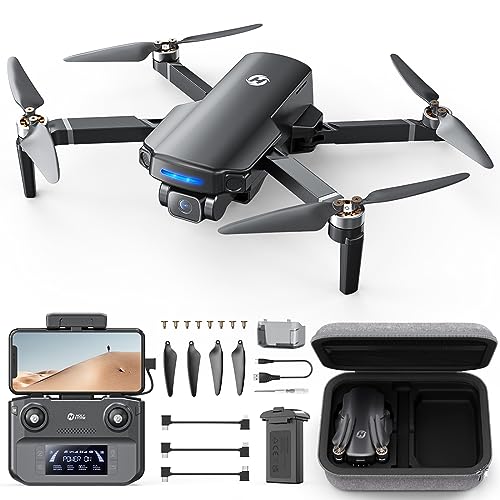
Holy Stone HS720E
Entry level buyers get the two features that matter most on a first GPS drone: satellite position hold and automatic return to home. Stabilisation is electronic rather than a mechanical gimbal, so footage stays steadier in calm air than in wind. It works well as a low cost way to find out whether the hobby suits you.
Pros
- GPS hold and return to home at entry level
- Two batteries commonly included
- Low risk introduction to the hobby
Cons
- Electronic stabilisation cannot match a gimbal
- Heavy enough to require registration
How they compare
| # | Model | Takeoff weight | Best for | Score | Price |
|---|---|---|---|---|---|
| 1 | DJI Mini 4 Pro | Under 250 grams | Best overall | 9.4 | Check price |
| 2 | DJI Air 3S | 1 inch wide plus telephoto | Best image quality | 9.2 | Check price |
| 3 | DJI Neo | About 135 grams | Best for beginners | 9.0 | Check price |
| 4 | HoverAir X1 | About 125 grams | Best for self filming | 8.8 | Check price |
| 5 | DJI Mavic 3 Pro | Four Thirds Hasselblad | Best for professional work | 8.6 | Check price |
| 6 | Autel Robotics EVO Lite Plus | 1 inch CMOS | Best alternative to DJI | 8.3 | Check price |
| 7 | Holy Stone HS720E | 4K with electronic stabilisation | Best budget | 8.0 | Check price |
Questions worth asking
Do I need to register my drone?
In most countries, yes, once the aircraft exceeds 250 grams, and you often need to display remote identification as well. Recreational flyers under that weight are frequently exempt from registration, though airspace rules still apply. Requirements vary by country, so check your national aviation authority before the first flight.
What does the 250 gram limit actually mean?
It is a regulatory weight class, not a performance measure. Authorities treat lighter aircraft as lower risk on impact, so registration and testing requirements ease up below that line. Several popular drones are engineered to weigh a few grams under the limit on purpose.
Is a bigger camera sensor worth the extra size?
For low light shooting, heavy editing or client delivery, yes. A 1 inch or Four Thirds sensor produces cleaner shadows and more grading latitude. Daylight flyers who value packing small often cannot tell the difference in the final clip.
How far can these drones fly from the controller?
Manufacturer range figures assume interference free conditions and exceed what regulations allow anyway. Nearly every jurisdiction requires visual line of sight, which limits practical range to a few hundred metres regardless of the radio link’s ceiling.
Can a beginner fly a camera drone safely?
Modern GPS models hold position the moment you release the sticks, removing most of the difficulty. Start in an open field away from people and trees, run a few batteries in calm weather, and learn how return to home behaves before trusting it fully. Propeller guards and automated flight paths cut the risk further.
How many spare batteries should I buy?
Two spares is the common recommendation among owners. One battery gives a short session once you factor in the reserve needed for the return leg. Bundle packs usually cost less than buying batteries separately later.
Do drones perform worse in wind and cold?
Both cut endurance noticeably. Heavier aircraft resist gusts better than sub 250 gram models, which get pushed around and burn extra power holding position. Cold weather reduces battery capacity, so warm packs before flight and expect shorter winter sessions.
Is a screen controller better than flying with a phone?
A built in screen removes the phone from the setup entirely, so calls cannot interrupt and phone battery is not a concern. That convenience adds cost and bulk. Occasional flyers do fine with a phone based controller, though owners report mounting a large phone securely is the main annoyance.
Drone vs action camera for travel footage, which wins?
A drone captures aerial perspective an action camera physically cannot reach, while an action camera works underwater and in tight spaces a drone cannot enter. Most travellers who want both angles end up owning one of each rather than choosing.
Our take
The DJI Mini 4 Pro suits most buyers because it delivers full obstacle sensing and capable footage while staying in the lighter regulatory class. Choose the DJI Air 3S when a larger sensor and second focal length would change what you can deliver. First time flyers take on the least risk with the DJI Neo.
Marcus Chen
Marcus covered consumer electronics for enthusiast tech publications for six years before joining ChoiceCrest. He specializes in translating manufacturer spec sheets into plain-language buying advice, with a focus on audio, computing accessories and smart-home gear.