Top Drawing Pencils for Kids That Spark Creativity
The Faber-Castell Jumbo Grip is our top pick for most kids because it features a break-resistant lead and an ergonomic triangular barrel that encourages a proper grip. Its main advantage is durability, surviving drops and heavy-handed strokes that are common in young children. A limitation is that the color range is limited to basic hues, so older kids may want more variety.
Choosing the right drawing pencil for a child can influence their interest in art. The best options are those that are easy to hold, produce clear lines, and resist breaking under pressure.
We looked at what parents and art teachers say about each set. From ergonomic jumbo pencils to water-soluble ones, this list covers a range of needs, from first scribbles to more detailed drawings.
The top picks, ranked

Faber-Castell Jumbo Grip Pencils with Eraser
These jumbo pencils are designed for small hands. The triangular shape and soft grip dots help kids hold them correctly. The lead is thick and break-resistant, making them ideal for rough use.
Pros
- Ergonomic design promotes proper grip
- Thick lead resists breaking
- Built-in eraser is convenient
Cons
- Limited to one lead hardness
- Eraser may wear out quickly

Staedtler Noris Club Triangular Pencils
These classic triangular pencils are a staple in many classrooms. The ergonomic shape reduces finger strain during long writing or drawing sessions. They produce smooth, dark lines that are easy to erase.
Pros
- Comfortable for extended use
- Break-resistant lead
- Smooth writing experience
Cons
- No eraser attached
- Can roll if not placed properly

Crayola Colored Pencils, 24 Count
Crayola offers a wide range of colors in a durable package. These pencils are pre-sharpened and have a thick, soft lead that is perfect for coloring and shading. They are ideal for kids who love to add color to their drawings.
Pros
- Vibrant color selection
- Pre-sharpened and ready to use
- Thick lead reduces breakage
Cons
- Not ideal for fine detail work
- Colors may smear if blended
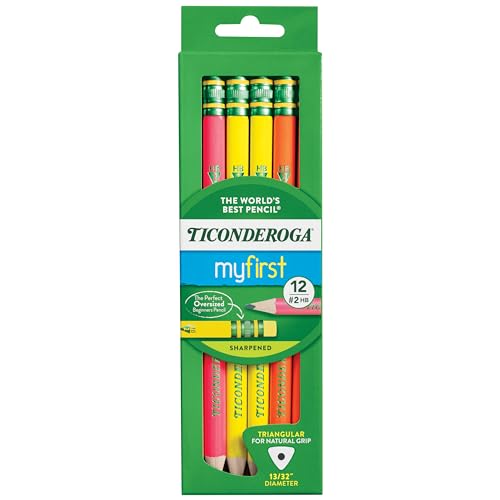
Ticonderoga My First Tri-Write Pencils
These extra-thick pencils are designed for the youngest artists. The triangular shape fits naturally in small hands, and the large diameter provides control. They come with a soft graphite core that makes marks easily.
Pros
- Extra-thick barrel for easy grip
- Soft lead is easy to see
- Long-lasting eraser
Cons
- Not suitable for older kids
- Lead may need frequent sharpening

Prismacolor Premier Colored Pencils, 24 Count
Prismacolor pencils are known for their rich pigments and smooth laydown. They are softer than typical school pencils, which allows for blending and layering. Older kids who are serious about art will appreciate the quality.
Pros
- Professional-grade pigments
- Smooth blending capabilities
- Durable leads with minimal breakage
Cons
- More expensive than others
- Soft lead requires careful sharpening

Lyra Rembrandt Art Design Pencils, 12 Count
This set includes a range of graphite grades from 2H to 8B, allowing kids to experiment with different line weights and shading techniques. The hexagonal barrel provides a comfortable grip, and the leads are break-resistant.
Pros
- Variety of hardness levels
- High-quality artist-grade graphite
- Good for teaching shading
Cons
- No eraser included
- Harder leads can be scratchy

Paper Mate Handwriting Mechanical Pencils, 0.7mm
These mechanical pencils feature a comfortable rubber grip and a retractable lead sleeve to prevent breakage. They are convenient because they never need sharpening, and the 0.7mm lead is sturdy for young writers.
Pros
- No sharpening required
- Refillable leads are economical
- Retractable tip protects lead
Cons
- Lead can snap if pressed too hard
- Small parts may be a hazard for young kids
The lineup, side by side
| # | Model | Graphite grade | Best for | Score | Price |
|---|---|---|---|---|---|
| 1 | Faber-Castell Jumbo Grip Pencils with Eraser | HB | Best overall for young kids | 9.4 | Check price |
| 2 | Staedtler Noris Club Triangular Pencils | HB | Best for school projects and homework | 9.0 | Check price |
| 3 | Crayola Colored Pencils, 24 Count | 24 | Best for vibrant colors and variety | 8.8 | Check price |
| 4 | Ticonderoga My First Tri-Write Pencils | HB | Best for beginners learning to write | 8.7 | Check price |
| 5 | Prismacolor Premier Colored Pencils, 24 Count | 24 | Best for older kids who want professional quality | 8.5 | Check price |
| 6 | Lyra Rembrandt Art Design Pencils, 12 Count | 2H, HB, B, 2B, 4B, 6B, 8B | Best for sketching and shading | 8.3 | Check price |
| 7 | Paper Mate Handwriting Mechanical Pencils, 0.7mm | 0.7mm | Best for kids who prefer a mechanical pencil | 8.0 | Check price |
How to choose
Frequently asked questions
What is the best pencil for a 3 year old?
For a 3 year old, look for extra-thick triangular pencils like Ticonderoga My First Tri-Write. They are easy to grip and have soft lead that marks without much pressure.
Are mechanical pencils suitable for young kids?
Mechanical pencils are generally recommended for kids 8 and up because they have small parts and the lead can break easily if not used carefully.
What does HB mean on a pencil?
HB stands for hard black, which is a medium grade. It is a good all-purpose choice for writing and drawing, not too hard or too soft.
How do I sharpen colored pencils without breaking the lead?
Use a sharpener designed for large or soft leads. Twist sharpeners or ones with a larger hole can be gentler. Rotate the pencil while sharpening and apply light pressure.
Can kids use artist-grade pencils like Prismacolor?
Yes, but they are softer and more expensive. They are best for older kids who have some drawing experience and want to blend colors or create detailed shading.
What is the difference between graphite and charcoal pencils?
Graphite is smooth and erasable, while charcoal is much darker, crumbly, and harder to erase. Charcoal is messier and better for advanced artists.
How many pencils should I buy for a child?
For general use, a pack of 12 is a good start. If they tend to lose pencils, consider a larger pack. For colored pencils, 24 colors offer a nice variety.
What is the safest pencil for toddlers?
The safest are those with no small parts and made from non-toxic materials. Look for extra-thick pencils that are clearly labeled for ages 2 and up.
Why do kids prefer colored pencils over crayons?
Colored pencils allow for more precision and control, which can be appealing as kids develop fine motor skills. They also don’t break as easily as crayons and can be sharpened to a point.
How can I encourage my child to draw more?
Provide a variety of materials and let them choose. Set up a dedicated art space and show interest in their work. Avoid criticizing their drawings and instead ask them to explain what they created.
Our take
For most families, the Faber-Castell Jumbo Grip pencils are the best investment because they balance ergonomics, durability, and affordability. If your child is older and interested in coloring, the Crayola Colored Pencils offer great value. For budding artists who want to explore shading, the Lyra Rembrandt set provides a range of grades at a reasonable price.
Jake Monroe
Jake worked as a residential contractor for over a decade before shifting to full-time writing. He evaluates power tools, hand tools and workshop gear through the lens of someone who has actually used them on job sites, not just read the box.


