Drain Cameras That Spot Clogs Before They Flood
Sanyipace Sewer Drain Camera leads with a stiff push cable and a distance counter that pinpoints the problem’s location. VEVOR Sewer Inspection Camera is the value choice for long main line runs. Teslong NTS300 covers short drain, trap and wall inspections instead of full sewer lines.
Sanyipace Sewer Drain Camera leads this roundup for a simple reason. Its push cable is stiff enough to drive around a bend, and an on-screen distance counter turns a video into actionable information. VEVOR Sewer Inspection Camera is the value pick for long main line runs. Teslong NTS300 is the right tool entirely for short branch drains, wall cavities and sink traps.
Drain cameras are easy to buy badly. Listings emphasize resolution and screen size, while cable stiffness, head diameter and lighting actually decide success. A soft cable coils up inside the pipe instead of advancing, and an oversized head will not pass a P-trap. We compared cable lengths and stiffness, head diameters, lighting, distance counters and reel construction. Owner reports about kinking cables and flooded heads after repeated use weighed heavily too.
The top picks, ranked

Sanyipace Sewer Drain Camera
A genuinely stiff fibreglass push cable pairs with a self-levelling head and an on-screen footage counter. Together they answer the question that matters most: how far down the problem sits. The monitor stays bright enough to read outdoors under a manhole cover. This targets residential main lines rather than small branch drains.
Pros
- Distance counter locates the fault precisely
- Cable stiff enough to push past bends
- Self-levelling image stays upright
Cons
- Head diameter too large for small traps
- Reel is heavy to carry any distance

VEVOR Sewer Inspection Camera
Long cable reels sell here at prices well below the professional brands, opening up a full main line inspection to landlords and serious homeowners. Image quality and build sit a clear step below trade equipment. For finding a root intrusion or a collapsed section on a residential run, it does the job asked of it.
Pros
- Longest reels at the lowest cost here
- Adequate image for spotting major faults
- Recording included on most versions
Cons
- Build quality sits below trade standard
- Cable can kink if pushed carelessly
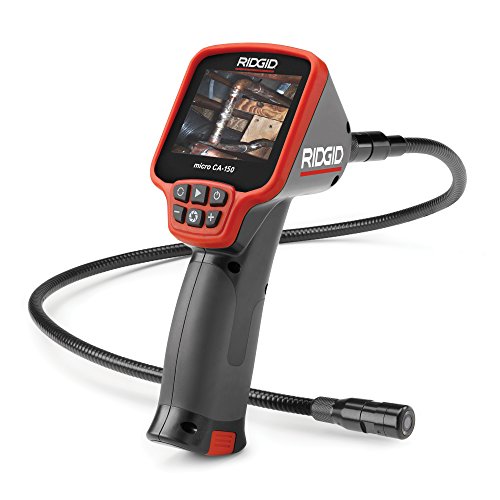
RIDGID micro CA-150 Inspection Camera
RIDGID builds this as a handheld inspection camera rather than a full sewer reel, backed by the durability and support the brand is known for. Wall cavities, appliance interiors and short drain runs suit it well, since the cable never needs to travel far. A full main line inspection calls for a different tool entirely.
Pros
- Durable construction with real support behind it
- Easy to handle one-handed
- Bright, adjustable head lighting
Cons
- Short cable rules out main line work
- Costs more than longer generic reels
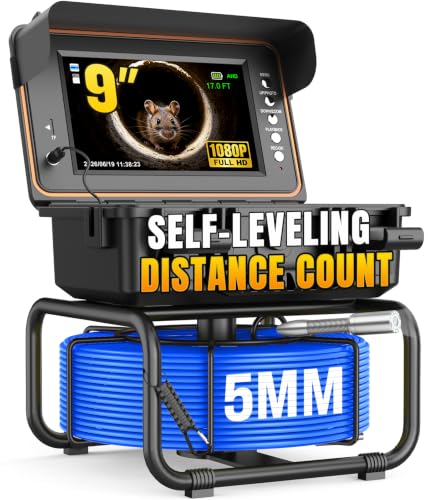
Anysun Sewer Pipe Inspection Camera
A smaller head diameter than most sewer reels lets this camera pass bends and narrower pipe that would stop a full-size unit. Less room for lighting is the tradeoff, so very large pipes look dim. Older properties with narrow branch lines often have no other option that fits.
Pros
- Passes bends that stop larger camera heads
- Suits older, narrow branch pipework
- Compact reel for its cable length
Cons
- Limited lighting inside large diameter pipe
- Softer cable needs careful feeding

Teslong NTS300 Dual Lens Borescope
This is a borescope rather than a sewer camera, with a slim flexible probe carrying both a forward and a side lens. Pipe walls become visible without twisting the cable at all. Sink traps, wall cavities, appliance backs and engine bays are its natural territory. With no push rod, it will not travel far into a drain unaided.
Pros
- Side lens shows pipe walls clearly
- Slim probe fits where nothing else will
- Useful well beyond plumbing tasks
Cons
- Flexible probe cannot be pushed down a drain
- Very short working range

DEPSTECH DS500 Endoscope Camera
The cheap end of the inspection market gets covered here, pairing a decent sensor with adjustable lighting in a compact endoscope. Checking a trap, a cavity or a blocked appliance outlet is entirely within its reach. Treat it as a diagnostic aid for accessible spots, not a substitute for a drain reel.
Pros
- Lowest cost way to see inside a pipe
- Adjustable lighting for close work
- Small enough to keep in a toolbox
Cons
- Not usable beyond a meter or two
- Image degrades in wet, dirty conditions

SYANSPAN Pipe Inspection Camera
Heavier reels here target people who inspect pipe regularly rather than once a year, with sturdier cable and more robust head sealing. That extra durability is the main argument over cheaper reels. Expect a learning period, since the interface feels dated and documentation runs thin.
Pros
- Durable cable and head sealing
- Suited to frequent, repeated use
- Distance readout on most variants
Cons
- Dated interface with thin documentation
- Bulky and heavy to transport
The lineup, side by side
| # | Model | Cable | Best for | Score | Price |
|---|---|---|---|---|---|
| 1 | Sanyipace Sewer Drain Camera | Stiff fibreglass push rod | Best overall | 9.4 | Check price |
| 2 | VEVOR Sewer Inspection Camera | Long reel options available | Best value for long runs | 9.2 | Check price |
| 3 | RIDGID micro CA-150 Inspection Camera | Handheld inspection camera | Best build quality | 9.0 | Check price |
| 4 | Anysun Sewer Pipe Inspection Camera | Small diameter | Best for tight bends | 8.8 | Check price |
| 5 | Teslong NTS300 Dual Lens Borescope | Dual lens borescope | Best for short inspections | 8.6 | Check price |
| 6 | DEPSTECH DS500 Endoscope Camera | Endoscope camera | Best budget inspection | 8.3 | Check price |
| 7 | SYANSPAN Pipe Inspection Camera | Heavy duty push rod | Best for repeated professional use | 8.0 | Check price |
How to choose
What size drain camera head fits your pipe? Head diameter is the constraint that stops most inspections before they start. A sewer camera head sized for a four-inch main line will not pass a sink trap or a two-inch branch. A slim borescope probe, meanwhile, has no stiffness and cannot be pushed any distance down a main line. Identify your pipe first, then buy the camera built to fit it.
How stiff does a push cable need to be? A push cable needs enough stiffness to transmit force around a bend without buckling, yet enough flexibility to negotiate that bend at all. Fibreglass push rods hit that balance, which is why professional reels use them. Soft cables coil inside the pipe and stop advancing after a few meters. That is the single most common complaint about inexpensive reels.
Why do distance counters and self-levelling heads matter? Finding a fault is only half the job. Knowing it sits roughly twelve meters from the cleanout tells a plumber exactly where to dig. An on-screen footage counter earns its cost on any camera meant for main lines. Self-levelling heads keep the image upright as the cable twists, making it easier to tell a crack in the crown from a deposit in the invert.
What can’t a drain camera tell you? A camera shows a blockage, a root intrusion, a collapsed section or a belly holding water. It does not show depth below ground or exact garden position, which needs a sonde in the head plus a separate locator receiver. Standing water also blocks a clear view, so clear some of the blockage or let flow run first.
Good to know
What length drain camera do I need?
For a residential main line to the street connection, twenty to thirty meters of cable covers most properties. Branch drains, sink lines and appliance outlets need only a few meters. Buying far more cable than necessary just makes the reel heavier without adding useful capability.
Can a drain camera go around tight bends?
Through gentle sweeps, yes. Sharp ninety-degree bends and P-traps are where most heads stop, and success depends on head diameter and cable stiffness together. Feeding the cable slowly while rotating it gently helps the head find its way around.
Do I need a sonde and locator with a drain camera?
Only if you need to know where the fault sits physically underground, for example before excavation work. A sonde inside the camera head sends a signal that a separate handheld receiver picks up on the surface. Most homeowner cameras include a footage counter but skip the sonde.
Will a drain camera work in standing water?
Poorly, since suspended debris scatters the LED light and clouds the image. Clear or partially clear the blockage first, or inspect once flow has drained away. That gives the head a clean view of the pipe wall instead of murky water.
Can a borescope replace a dedicated sewer camera?
For short, accessible runs such as a trap or a wall cavity, yes, and it costs less too. Beyond a meter or two into a drain, no, since a flexible borescope probe cannot be pushed along the pipe.
How do you maintain a drain camera cable?
Rinse and dry the cable as it winds back onto the reel, and never force it against resistance. Avoid sharp reverse bends near the head, where cables are most likely to kink. Check the head seal periodically, since a flooded head is the usual way these cameras fail.
Is buying a drain camera worth it versus hiring one?
For a single inspection, hiring or calling a plumber costs less. Landlords, property managers and anyone with recurring root problems typically recoup the cost within a couple of call-outs, and owning one lets you check results after clearing a blockage yourself.
What do tree roots look like on a drain camera?
Fine, hair-like strands or a dense mass entering through a joint or crack, usually along the upper part of the pipe. Paper and grease collect around them, so debris is often what you notice first rather than the roots themselves.
Our take
Sanyipace Sewer Drain Camera is the one to buy for residential main line work, since a stiff cable and a distance counter turn a video into something a plumber can act on. VEVOR Sewer Inspection Camera gets similar reach for less if plainer build quality is acceptable. For traps, cavities and appliance outlets, skip the reels entirely and reach for the Teslong NTS300 dual lens borescope.
Jake Monroe
Jake worked as a residential contractor for over a decade before shifting to full-time writing. He evaluates power tools, hand tools and workshop gear through the lens of someone who has actually used them on job sites, not just read the box.