Dough Proofing Boxes for Reliable Bulk Fermentation at Home
Cambro’s Camwear box is the standard choice across professional kitchens for its clear polycarbonate walls and stackable design. Carlisle’s StorPlus version stacks just as well at a slightly lower cost. Rubbermaid Commercial’s color-coded box helps anyone fermenting multiple dough types avoid mixing up which batch is which.
Cambro’s Camwear dough proofing box leads this list because it is the box most professional bakeries already standardized on, with clear polycarbonate sides that make it easy to watch a bulk dough rise without lifting the lid. Carlisle’s StorPlus box matters as a close alternative, stacking to the same footprint at a lower cost for anyone outfitting a home setup rather than a commercial kitchen. Rubbermaid Commercial’s color-coded version solves a specific problem, letting a baker running more than one dough type at once tell batches apart at a glance.
A proofing box needs to hold a bulk mass of dough through its rise while letting a baker see and track that rise without constantly checking underneath a cover. We compared material, depth options and stacking design across seven boxes built for bread and pizza dough fermentation.
How to choose
What a dough proofing box is built to do A proofing box holds a bulk mass of dough through its rise, giving a baker a way to watch that rise through clear sides rather than lifting a cover repeatedly and letting heat escape. Cambro’s Camwear box set the format most of this category follows, a rectangular container matched to standard half-sheet pan dimensions so it stacks with other kitchen equipment. A home baker using a mixing bowl can bulk ferment without a dedicated box, but a box’s flat, wide shape chills and proofs more evenly than a tall, narrow bowl.
Choosing a depth for your typical batch size A 3 inch box, like Vigor’s, suits a single loaf or a batch that will not expand dramatically during its rise, while a 6 inch box, like New Star Foodservice’s, gives more room for dough that doubles or triples in volume. Choosing a box too shallow for an expanding batch risks dough pushing against the lid before fermentation finishes. Choosing one too deep wastes shelf and fridge space that a shallower box would use more efficiently.
Polycarbonate versus polypropylene material Polycarbonate boxes, like Cambro’s, Carlisle’s and Thunder Group’s, offer the clearest view of a dough’s progress and resist impact better than softer plastics. Polypropylene boxes, like Rubbermaid Commercial’s, flex slightly rather than cracking under stress, at the cost of some visual clarity through the sides. Neither material affects the dough itself, so the choice comes down to how much a baker values seeing through the box clearly versus durability under rough handling.
Stacking, lids and fitting a proofing box into a workflow Matching footprint across boxes, as Cambro, Carlisle and Rubbermaid Commercial all do at 18 by 26 inches, lets different brands stack together rather than locking a kitchen into one supplier. A snug-fitting lid matters for retarding dough in a refrigerator, where a loose lid lets the dough’s surface dry out and form a skin. Buying a box and lid together, as Met Lux packages them, avoids the mismatch risk of ordering parts separately from different listings.
The best picks, ranked

Cambro Camwear Dough Proofing Box
Cambro’s Camwear box is the container most commercial bakeries already use, built from clear polycarbonate that resists impact better than lighter plastics and shows a dough’s rise clearly through the sides. Its 18 by 26 inch footprint matches standard half-sheet pan dimensions, so it stacks neatly with other kitchen storage. Graduated volume markings on the interior wall help track how much a given batch has expanded.
Pros
- Clear polycarbonate shows dough rise without opening the lid
- Standard footprint stacks with other half-sheet equipment
- Graduated markings help track fermentation progress
Cons
- Costs more than polypropylene alternatives
- Lid sold separately on some package configurations

Carlisle StorPlus Dough Proofing Box
Carlisle’s StorPlus box matches Cambro’s general design and material, stacking to the same 18 by 26 inch footprint at a lower price point. The clarity of the polycarbonate walls is comparable, making it easy to monitor a dough’s rise from the side. It lacks some of the graduated markings found on Cambro’s version, relying more on visual judgment than a printed scale.
Pros
- Lower cost than Cambro’s equivalent box
- Same stackable footprint as the industry standard
- Clear sides show dough rise well
Cons
- Fewer graduated markings than Cambro’s version
- Slightly less impact-resistant than premium polycarbonate

Rubbermaid Commercial ProSave Color-Coded Dough Box
Rubbermaid Commercial ships this box with color-coded lid options, letting a kitchen running more than one dough recipe at a time tell batches apart without labeling each one by hand. The box itself matches the standard footprint used by Cambro and Carlisle, so it stacks with existing equipment. Material is slightly more flexible than rigid polycarbonate, trading some clarity for lower breakage risk if dropped.
Pros
- Color-coded lids simplify tracking multiple dough types
- Standard footprint stacks with other half-sheet gear
- More flex-resistant to cracking than rigid polycarbonate
Cons
- Less visual clarity through the sides than polycarbonate
- Color coding only helps if a kitchen commits to the system

Thunder Group Polycarbonate Dough Proofing Box
Thunder Group positions this box as a lower-cost entry into the same polycarbonate category as Cambro’s and Carlisle’s boxes, without matching either brand’s reputation for long-term durability. It still offers the clear sides needed to watch a rise in progress. The standard footprint fits the same stacking systems as other half-sheet-sized boxes.
Pros
- Lower price than premium commercial brands
- Clear polycarbonate shows rise progress
- Standard size fits common stacking systems
Cons
- Less proven long-term durability than Cambro’s line
- Lid fit can be slightly looser than premium boxes

Met Lux Dough Proofing Box
Met Lux sells this box in smaller starter packs, suiting a home baker setting up bulk fermentation for the first time rather than a commercial kitchen buying in bulk. Material and general design follow the same polycarbonate standard as larger commercial brands. It comes with a matching lid included in most package configurations, unlike some commercial listings that sell lids separately.
Pros
- Starter pack sizing suits home bakers well
- Lid included rather than sold separately
- Same polycarbonate clarity as commercial brands
Cons
- Smaller pack sizes cost more per box than bulk commercial orders
- Less established track record than Cambro or Carlisle

New Star Foodservice Dough Proofing Box
New Star Foodservice focuses this listing on the deeper 6 inch option, giving a larger bulk dough mass more room to expand before it reaches the lid. That extra depth matters for recipes that double or triple in volume during a long bulk ferment. The same polycarbonate material and standard footprint apply as with other boxes on this list.
Pros
- 6 inch depth suits dough that expands significantly
- Clear sides track a large batch’s progress
- Standard footprint stacks with other equipment
Cons
- Deeper box takes up more fridge or shelf space
- Overkill depth for small, single-loaf batches
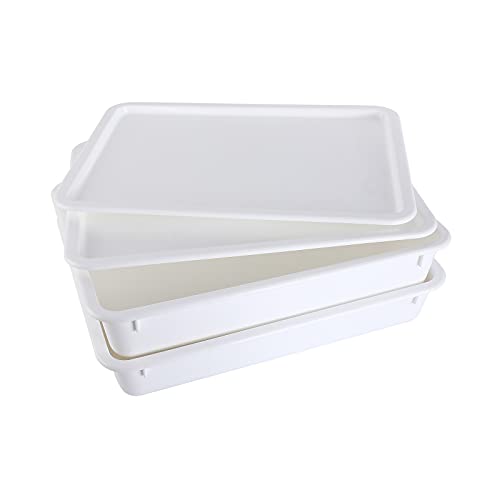
Vigor Dough Proofing Box
Vigor’s box uses the shallower 3 inch depth, suited to a single loaf’s worth of dough or a batch that does not need the extra headroom a 6 inch box provides. The shallower profile also stacks more boxes into the same vertical shelf or fridge space. Material and footprint match the standard found across this category.
Pros
- Shallow depth stacks more boxes per shelf
- Suits single-loaf or small batch fermentation
- Matches standard half-sheet footprint
Cons
- Not enough headroom for dough that expands significantly
- Less versatile than a 6 inch box for varied batch sizes
Compared at a glance
| # | Model | Material | Best for | Score | Price |
|---|---|---|---|---|---|
| 1 | Cambro Camwear Dough Proofing Box | Polycarbonate | Best overall, the professional kitchen standard | 9.2 | Check price |
| 2 | Carlisle StorPlus Dough Proofing Box | Polycarbonate | Best alternative at a lower cost | 8.8 | Check price |
| 3 | Rubbermaid Commercial ProSave Color-Coded Dough Box | Polypropylene | Best for tracking multiple dough types at once | 8.6 | Check price |
| 4 | Thunder Group Polycarbonate Dough Proofing Box | Polycarbonate | Best budget commercial-grade box | 8.3 | Check price |
| 5 | Met Lux Dough Proofing Box | Polycarbonate | Best value starter set for home use | 8.2 | Check price |
| 6 | New Star Foodservice Dough Proofing Box | Polycarbonate | Best deep box for larger bulk batches | 8.1 | Check price |
| 7 | Vigor Dough Proofing Box | Polycarbonate | Best shallow box for smaller single batches | 8.0 | Check price |
Frequently asked questions
What size dough proofing box is standard?
Most commercial boxes, including Cambro’s and Carlisle’s, use an 18 by 26 inch footprint that matches standard half-sheet pan dimensions.
Should I choose a 3 inch or 6 inch deep proofing box?
A 3 inch box suits smaller batches that will not expand much, while a 6 inch box gives more room for dough that doubles or triples in volume.
Can a dough proofing box go in the refrigerator for cold retarding?
Yes, a box with a snug-fitting lid, like Cambro’s or Met Lux’s, works well for refrigerated cold fermentation without the dough drying out.
Is polycarbonate or polypropylene better for a proofing box?
Polycarbonate, used by Cambro and Carlisle, offers clearer visibility and more impact resistance, while polypropylene, used by Rubbermaid Commercial, flexes rather than cracking.
Do proofing boxes come with a lid included?
It varies by listing, with some commercial boxes selling the lid separately and others, like Met Lux’s starter packs, including it.
Can a proofing box be used for pizza dough as well as bread?
Yes, the same box works for bulk bread dough fermentation or for pizza dough before it is divided into individual balls.
Are these boxes dishwasher safe?
Most polycarbonate and polypropylene proofing boxes are dishwasher safe, though very hot wash cycles can shorten a plastic lid’s lifespan over time.
Why does my dough proofing box have measurement lines inside?
Graduated volume markings, found on boxes like Cambro’s, help track how much a dough has expanded without guessing by eye.
Can proofing boxes stack on top of each other while dough is rising?
Boxes with a secure lid can generally stack, though some bakers avoid stacking while dough is actively rising to prevent pressure on the lid.
Is a dedicated proofing box necessary for home bread baking?
Not strictly, since a large bowl works for occasional baking, but a flat box proofs more evenly and stacks better for anyone baking in bulk regularly.
Our pick
Cambro’s Camwear dough proofing box is the strongest choice for anyone who wants the same equipment professional bakeries rely on, thanks to its clarity, graduated markings and standard stacking footprint. Home bakers who want similar performance at a lower cost should choose Carlisle’s StorPlus box instead, since it matches the same footprint and material at a smaller price. Anyone running multiple dough recipes at once is better served by Rubbermaid Commercial’s color-coded version than by a single uniform box that offers no way to tell batches apart.
Dana Whitfield
Dana spent eight years buying and merchandising for a regional kitchenware retailer before moving into editorial work. She has handled thousands of SKUs across cookware, small appliances and kitchen organization, and focuses on the practical differences that matter once a product is actually in daily use.
You might also need

Top Hand Mixers for Home Bakers: From Light Whipping to Stiff Doughs

Dosing Cups Built for Home Baristas Who Weigh Every Shot

Top Drill Presses for Home Workshops: From Benchtop to Floor Models
