How to Pick a Disc Sander That Won’t Bog Down
WEN’s 6502 covers most home shops, pairing a 4×36-inch belt with a 6-inch disc for flat stock and curves. JET’s J-4002 steps up to a 3/4-horsepower motor for shops running stock through daily. POWERTEC’s DS4000 matches that same combo layout at a lower cost, best suited to occasional weekend projects.
WEN’s 6502 combo sander suits most home woodworkers, pairing a 4×36 belt with a 6-inch disc in one machine, though its 1/3-horsepower motor bogs down on aggressive hardwood removal.
Listings mix disc-only, belt-only, and combo machines under similar names, so models got grouped by table size and motor rating, then checked against owner feedback on runout and vibration.
Before you buy
What to look for in a disc sander Disc diameter sets how much surface you sand per pass. Six inches and 12 inches are the common benchtop sizes. Motor horsepower decides how well the machine resists bogging down in hardwood. Table tilt matters for beveled edges, and most benchtop units cover a 0 to 45 degree range.
Combo sanders vs disc-only machines Combo units like the WEN 6502 add a belt for flat stock removal alongside the disc for curves and edges. Disc-only machines such as the Delta 31-140 free up floor space for a dedicated belt sander elsewhere. Limited shop space favors a combo unit over two single-purpose machines.
How much motor do you need for daily use? Occasional project work runs fine on a 1/3-horsepower motor. Shops feeding stock through daily should step up to the JET J-4002’s 3/4-horsepower motor. That extra output resists stalling under sustained pressure, where smaller motors slow down or stop.
Dust collection and shop setup Most benchtop disc sanders include a dust port sized for a standard shop vac hose. Fine sanding dust builds up fast around the table and motor housing without collection hooked up. Plan for a vac line before the first cut, not after dust becomes a cleanup problem.
What we recommend
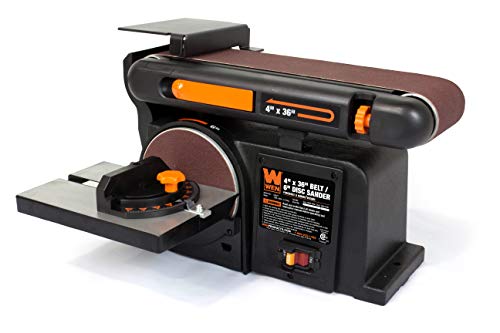
WEN 6502 Belt and Disc Sander
This combo machine puts a 4×36-inch belt beside a 6-inch disc, covering flat stock and curved edges in one footprint. Tilting the belt from horizontal to vertical helps with long boards. Swinging to 45 degrees, the cast iron table supports beveled work on the disc side.
Pros
- Combo layout covers two sanding tasks in one footprint
- Cast iron table resists flex under pressure
- Belt tilts to vertical for long-edge sanding
Cons
- Dust port needs a shop vac for real collection
- Motor bogs down on aggressive stock removal

JET J-4002 Belt and Disc Sander
JET builds this combo sander around a 3/4-horsepower motor, more than double the output of most benchtop disc sanders. Sharing a cast aluminum table, the 6-inch disc and 4×36 belt both tilt to 45 degrees. Cabinet shop owners report it holds up under repeated daily use.
Pros
- Motor handles harder woods without stalling
- Cast aluminum table stays flat over time
- Quick-release belt tension speeds up paper changes
Cons
- Heavier and larger footprint than hobby-grade sanders
- Costs more than single-purpose disc sanders
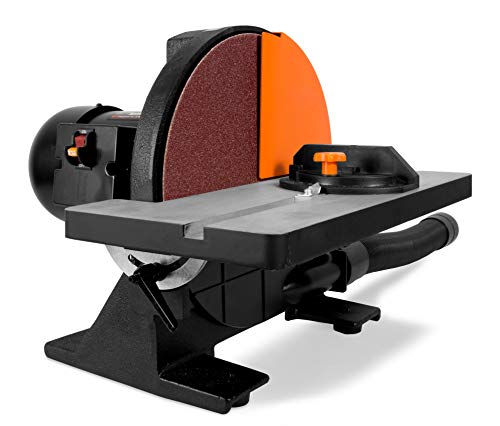
WEN 6524 12-Inch Disc Sander
A 12-inch disc adds more surface area than the 6-inch combo units above, useful for wide panels. Variable speed control between 1000 and 3100 RPM lets it match speed to material. Its cast iron table and miter gauge slot support angled sanding jigs.
Pros
- Larger disc covers wide stock in fewer passes
- Variable speed suits both wood and softer plastics
- Miter slot accepts standard sanding jigs
Cons
- No belt sander option, disc only
- Table tilt maxes out lower than the combo units

POWERTEC DS4000 Belt and Disc Sander
POWERTEC mirrors the WEN 6502 layout, a 4×36 belt beside a 6-inch disc, at a lower entry cost. Its cast iron table tilts to 45 degrees on both sides. Occasional hobby projects suit it better than daily production work.
Pros
- Lower cost than comparable combo sanders
- Cast iron table matches pricier competitors
- Compact footprint fits a benchtop in a small shop
Cons
- Dust collection port is narrow and clogs easily
- Vibration increases noticeably at higher belt speeds

Delta 31-140 Shopmaster Disc Sander
Delta focuses this machine on a single 12-inch disc paired with a miter gauge that adjusts in fine increments, useful for repeatable angled edges. A cast iron table tilts 45 degrees and locks with one lever. Belt sanding needs a separate tool, since this is disc-only.
Pros
- Fine miter adjustment aids repeatable angled joints
- Stronger motor than most single-disc competitors
- Single-lever table lock speeds up angle changes
Cons
- No belt sanding function included
- Larger cast iron base takes up more bench space

RIKON 50-122 Belt and Disc Sander
RIKON rates this combo sander for light metal grinding alongside standard woodworking use. A cast iron table carries the 6-inch disc and 4×36 belt through the same tilt range as the WEN and POWERTEC units. Its wider base improves stability during aggressive stock removal.
Pros
- Wider base reduces walking during heavy sanding
- Rated for light metal work, not just wood
- Tool-free belt tracking adjustment
Cons
- Motor is not stronger than similarly priced combo units
- Table tilt indicator is hard to read precisely
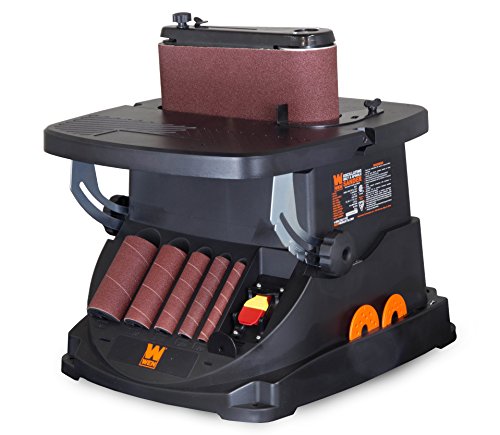
Grizzly G1014Z Combination Sander
Grizzly keeps the same 4×36 belt and 6-inch disc layout as pricier rivals, at entry-level pricing. Some refinements get skipped, like quick-release belt tension. Light hobby work still holds up fine on core sanding performance.
Pros
- Lowest price among the combo sanders in this lineup
- Same core disc and belt sizing as pricier competitors
- Compact footprint fits smaller workbenches
Cons
- Belt tension adjustment requires tools, not quick-release
- Fit and finish trail the WEN and JET models
How they stack up
| # | Model | Disc size | Best for | Score | Price |
|---|---|---|---|---|---|
| 1 | WEN 6502 Belt and Disc Sander | 6 inches | Best overall | 9.3 | Check price |
| 2 | JET J-4002 Belt and Disc Sander | 6 inches | Best for daily shop use | 9.0 | Check price |
| 3 | WEN 6524 12-Inch Disc Sander | 12 inches | Best for larger discs | 8.7 | Check price |
| 4 | POWERTEC DS4000 Belt and Disc Sander | 6 inches | Best value | 8.4 | Check price |
| 5 | Delta 31-140 Shopmaster Disc Sander | 12 inches | Best for precision edges | 8.2 | Check price |
| 6 | RIKON 50-122 Belt and Disc Sander | 6 inches | Best for edge grinding metal | 8.1 | Check price |
| 7 | Grizzly G1014Z Combination Sander | 6 inches | Best budget | 8.0 | Check price |
Good to know
What is the difference between a belt sander and a disc sander?
A belt sander runs a continuous abrasive loop for flat stock removal. A disc sander spins a flat abrasive wheel, better suited to curves and angled edges.
Can a disc sander sand metal?
Some models, like the RIKON 50-122, carry a rating for light metal grinding. Most benchtop disc sanders still target wood as the primary material.
What size disc sander do I need for a home shop?
A 6-inch disc covers most hobby woodworking tasks. Wider panels or production runs call for a 12-inch disc, like the WEN 6524.
Are combo belt and disc sanders worth it?
Yes, for shops short on floor space. Combo units like the WEN 6502 cover two sanding tasks without adding a second machine.
How much horsepower does a disc sander need?
1/3 horsepower handles occasional hobby use. Daily shop work benefits from 3/4 horsepower or more, as found on the JET J-4002 and Delta 31-140.
Do disc sanders need dust collection?
Yes, sanding dust piles up fast without it. Most benchtop models include a port sized for a standard shop vac hose.
Disc sander vs oscillating spindle sander, which is better for curves?
An oscillating spindle sander handles tight interior curves with more control. A disc sander works faster on outside edges and flat bevels.
What table tilt range should a disc sander have?
0 to 45 degrees covers most bevel and miter needs. That range is standard across the combo units in this comparison.
Is a 12-inch disc sander better than a 6-inch model?
A 12-inch disc covers more surface per pass, which speeds up wide panels. A 6-inch disc costs less and suits smaller, occasional projects fine.
How do you change sandpaper on a disc sander?
Most discs use hook-and-loop paper that peels off and presses back on. Belt models like the JET J-4002 add quick-release tension levers for faster belt swaps.
The bottom line
WEN’s 6502 remains the strongest starting point for most home shops, balancing belt and disc sanding in one compact machine. Shops running stock through daily should upgrade to the JET J-4002 for its stronger motor. Budget-conscious hobbyists get similar core performance from the POWERTEC DS4000 instead.
Jake Monroe
Jake worked as a residential contractor for over a decade before shifting to full-time writing. He evaluates power tools, hand tools and workshop gear through the lens of someone who has actually used them on job sites, not just read the box.


