Direct Boxes That Actually Solve Stage Hum and Buzz
Radial Engineering’s J48 leads this roundup with phantom-powered headroom and a rugged steel body. Acoustic players get more from the LR Baggs Session DI, thanks to its onboard EQ and feedback-fighting boost. For a proven budget option, the Pro Co DB-1 delivers transformer isolation with zero power source needed.
Radial Engineering’s J48 stands out as the strongest all-around direct box, an active phantom-powered unit with high headroom for basses, synths, and hot pickups. It fits most touring and studio setups, though it needs a phantom-capable mixer channel and costs more than a passive box. Musicians without phantom power available should look at a passive option like the Pro Co DB-1 instead.
Direct boxes look simple, but passive and active designs solve different stage problems, and picking wrong causes hum or a weak signal at the mixer. We compared connector layouts, power requirements, ground lift design, and frequency response across each listing’s own specifications, then weighed that against patterns in owner feedback.
What we recommend

Radial Engineering J48
The J48 runs on 48V phantom power pulled straight from the mixer, so there is no battery to forget. Class A discrete circuitry keeps headroom above +22dBu, which matters for active basses and keyboards with hot output. A switchable pad tames especially loud sources without clipping.
Pros
- No battery required thanks to phantom power draw
- High headroom handles active pickups and synths cleanly
- Rugged steel chassis built for daily stage use
Cons
- Needs a phantom-capable mixer input to operate
- Costs more than passive alternatives

LR Baggs Session DI
Built specifically for acoustic guitar and bass pickups, the Session DI adds a three-band EQ before the signal hits the board. A boost switch with a sweepable frequency tames feedback on stage. It runs on a 9V battery or 48V phantom power, so it still works without a powered mixer nearby.
Pros
- Onboard EQ shapes tone before the DI stage
- Sweepable boost control fights feedback live
- Works on battery or phantom power
Cons
- Priced higher than general-purpose DI boxes
- Overkill for electric guitar or bass rigs

Pro Co DB-1
The DB-1 has shipped on stages since the 1980s and remains a passive workhorse. An internal transformer isolates the signal without coloring the tone much. No power supply or battery is needed, which simplifies setup for a single instrument.
Pros
- No power source needed for basic operation
- Transformer isolation cuts ground hum reliably
- Compact metal housing survives years of touring
Cons
- Passive design loses some signal on long cable runs
- No onboard EQ or level boost
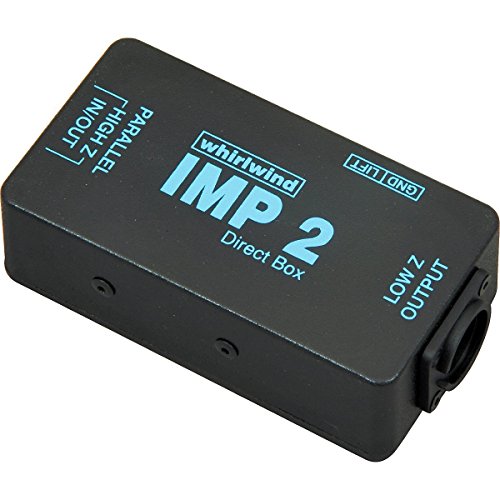
Whirlwind IMP 2
The IMP 2 packs two independent passive DI channels into one box, useful for stereo keyboards or a keys-and-vocal combo. Each channel gets its own ground lift switch, so hum on one line will not force a compromise on the other. Whirlwind builds the chassis from steel for repeated load-in and load-out.
Pros
- Two independent channels save space on a crowded stage
- Per-channel ground lift solves hum without shared tradeoffs
- Steel housing holds up to frequent transport
Cons
- Larger footprint than single-channel DI boxes
- No active boost for low-output sources

Radial Engineering ProDI
Radial trimmed the feature set down to essentials with the ProDI, a passive box built around a custom transformer. It handles guitar, bass, and keyboard lines without adding noise of its own. A pad switch and ground lift cover most troubleshooting needs on a small stage.
Pros
- Custom transformer keeps noise floor low
- Simple two-switch layout speeds setup
- Lower cost than active Radial models
Cons
- No phantom power option for hotter signals
- Single channel only, no stereo pairing
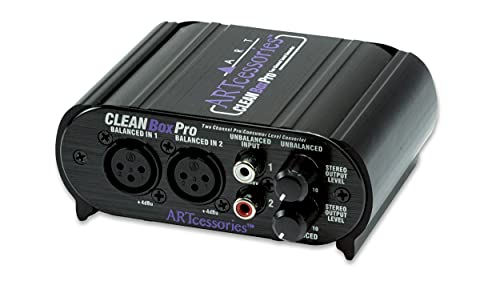
ART CleanBox Pro
The CleanBox Pro converts an unbalanced instrument signal to a balanced mic-level output using an internal transformer plus active buffering. Phantom power runs the circuit, so no battery compartment sits inside the housing. Engineers often reach for it when tracking direct guitar or bass parts that need a clean starting point.
Pros
- Transformer plus active stage lowers noise for recording
- No battery to replace since it runs on phantom power
- Compact enough for a crowded patch bay
Cons
- Requires a phantom-capable preamp or interface
- Limited pad options for very hot sources

Behringer Ultra-DI DI20
The DI20 gives budget-conscious buyers an active circuit without the higher cost of boutique brands. It runs on phantom power or a 9V battery, so it adapts to mixers without phantom output. A pad switch handles active basses and synth modules that would otherwise clip the input.
Pros
- Lowest cost active DI box in this roundup
- Runs on battery when phantom power is unavailable
- Handles hot signals with the built-in pad
Cons
- Plastic housing feels less rugged than metal competitors
- Owners report occasional switch reliability issues over years
What matters most
What a Direct Box Actually Does A direct box takes a high-impedance, unbalanced signal from a guitar, bass, or keyboard and converts it to a low-impedance, balanced signal a mixer can use over long XLR cable runs. Passive designs use an internal transformer and need no power source. Active designs add a buffering circuit, usually run on 48V phantom power or a 9V battery, which raises headroom for hot pickups. Ground lift switches break the connection between the instrument’s ground and the mixer’s ground, the usual fix for a 60-cycle hum.
Passive vs Active: Matching the Circuit to the Source Passive boxes like the Pro Co DB-1 and Radial ProDI suit most electric guitars and basses without extra cost or a power source. Active boxes such as the Radial J48 and Behringer DI20 add headroom for active pickups, keyboards, and drum machines that output a hotter signal. A passive box driving a long cable run can lose some high-frequency detail; an active buffer prevents that loss. Active designs make more sense when the source has low output or the cable run exceeds fifty feet.
Setups for Acoustic Instruments and Keyboards Acoustic guitar and bass players benefit from a DI with onboard EQ, since piezo pickups often sound thin or brittle without shaping. The LR Baggs Session DI adds a boost control tuned to fight feedback frequencies common on stage. Keyboard players running stereo synths need two independent channels, which the Whirlwind IMP 2 provides with separate ground lift switches per side. A single-channel box forces a mono mix or a second unit for true stereo.
Touring, Studio, and Heavy Daily Use Touring bands favor steel-housing passive boxes like the Pro Co DB-1 or Whirlwind IMP 2, since they survive repeated load-in without a battery to replace. Studio engineers often prefer the ART CleanBox Pro for tracking direct guitar or bass, where its transformer plus active stage keeps the recorded signal clean. Budget-conscious buyers building a first rig can start with the Behringer DI20, which runs on phantom power or a battery. Any of these boxes needs a working ground lift switch check before a show, since a bad connection causes the hum it was meant to prevent.
Compared at a glance
| # | Model | Type | Best for | Score | Price |
|---|---|---|---|---|---|
| 1 | Radial Engineering J48 | Active, phantom powered | Best Overall | 9.4 | Check price |
| 2 | LR Baggs Session DI | Active DI and preamp for acoustic instruments | Best for Acoustic Instruments | 9.1 | Check price |
| 3 | Pro Co DB-1 | Passive, transformer isolated | Best Budget Passive | 8.8 | Check price |
| 4 | Whirlwind IMP 2 | Passive, 2 channel | Best for Keyboards and Stereo Sources | 8.6 | Check price |
| 5 | Radial Engineering ProDI | Passive, single channel | Best Value Passive | 8.4 | Check price |
| 6 | ART CleanBox Pro | Active, phantom powered | Best for Studio Recording | 8.2 | Check price |
| 7 | Behringer Ultra-DI DI20 | Active, single channel | Best Budget Active | 8.0 | Check price |
Common questions
What does a direct box do for a guitar or bass signal?
It converts a high-impedance, unbalanced instrument signal into a low-impedance, balanced signal a mixer accepts over XLR cable. This prevents signal loss and hum on cable runs longer than twenty feet.
Is a passive or active DI box better for keyboards?
Active DI boxes generally suit keyboards better, since synths and drum machines often output a hotter signal that benefits from extra headroom. A passive box like the Whirlwind IMP 2 still works fine for most keyboard rigs at typical stage volumes.
Do direct boxes need phantom power?
Only active DI boxes need power, usually 48V phantom from the mixer or a 9V battery inside the unit. Passive boxes such as the Pro Co DB-1 and Radial ProDI need no power source at all.
Can a DI box fix ground hum on stage?
A ground lift switch on most DI boxes breaks the ground loop between the instrument and the mixer, the common cause of 60-cycle hum. It will not fix hum caused by lighting dimmers or faulty cables.
What is the difference between the Radial J48 and Radial ProDI?
The J48 is active and phantom powered with higher headroom for hot pickups, while the ProDI is passive and needs no power at all. The ProDI costs less and suits simple guitar or bass setups without active electronics.
Are DI boxes worth it for acoustic guitar?
Yes, especially with a piezo pickup, since a DI with onboard EQ like the LR Baggs Session DI can correct the thin tone piezos often produce. It also isolates the signal from ground hum before it reaches the house mixer.
How many channels does a direct box need for stereo keyboards?
Stereo synths need two independent DI channels, either from a two-channel box like the Whirlwind IMP 2 or two single-channel boxes. Each channel should have its own ground lift switch to avoid a shared hum problem.
What is the best budget direct box for a first rig?
The Pro Co DB-1 is a proven passive option that needs no power source and costs less than active alternatives. The Behringer DI20 is a solid active budget pick when a hotter signal needs extra headroom.
The verdict
The Radial Engineering J48 earns the top spot for its phantom-powered headroom and rugged build, a fit for touring musicians running active basses or synths. Acoustic players should choose the LR Baggs Session DI instead, since its onboard EQ and boost control address feedback that a general-purpose DI cannot. Anyone building a budget rig can rely on the Pro Co DB-1, a passive box that has proven itself on stages for decades without needing power.
Marcus Chen
Marcus covered consumer electronics for enthusiast tech publications for six years before joining ChoiceCrest. He specializes in translating manufacturer spec sheets into plain-language buying advice, with a focus on audio, computing accessories and smart-home gear.


