RV Water Filters for Owners Who Want a Digital Readout
Camco’s TastePURE RV/Marine Water Filter suits most rigs with a simple garden-hose-thread install. Culligan’s RVF-10 costs less per cartridge and wins on value. Clearsource’s Premium System suits full-time RVers who need higher-capacity, two-stage filtration. None of these seven filters include a digital screen; most rely on flow indicators instead.
Camco’s TastePURE RV/Marine Water Filter leads this list for weekend and seasonal RVers who want a simple garden-hose install. Carbon block media loaded with KDF-55 clears chlorine taste and odor within minutes of hookup. Its main limitation is a 2,000 gallon rating, which forces more frequent cartridge swaps than a larger canister system.
Digital rarely means a screen in this category; most listings use the word for flow meters or cartridge-life indicators sold separately. We compared filter media, micron rating, rated capacity, flow rate and connection hardware across current Amazon listings. Owner feedback on installation ease and taste improvement shaped the final ranking.
What we recommend

Camco TastePURE RV/Marine Water Filter with Flexible Hose Protector
Carbon block media combined with KDF-55 removes chlorine taste, odor and some heavy metals from hose-fed water. A flexible hose protector shields the housing from kinks and impact during towing or storage. Threading onto a standard garden hose takes just a few minutes, no tools needed.
Pros
- No-tool garden-hose-thread installation
- Flexible hose protector resists kinks and impact
- Removes chlorine taste and odor effectively
Cons
- 20 micron rating misses fine sediment in silty water
- Lacks a visual cartridge-life indicator
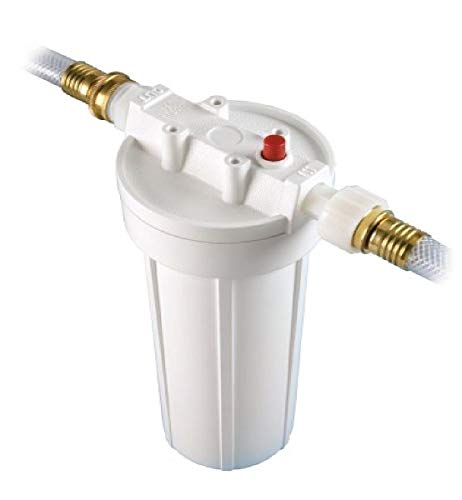
Culligan RVF-10 Exterior RV Water Filter
Culligan’s RVF-10 relies on a granular activated carbon cartridge inside an impact-resistant polypropylene housing built for outdoor mounting. Chlorine taste and odor drop noticeably, and replacement cartridges cost less than dual-stage systems. Owners who want a recognizable filtration brand without a canister setup gain a compact option here.
Pros
- Lower cost per replacement cartridge
- Trusted Culligan filtration brand
- Compact housing mounts near the hose bib easily
Cons
- 200 gallon rating means more frequent swaps on long trips
- No dedicated sediment pre-filter stage

Hydro Life 52200 Exterior RV and Marine Water Filter
NSF/ANSI 42 certification backs the Hydro Life 52200’s carbon block cartridge for chlorine taste and odor reduction. A mounting bracket secures the housing to a bumper or frame rail instead of letting it dangle from the hose. Certified media at a lower upfront cost than two-stage canister systems makes this the budget pick.
Pros
- NSF/ANSI 42 certification backs the taste and odor claims
- Mounting bracket keeps the housing stable in transit
- Costs less upfront than dual-stage options
Cons
- Single-stage design skips dedicated sediment filtration
- Replacement cartridges cost more than generic carbon filters
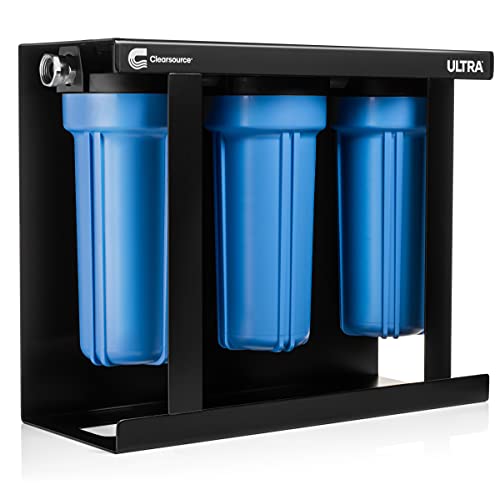
Clearsource Premium RV Water Filter System
Two 10 inch canisters run in series inside Clearsource’s Premium system, a 5 micron sediment filter followed by a carbon block. Larger cartridge volume means fewer replacements than single inline filters see during months of continuous use. Included mounting brackets and hose adapters suit a permanent installation.
Pros
- Two-stage filtration handles higher sediment loads
- Larger cartridges outlast single inline filters
- Clear housings show sediment buildup at a glance
Cons
- Bulkier footprint needs a dedicated mounting spot
- Higher upfront cost than single-stage inline filters

Camco EVO Premium RV/Marine Water Filter
A 5 micron sediment pre-filter stage sits ahead of the carbon block in the EVO Premium, catching silt and rust particles that clog single-stage filters fast. Camco rates this cartridge for higher-volume use than its base TastePURE line. Matching GHT fittings let owners swap it in without changing hose hardware.
Pros
- 5 micron sediment stage suits silty well or lake fill-ups
- Higher rated capacity than single-stage Camco filters
- Compatible with existing Camco hose fittings
Cons
- Costs more than the standard TastePURE model
- Bulkier housing than a single-stage inline filter

iSpring RVF10 Dual-Stage RV/Marine Inline Water Filter
Sediment and carbon block cartridges stack inside one dual-stage housing on iSpring’s RVF10. Quick-connect fittings let owners swap either cartridge independently rather than replacing the whole unit. Households already running iSpring filtration indoors gain matching cartridge sourcing outside.
Pros
- Independent cartridge replacement lowers long-term cost
- Quick-connect fittings speed up seasonal setup
- Dual-stage design outperforms single carbon filters on sediment
Cons
- Larger housing than a basic inline filter
- Replacement cartridges are less common at retail stores
Camco EVO Advanced Water Filter with Flexible Hose Protector
An added scale-inhibiting media stage sets the EVO Advanced apart from the EVO Premium, targeting hard water mineral deposits. Flexible hose protection and GHT fittings carry over from other Camco inline filters. Owners fighting scale buildup on fixtures often step up to this tier.
Pros
- Scale-inhibiting stage helps with hard water mineral buildup
- Shares fittings with other Camco EVO filters
- Flexible hose protector reduces housing damage
Cons
- Priced higher than single-stage filters
- Overkill for RVers on consistently soft city water
How they compare
| # | Model | Filter Media | Best for | Score | Price |
|---|---|---|---|---|---|
| 1 | Camco TastePURE RV/Marine Water Filter with Flexible Hose Protector | Carbon block with KDF-55 | Best overall | 9.4 | Check price |
| 2 | Culligan RVF-10 Exterior RV Water Filter | Granular activated carbon | Best value | 9.1 | Check price |
| 3 | Hydro Life 52200 Exterior RV and Marine Water Filter | Carbon block, NSF/ANSI 42 certified | Best budget | 8.8 | Check price |
| 4 | Clearsource Premium RV Water Filter System | 5 micron sediment plus carbon block | Best for full-time RVers | 8.6 | Check price |
| 5 | Camco EVO Premium RV/Marine Water Filter | Sediment pre-filter plus carbon block | Best for sediment-heavy water | 8.4 | Check price |
| 6 | iSpring RVF10 Dual-Stage RV/Marine Inline Water Filter | Sediment and carbon block cartridges | Best for dual-stage/canister systems | 8.2 | Check price |
| 7 | Camco EVO Advanced Water Filter with Flexible Hose Protector | Sediment, carbon block and scale inhibitor | Best for hard water | 8.0 | Check price |
Before you buy
What to Look for in an RV Water Filter Filter media decides what actually gets removed. Carbon block targets chlorine taste and odor, while an added sediment stage traps grit and rust. Micron rating shows the smallest particle a filter can catch, and 5 micron catches far more than 20 micron. Rated capacity, listed in gallons, signals how much water passes before a cartridge needs replacing. Nearly every RV filter uses a 3/4 inch garden hose thread, so it connects to a standard fresh-water hose without adapters.
What Does ‘Digital’ Mean on These Listings? Few listings for digital rv water filters ship with an actual screen. Most use the word loosely, pointing to compatibility with a separate flow meter or a phone app that tracks tank levels. Some filters rely on a mechanical or color-changing life indicator instead of electronics. Owners wanting a true digital readout typically pair one of these filters with a standalone inline flow sensor.
Matching a Filter to Your Water Source and Trip Length City water hookups at developed campgrounds usually need only chlorine taste and odor reduction, a job any single-stage carbon filter handles well. Wells, lakes and older municipal systems tend to carry more grit, favoring a two-stage filter with a dedicated sediment cartridge. Weekend trips push less total volume through a cartridge, so a lower-capacity filter like the Culligan RVF-10 still lasts a full season. Longer routes with unpredictable water quality justify carrying a spare cartridge no matter which filter gets chosen.
When a Canister System Pays Off for Full-Time RVers Full-time RVers push far more water through a filter each month than weekend campers do. A twin-canister system like the Clearsource Premium spreads that volume across two larger cartridges instead of one small inline filter. Fewer cartridge changes mean less time spent disconnecting hoses at inconvenient moments. Its bulkier setup needs a fixed mounting spot near the fresh-water connection, so it suits a permanent hookup better than a filter swapped between rigs.
Questions worth asking
Do any RV water filters have a real digital display?
No mainstream RV-specific filter on Amazon ships with a built-in screen right now. Listings calling a filter digital usually mean it works with a separate flow meter or a mechanical life indicator.
What micron rating works best for RV drinking water?
A 5 micron rating traps finer sediment than the 20 micron rating found on basic single-stage filters. Well water, lake fill-ups and older campground plumbing benefit from the lower number; clean city hookups often do fine at 20 micron.
How often should an RV inline water filter get replaced?
Replacement depends on rated capacity and gallons used, not a fixed calendar. A filter rated for 2,000 gallons might last a full season for weekend campers but only a few weeks of daily hookups for full-timers.
Can a regular garden hose filter replace an RV-specific one?
Standard garden hose filters often skip the flexible housing and freeze-resistant materials built into RV filters like the Camco TastePURE. They may work in mild weather but can crack under road vibration and temperature swings.
Is a two-stage RV water filter worth the extra cost?
Two-stage filters add a dedicated sediment cartridge ahead of the carbon block, extending the carbon stage’s life in gritty water. Owners filling up mostly from clean city hookups may not notice the difference and can save money with a single-stage filter.
Does an RV water filter reduce water pressure?
Any inline filter creates some pressure drop. Single-stage carbon filters like the Culligan RVF-10 restrict flow less than dual-stage canister systems, and owners with already-low campground pressure notice a bigger drop with two-stage setups.
What is the difference between inline and canister RV water filters?
Inline filters are compact, single-cartridge units that connect directly between the hose and the RV, like the Camco TastePURE. Canister systems such as the Clearsource Premium use larger, separately mounted housings with bigger cartridges and typically two filtration stages.
Do RV water filters work for both well water and city hookups?
Carbon-based filters handle chlorine taste from city hookups but do little against bacteria sometimes found in untreated well water. RVers filling from wells or unknown sources should treat or test that water separately, since none of these filters are rated for microbiological purification.
Our pick
Camco’s TastePURE RV/Marine Water Filter balances price, taste improvement and simple installation better than the other six options here, making it the default pick for most RVers. Full-time RVers pulling from unpredictable campground water should step up to the Clearsource Premium System instead, since its two-stage canister design handles higher volume without frequent cartridge changes. Anyone chasing an actual digital screen will not find one on a current RV-specific filter, so pair any of these seven with a separate inline flow meter for a live readout.
Tony Russo
Tony trained as an automotive technician and spent years in service and parts retail before moving into writing. He focuses on garage tools, car care products and accessories from a hands-on maintenance perspective.


