Digital RV Inverters Ranked by Wattage and Waveform Type
Renogy’s 3000W 12V Pure Sine Wave Inverter leads this list for full-time RVers running mixed AC loads. Go Power!’s GP-SW3000-12 suits rigs already wired for Go Power! solar, and Xantrex’s PROwatt SW 2000 protects CPAP machines and laptops with low-distortion output. We compared continuous wattage, surge capacity, waveform, and install format across seven models.
Renogy’s 3000W 12V Pure Sine Wave Inverter fits full-time RVers running a fridge, laptops, and other AC gear off one battery bank. Clean pure sine output protects sensitive electronics, though sustaining that draw needs a sizable battery bank. Weekend campers with lighter loads usually save money with a smaller unit instead.
Wattage needs, waveform type, and mounting style shift dramatically between a weekend camper and a full-time rig. Owner reports on installation problems and manufacturer spec sheets helped sort these seven inverters by real-world use case rather than price alone.
The shortlist, ranked

Renogy 3000W 12V Pure Sine Wave Inverter
Continuous output reaches 3000W with a 6000W surge rating, enough to start a residential fridge compressor or a small window AC unit. An LCD panel tracks input voltage, output load, and battery status without a separate app. Owners mounting the unit in an outdoor compartment note the included remote control cable reaches most storage bay layouts.
Pros
- Starts residential fridges and microwaves on surge power
- LCD panel displays live voltage and load data
- Remote control cable suits outdoor compartment mounting
Cons
- Sustaining full 3000W draw needs a large 12V battery bank
- Cooling fan noise rises noticeably under heavy load

Go Power! GP-SW3000-12 Pure Sine Wave Inverter
Go Power! designed this 3000W unit to pair directly with its own solar charge controllers and battery monitors. Wiring stays simple for anyone already running a Go Power! solar array. The digital remote panel reports specific fault codes instead of one generic warning light, which speeds up diagnosing a low-voltage shutdown on the road.
Pros
- Pairs cleanly with existing Go Power! solar components
- Remote panel reports distinct fault codes for faster troubleshooting
- High conversion efficiency limits battery drain during use
Cons
- Costs more than several other 3000W competitors
- Deeper chassis needs extra mounting clearance

Xantrex PROwatt SW 2000 Inverter
Low total harmonic distortion keeps this pure sine output close to grid quality, which laptops, CPAP machines, and TVs read correctly. A front panel display cycles through wattage draw, input voltage, and fault alerts. Two onboard GFCI outlets let sensitive devices plug in directly without extra wiring.
Pros
- Low harmonic distortion suits CPAP and other medical electronics
- Built-in GFCI outlets skip extra wiring for direct plug-in
- Compact enough for under-dinette mounting
Cons
- 2000W ceiling rules out larger AC units or microwaves
- No remote monitor panel included
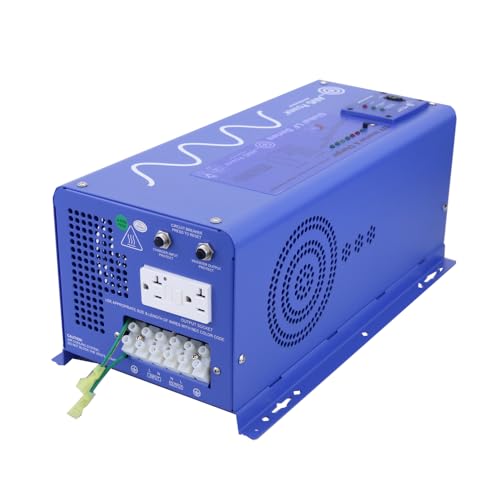
AIMS Power 3000W Pure Sine Inverter Charger 12V
This AIMS model pairs a 3000W pure sine inverter with a 125A automatic battery charger in one chassis. Combining both functions cuts the wiring a separate charger would need. Owners report the automatic transfer relay switches to shore power in under 20 milliseconds, so connected electronics rarely notice the changeover.
Pros
- Replaces a standalone inverter and separate battery charger
- Automatic transfer switch reaches shore power in under 20ms
- Digital panel shows active mode and charge status
Cons
- Larger and heavier than inverter-only units
- Installation wiring takes more effort than a plug-in model

Krieger KR2000 2000W Power Inverter
A modified sine waveform runs at 2000W continuous, enough for power tools, fans, and older appliances without sensitive electronics inside. Dual USB ports charge phones directly, skipping a separate outlet adapter. Hardwire and remote control kits ship in the box, which trims the extra parts list for a DIY install.
Pros
- Hardwire kit and remote control included in the box
- Dual USB ports charge devices without an adapter
- Digital display tracks battery voltage and wattage draw
Cons
- Modified sine waveform can cause humming in some audio gear
- Not suited to CPAP machines or other medical electronics

BESTEK 1000W Power Inverter MRI9011BU
This plug-in unit connects to a standard 12V accessory outlet, skipping any hardwire install for light loads like laptops and phone chargers. A digital LED readout shows battery voltage so owners can avoid draining a starter battery. Built-in cooling fans switch on automatically once output crosses roughly 40 percent load.
Pros
- Plugs into a 12V socket with no hardwiring required
- LED voltage readout helps prevent starter battery drain
- Low cost fits small trailers and occasional use
Cons
- 1000W ceiling rules out microwaves or AC units
- Plug-in connection limits sustained heavy draw

GIANDEL 2000W Pure Sine Wave Inverter 12V
A narrower chassis than most 2000W competitors fits GIANDEL into shallow storage bays common on smaller trailers. Side-by-side digital readouts show output wattage and DC input voltage at once. Dual cooling fans cycle on temperature control instead of running continuously.
Pros
- Narrow chassis fits shallow storage compartments
- Temperature-controlled fans cut down on constant noise
- Pure sine output stays safe for sensitive electronics
Cons
- Cable leads run shorter than some full-size competitors
- 2000W ceiling limits use with larger appliances
The lineup, side by side
| # | Model | Continuous power | Best for | Score | Price |
|---|---|---|---|---|---|
| 1 | Renogy 3000W 12V Pure Sine Wave Inverter | 3000W | Best overall | 9.4 | Check price |
| 2 | Go Power! GP-SW3000-12 Pure Sine Wave Inverter | 3000W | Best for solar RV setups | 9.1 | Check price |
| 3 | Xantrex PROwatt SW 2000 Inverter | 2000W | Best for sensitive electronics | 8.8 | Check price |
| 4 | AIMS Power 3000W Pure Sine Inverter Charger 12V | 3000W | Best inverter/charger combo | 8.5 | Check price |
| 5 | Krieger KR2000 2000W Power Inverter | 2000W | Best value | 8.3 | Check price |
| 6 | BESTEK 1000W Power Inverter MRI9011BU | 1000W | Best budget | 8.1 | Check price |
| 7 | GIANDEL 2000W Pure Sine Wave Inverter 12V | 2000W | Best for tight installs | 8.0 | Check price |
How to pick the right one
Pure sine wave vs modified sine wave Pure sine wave inverters match utility grid quality, which keeps laptops, CPAP machines, and variable-speed motors running safely. Modified sine wave units approximate that curve in steps, costing less but sometimes causing hum in audio gear or extra heat in fan motors. Most sensitive electronics need pure sine power. Basic power tools, fans, and incandescent lighting run fine either way.
How to size wattage for your RV loads Add up the running wattage of everything you plan to power at once, then check the inverter’s surge rating against your highest single startup draw. A residential fridge compressor alone can spike past 1500W at startup despite running near 150W continuously. Undersizing trips overload protection mid-trip, and oversizing wastes battery capacity on standby draw. Match total continuous wattage to your battery bank’s discharge rating, not just the inverter’s rated output.
Hardwired vs plug-in installs Plug-in inverters connect to a 12V accessory outlet and suit loads under roughly 400W, with no wiring work required. Hardwired units bolt near the battery bank with heavy gauge cable, carrying the higher current that 2000W and 3000W models draw. Inverter/charger combos typically need hardwiring plus a transfer switch tie-in to shore power. Light, occasional use favors plug-in; daily whole-RV power favors hardwired.
Safety features worth checking before you buy Overload shutdown, low-battery cutoff, and thermal protection count as baseline features on any RV inverter. Short-circuit protection stops a wiring fault from damaging the unit or sparking a fire inside a storage bay. Fault-code displays speed up troubleshooting mid-trip compared with a single generic warning light. GFCI-protected outlets add shock protection near water or wet ground.
Common questions
What size inverter do I need for an RV?
Total the running wattage of devices used at the same time, then confirm the surge rating covers your highest startup spike. Full-time rigs running a residential fridge and microwave typically need 2000W to 3000W continuous.
Is a pure sine wave inverter worth it for a travel trailer?
Yes for laptops, CPAP machines, and modern TVs, since modified sine wave power can make them run inefficiently or fail to start. A modified sine unit works fine for basic tools and fans.
Can a residential fridge run on a modified sine wave inverter?
Compressor-based fridges often run hotter or shut down on modified sine wave power because of its stepped voltage curve. Pure sine output matches how the compressor’s control board expects grid power to behave.
How do you install an inverter in an RV?
Plug-in models under 400W connect straight into a 12V accessory outlet with no extra wiring. Larger hardwired units need heavy gauge cable to the battery bank, a fuse near the battery, and ventilation clearance.
What’s the difference between an inverter and an inverter charger?
A standard inverter only converts DC battery power to AC. An inverter charger adds a battery charger and automatic transfer switch, so it also recharges the battery bank whenever shore power connects.
Can an RV inverter run a microwave?
A typical 1000W microwave needs an inverter rated near 1500W continuous with a matching surge rating, since microwaves draw a startup spike. Check the microwave’s nameplate wattage before sizing the inverter.
Do RV inverters drain the battery when not in use?
Most units draw a small idle current, often under 1A, even with nothing connected. Manufacturers recommend switching the unit off at its physical switch during long storage to avoid slow drain.
Pure sine wave vs modified sine wave inverter, which is better for electronics?
Pure sine wave suits electronics with microprocessors, variable-speed motors, or transformers, since it mirrors utility power quality. Modified sine wave works for simple resistive loads like heaters and incandescent bulbs.
Which RV inverter is best for solar power setups?
Go Power!’s GP-SW3000-12 pairs directly with that brand’s charge controllers and battery monitors, simplifying wiring for an existing Go Power! array. Any 12V pure sine inverter can pair with a solar system as long as the charge controller and battery bank match its draw.
The verdict
Renogy’s 3000W 12V Pure Sine Wave Inverter is the strongest overall pick for full-time RVers running a residential fridge, laptops, and other sensitive electronics off one system. Weekend campers with lighter loads should choose the BESTEK 1000W plug-in unit instead, since it skips hardwiring and costs far less to own. Anyone already running Go Power! solar components gets simpler wiring and matched fault diagnostics from the GP-SW3000-12.
Tony Russo
Tony trained as an automotive technician and spent years in service and parts retail before moving into writing. He focuses on garage tools, car care products and accessories from a hands-on maintenance perspective.