Digital RV Backup Cameras That Handle Long Highway Tows
Furrion Vision S leads for its dedicated 7-inch monitor and IP69K rating, ideal for highway towing distances. Rear View Safety RVS-770619 suits trailer owners who want a hardwired signal immune to campground interference. Yada Digital Wireless fits smaller trailers on a tighter budget with a compact 4.3-inch display.
Furrion’s Vision S pairs a dedicated 7-inch monitor with an IP69K-rated camera, built for owners towing at highway speed. It costs more than phone-app kits, but skips the phone battery drain and signal lag those kits carry.
Wireless range claims vary widely between listings, so we weighed manufacturer specs, IP ratings, and owner reports on signal drop across seven systems.
The top picks, ranked

Furrion Vision S Wireless RV Backup Camera
Furrion built this system around a dedicated 7-inch monitor instead of a phone app, so towing distance and phone battery never interact. Road spray and rain rarely faze the camera housing, rated IP69K. Owners can add a second front camera later for full rig visibility.
Pros
- Dedicated monitor removes phone battery drain during long tows
- IP69K housing shrugs off highway spray and rain
- Front camera add-on gives full-length rig visibility
Cons
- Costs more than phone-app based kits
- Monitor mount uses up dashboard space
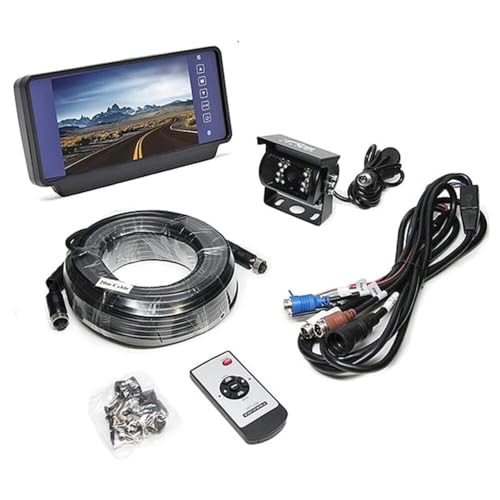
Rear View Safety RVS-770619 Backup Camera System
Trailer hitches vibrate constantly, so Rear View Safety houses this camera in a rugged shell built for that stress. A hardwired digital signal replaces wireless, sidestepping interference from neighboring campers. Infrared LEDs switch on automatically once light drops.
Pros
- Hardwired connection avoids wireless interference at crowded campgrounds
- Rugged housing tolerates constant trailer-hitch vibration
- Automatic night vision needs no manual switching
Cons
- Hardwired install takes longer than plug-and-play wireless kits
- Cable routing runs through the trailer frame or hitch

Yada Digital Wireless Backup Camera (BT54860)
Smaller trailers and short-wheelbase RVs suit Yada’s straightforward digital wireless kit best. A 4.3-inch monitor mounts to the windshield or dash without extra wiring runs. Basic infrared LEDs handle close-range visibility rather than long-distance detail.
Pros
- Costs less than full RV-specific camera systems
- Wireless install skips extensive cabling
- Compact monitor fits smaller dashboards
Cons
- 60-foot range falls short of dedicated RV systems
- Smaller screen hides detail at distance

Furrion Vision S with Side Cameras (4-Camera System)
Long motorhomes carry wide blind spots that a single rear camera cannot cover, so this Furrion kit adds two side units. The monitor splits into multiple panes to show several angles at once during lane changes. Digital transmission avoids the ghosting older analog systems produce.
Pros
- Split-screen view covers rear and both sides simultaneously
- Side cameras close blind spots along long motorhome bodies
- Digital signal skips the ghosting analog systems show
Cons
- Priced highest among the systems compared here
- Four-camera installation takes considerably more setup time

Furrion Vision S with Backup Assist Grid
Hitching solo gets easier with this Furrion variant’s adjustable guide lines overlaid on the monitor. Grid lines shift during reverse to estimate coupler distance without a second person directing. The camera carries the same IP69K rating as Furrion’s standard Vision S line.
Pros
- Guide grid assists solo hitching without a spotter
- Shares Furrion’s proven IP69K weatherproofing
- Digital signal keeps the image clear at range
Cons
- Grid needs calibration for each trailer’s coupler height
- Priced above a basic single-camera kit

Wolfbox 5-inch Wireless RV Backup Camera
Wolfbox pairs this camera with an optional solar panel that trickle-charges its built-in battery, cutting down on wiring. A 5-inch monitor runs on digital wireless signal where hardwiring is impractical. Smaller travel trailers without existing rear wiring fit this setup well.
Pros
- Solar assist cuts down on manual charging
- Wireless design skips hardwiring for rear power
- Setup suits smaller trailers without existing wiring
Cons
- 52-foot range trails hardwired systems
- Battery still needs periodic charging during low sun

Auto-Vox Solar Wireless RV Backup Camera (TW10)
Older RVs without rear-facing wiring runs are the target for Auto-Vox’s solar and wireless combination. Suction or adhesive mounts hold the 5-inch monitor without drilling into the dash. Night vision covers close-range parking rather than highway-distance viewing.
Pros
- No wiring required for camera or monitor power
- Suction or adhesive mount skips drilling
- Fits older RVs retrofitted without factory wiring
Cons
- Range trails hardwired Furrion or Rear View Safety systems
- Solar charging depends on parking angle and season
Side by side
| # | Model | Monitor size | Best for | Score | Price |
|---|---|---|---|---|---|
| 1 | Furrion Vision S Wireless RV Backup Camera | 7 inches | Best overall | 9.4 | Check price |
| 2 | Rear View Safety RVS-770619 Backup Camera System | 7 inches | Best for towing setups | 9.1 | Check price |
| 3 | Yada Digital Wireless Backup Camera (BT54860) | 4.3 inches | Best budget | 8.5 | Check price |
| 4 | Furrion Vision S with Side Cameras (4-Camera System) | 7 inches (split-screen capable) | Best for large motorhomes | 9.2 | Check price |
| 5 | Furrion Vision S with Backup Assist Grid | 7 inches | Best for hitching alone | 9.0 | Check price |
| 6 | Wolfbox 5-inch Wireless RV Backup Camera | 5 inches | Best for quick installs | 8.6 | Check price |
| 7 | Auto-Vox Solar Wireless RV Backup Camera (TW10) | 5 inches | Best for older RVs without rear wiring | 8.7 | Check price |
How to choose
What matters most in an RV backup camera Wireless range needs to clear the full length of the rig plus hitch distance, since motorhomes outrun car-grade cameras fast. Weatherproofing counts more here than on cars, given constant road spray at highway speed. Night vision quality decides how safely you back into an unlit campsite.
Hardwired vs wireless: which signal holds up Hardwired setups, like the Rear View Safety RVS-770619, dodge interference from other campers’ wireless gear at crowded sites. Wireless kits install faster and suit rigs with no existing rear wiring. Pick hardwired for long-term reliability, wireless when speed of setup matters more.
Multi-camera systems for large motorhomes Long motorhomes carry blind spots that stretch well beyond what one rear camera can show. Furrion’s 4-camera kit splits the monitor into multiple panes for full-perimeter visibility during lane changes. Smaller trailers rarely need more than a single rear-facing unit.
Solar and battery power for older RVs without wiring RVs missing factory rear wiring benefit from solar-assisted cameras like the Wolfbox or Auto-Vox TW10, which skip new cable runs entirely. These systems trade some wireless range for a much simpler install. Frequent towers parking in shade should expect occasional manual battery charging.
Frequently asked questions
What is the difference between digital and analog RV backup cameras?
Digital signals resist interference and ghosting far better than older analog wireless setups, especially over the length of a full-size RV.
How far can a wireless RV backup camera transmit?
Rated ranges here run from about 52 to 105 feet, though trees, other RVs, and nearby wireless devices can shorten real-world distance.
Do RV backup cameras need to be weatherproof?
Most quality RV cameras carry an IP67 or IP69K rating to survive road spray, rain, and dust at highway speed.
Can I add side cameras to an existing RV backup camera system?
Furrion’s Vision S line supports adding side or front units later, but check monitor compatibility before ordering extras.
Is a hardwired or wireless RV backup camera more reliable?
Hardwired systems avoid wireless interference at busy campgrounds, while wireless systems trade some reliability for a far simpler install.
Do solar-powered RV backup cameras work without direct sunlight?
A battery backup covers cloudy stretches, but extended low sun can force manual charging to keep the camera running.
Which monitor size works best for an RV backup camera?
A 7-inch monitor, like Furrion’s Vision S, shows more detail at distance, while 4.3 to 5-inch screens suit smaller trailers with less dash space.
Does a backup camera help with hitching a trailer alone?
Furrion’s Backup Assist Grid variant overlays guide lines that estimate coupler distance without a second person directing.
Are 4-camera RV systems worth it for a small travel trailer?
Rarely. Small trailers have narrow blind spots that a single rear camera already covers, so the extra cost and install time favor large motorhomes instead.
The bottom line
Furrion’s Vision S fits most RV owners, pairing a dedicated monitor with weatherproofing rated for highway towing. Motorhome owners battling wide blind spots should step up to Furrion’s 4-camera kit instead. Anyone retrofitting an older trailer without rear wiring gets more value from the Auto-Vox TW10’s solar setup.
Tony Russo
Tony trained as an automotive technician and spent years in service and parts retail before moving into writing. He focuses on garage tools, car care products and accessories from a hands-on maintenance perspective.