RV Power Up: Heavy Duty Digital Inverters Compared
For most RVers, the Renogy 3000W Pure Sine Wave Inverter stands out as the top pick due to its high surge capacity and robust construction. It handles heavy loads like air conditioners and microwaves with ease. However, it requires a 12V battery bank and proper ventilation, which may be a limitation for some.
When you’re on the road, a dependable inverter is crucial for running appliances and electronics. Digital heavy-duty RV inverters convert DC battery power to AC, giving you the comforts of home anywhere.
Our roundup focuses on models that offer high wattage, smart features, and durability. We looked at verified buyer feedback and technical specs to help you choose the best one for your RV setup.
Our top picks

Renogy 3000W Pure Sine Wave Inverter
Renogy’s 3000W inverter delivers clean power for large appliances. It has a 6000W surge capability and a rugged aluminum case. Owners report reliable performance for air conditioners and microwaves. The included remote control adds convenience.
Pros
- High surge capacity for starting motors
- Pure sine wave output protects sensitive devices
- Remote control included
Cons
- Heavy and bulky
- Requires large battery bank

AIMS Power 2000W Pure Sine Inverter
This AIMS inverter offers 2000W continuous and 4000W surge at a competitive price. It features a digital display for monitoring voltage and power. Users appreciate its quiet operation and sturdy build. It handles coffee makers and TVs without issues.
Pros
- Affordable for pure sine wave output
- Digital display for real-time data
- Quiet operation
Cons
- Lower wattage may not run large AC units
- Fans can be audible under load

Go Power! GP-3000HD Inverter
Go Power’s 3000W inverter is built for demanding RV applications. It features a high-frequency design that reduces weight. The unit is UL certified and backed by a 2-year warranty. Owners report clean power and minimal interference.
Pros
- UL certified for safety
- Lightweight high-frequency design
- Excellent warranty
Cons
- Premium price
- No built-in transfer switch

Xantrex Freedom X 2000
The Xantrex Freedom X 2000 combines inverter and charger in one unit. It provides 2000W of pure sine wave power and can charge batteries when connected to shore power. The remote panel is user-friendly. Users value its versatility for off-grid setups.
Pros
- Combines inverter and charger
- Easy to monitor via remote panel
- Suitable for boondocking
Cons
- Heavier than standalone inverters
- Charger output limited to 50A

WZRELB 2000W Pure Sine Wave Inverter
WZRELB offers a 2000W inverter that is compact and lightweight. It includes a digital display and remote control. Owners report it runs small appliances and electronics efficiently. The price point is attractive, though some users noted fan noise.
Pros
- Lightweight and compact design
- Digital display shows battery voltage
- Remote on/off included
Cons
- Not suitable for large AC units
- Fan noise under heavy load

Schumacher PC-3000 Power Inverter
Schumacher’s 3000W inverter delivers steady power for demanding equipment. It features multiple AC outlets and USB ports. The build is durable with protective casing. Users find it reliable for extended use, though it is heavy.
Pros
- Multiple outlets including USB
- Durable casing
- High continuous output
Cons
- Bulkier than some competitors
- No remote control standard
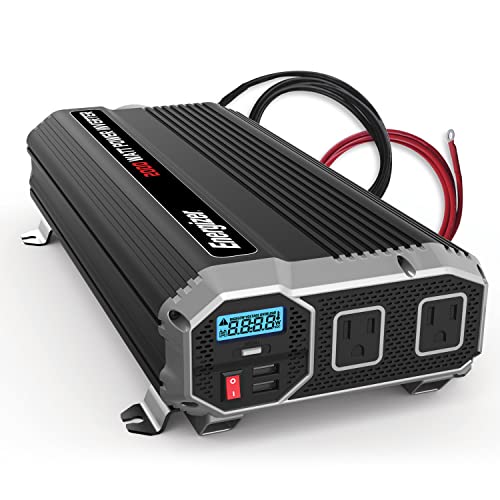
Energizer 2000W Modified Sine Wave Inverter
Energizer’s 2000W inverter offers modified sine wave output at an affordable price. It has a digital display and multiple outlets. Owners report it powers basic tools and appliances well, but it may cause buzzing in some devices.
Pros
- Budget-friendly
- Digital display
- Compact size
Cons
- Not for sensitive electronics
- Humming in audio equipment
How they stack up
| # | Model | Continuous Power | Best for | Score | Price |
|---|---|---|---|---|---|
| 1 | Renogy 3000W Pure Sine Wave Inverter | 3000W | Heavy loads and sensitive electronics | 9.4 | Check price |
| 2 | AIMS Power 2000W Pure Sine Inverter | 2000W | Mid-size RVs with moderate power needs | 9.0 | Check price |
| 3 | Go Power! GP-3000HD Inverter | 3000W | RVers needing high reliability and warranty | 9.2 | Check price |
| 4 | Xantrex Freedom X 2000 | 2000W | All-in-one inverter/charger for boondocking | 9.1 | Check price |
| 5 | WZRELB 2000W Pure Sine Wave Inverter | 2000W | Budget-conscious RVers with light loads | 8.6 | Check price |
| 6 | Schumacher PC-3000 Power Inverter | 3000W | Running tools and appliances in larger RVs | 8.8 | Check price |
| 7 | Energizer 2000W Modified Sine Wave Inverter | 2000W | Simple power needs without sensitive electronics | 8.0 | Check price |
What to look for
Power Rating Considerations Check the continuous and surge wattage. Continuous wattage is what the inverter can supply constantly. Surge wattage covers brief spikes when starting motors. Total your RV appliances to ensure the inverter can handle them.
Pure Sine Wave vs Modified Sine Wave Pure sine wave inverters produce clean power similar to grid electricity, safe for sensitive electronics like laptops and medical devices. Modified sine wave is cheaper but can cause interference. Choose pure sine wave for modern appliances.
Input Voltage and Battery Bank Most heavy-duty inverters use 12V DC input, matching standard RV batteries. Some models support 24V or 48V. Ensure your battery bank can provide the required current. High wattage drains batteries quickly, so consider lithium batteries.
Safety Features and Monitoring Look for overload protection, short circuit protection, and thermal shutdown. A digital display helps monitor battery voltage and power usage. Remote controls allow convenient operation from a distance.
Common questions
What size inverter do I need for my RV?
Add up the wattage of appliances you plan to run simultaneously. Choose an inverter with continuous power above that total. For most RVs, 2000W to 3000W is sufficient.
Can I run my RV air conditioner with a 2000W inverter?
A typical RV AC requires about 1500W continuous and 3000W surge. A 2000W continuous inverter with high surge might work for smaller AC units, but a 3000W is safer.
What is the difference between pure sine wave and modified sine wave inverters?
Pure sine wave offers clean power compatible with all electronics, while modified sine wave is cheaper but may cause buzzing in audio equipment and can damage some devices over time.
How long can I run an inverter off my RV battery?
It depends on battery capacity and load. For example, a 100Ah battery at 12V provides 1200Wh. Running a 1000W load would last about 1 hour. Larger battery banks are needed for extended use.
Do I need a professional to install an inverter?
Installation involves electrical work. If you are comfortable with wiring, you can do it yourself. Otherwise, hire a professional to avoid safety risks.
Can I leave my inverter on all the time?
Many inverters have a standby or power saving mode. Leaving it on drains battery. It is best to turn off when not in use, especially if you have no load.
Are digital inverters better than analog?
Digital inverters offer more precise monitoring and often include smart features. They tend to be more efficient and quieter. Analog inverters are simpler but less feature-rich.
What is the warranty on these inverters?
Warranties vary by brand. Go Power offers 2 years, Renogy typically 2 years, and others may offer 1 year. Always check the product listing.
Can I use a 24V inverter on a 12V system?
No. Inverters are designed for specific input voltages. Using a 24V inverter on 12V will not work properly and may damage the unit.
Our take
For most RV owners, the Renogy 3000W Pure Sine Wave Inverter is the best choice because it balances power, surge capacity, and reliability. If you need a combined charger, the Xantrex Freedom X 2000 is excellent for boondocking. Budget-conscious users can opt for the AIMS Power 2000W to save money without sacrificing pure sine wave output.
Tony Russo
Tony trained as an automotive technician and spent years in service and parts retail before moving into writing. He focuses on garage tools, car care products and accessories from a hands-on maintenance perspective.