How to Pick a Meat Cutter for Your Home Kitchen
BESWOOD BESWOOD250 is the strongest home meat cutter, pairing a 10 inch chromium plated blade with a quiet belt driven motor. Cuisinart FS-75 suits smaller kitchens that slice deli meat once a week. Elite Gourmet EMT-503B covers occasional users who mainly portion cooked roasts.
BESWOOD BESWOOD250 is the meat cutter to buy if you slice more than a few pounds at a time. A 10 inch chromium plated carbon steel blade and a belt driven motor handle prosciutto through roast beef without bogging down. It weighs a lot and takes real counter space, which rules it out of small kitchens.
Meat slicers separate on blade size, drive type and how quickly the carriage comes off for washing. We compared blade diameter, motor wattage, thickness range, cleaning access and food type suitability across current Amazon listings. Owner feedback about semi frozen meat, blade wobble and sharpener performance decided where each model landed.
What to look for
What to look for in a meat cutter Blade diameter sets the ceiling on what you can slice. Seven and a half inches covers deli meat and cheese, while ten inches takes whole hams and larger roasts. Motor wattage decides how long you can run before heat builds up, so 130 watts suits weekly use and 300 watts plus suits volume. Check that the carriage, pusher and blade come off, because a machine that is hard to wash gets used less. Non slip feet and a two button start are basic safety features worth confirming.
Matching the machine to what you slice Cooked deli meat is the easiest job and any model here handles it. Cured products such as prosciutto need a smooth blade and fine thickness control, which favours the BESWOOD250. Semi frozen beef for hot pot demands more torque, and the 200 watt OSTBA is the smallest machine that manages it comfortably. Bread and cheese slice better with a serrated edge, so the two blade OSTBA and the Chefman have an advantage. Raw whole muscle cuts should be firmed in the freezer for about thirty minutes first.
Best meat slicers for small kitchens Counter space usually decides this category before performance does. Cuisinart FS-75 and Elite Gourmet EMT-503B store in a cupboard between uses, which suits apartments. Chefman Die-Cast adds a metal body without growing much larger. Skip the KWS MS-10NT unless you have a dedicated shelf, since its commercial frame dominates a domestic counter. Anyone slicing once a month should consider the Victorinox Fibrox Pro slicing knife instead, because storage and cleanup both drop to nothing.
Cleaning and safety habits that matter Unplug before removing any blade, and use a cut resistant glove when wiping the edge. Wash the carriage, pusher and tray after every session in warm soapy water, then dry fully to prevent water spotting on aluminium. Blades on the BESWOOD250 and KWS MS-10NT come off with a tool for deeper cleaning between the guard and the disc. Never push meat with bare fingers, since the pusher exists for a reason. Store a slicer with the thickness dial at zero so the blade edge is covered.
The best picks, ranked
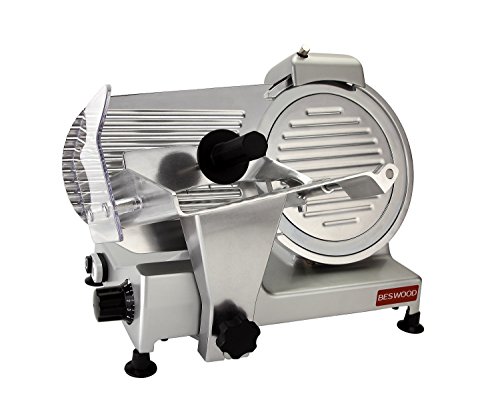
BESWOOD BESWOOD250 10 Inch Electric Deli Meat Slicer
A chromium plated carbon steel blade holds an edge longer than the stainless discs on lighter machines. Belt drive keeps the motor quieter than gear driven rivals and runs cooler through long sessions. Its aluminium body is heavy, so pick a permanent spot on the counter or a sturdy shelf.
Pros
- Handles long sessions without the motor overheating
- Built in dual whetstone sharpener keeps the edge true
- Blade removes with a tool for thorough washing
Cons
- Heavy enough to need a dedicated counter spot
- Blade guard assembly takes practice to refit
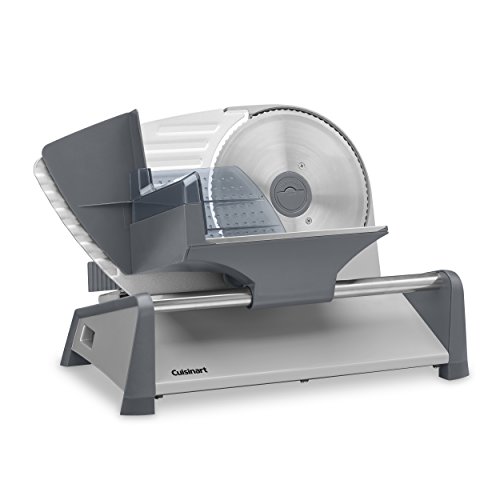
Cuisinart FS-75 Kitchen Pro Food Slicer
Its 7.5 inch stainless blade suits weekly deli meat, bread and cheese rather than whole muscle cuts. A removable carriage and food pusher come apart in seconds for washing up. Expect slower progress on dense frozen items compared with a 10 inch machine.
Pros
- Small footprint fits a normal kitchen counter
- Carriage lifts off without tools
- Handles bread and cheese as well as meat
Cons
- Smaller blade limits large roasts
- Struggles with dense semi frozen cuts
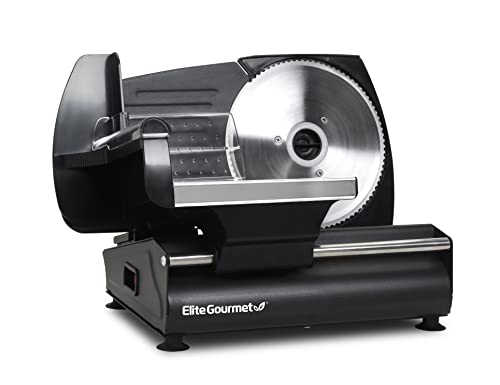
Elite Gourmet EMT-503B Electric Deli Meat Slicer
Occasional slicing of cooked ham, turkey or cheese is where this one belongs. A 7.5 inch stainless blade and a compact housing store easily in a cupboard between uses. Its motor is not built for continuous batches, so rest it between long runs.
Pros
- Light enough to store in a cupboard
- Simple two button safety operation
- Suction feet keep it steady mid cut
Cons
- Motor needs rest during large batches
- Blade guard is fiddly to clean around
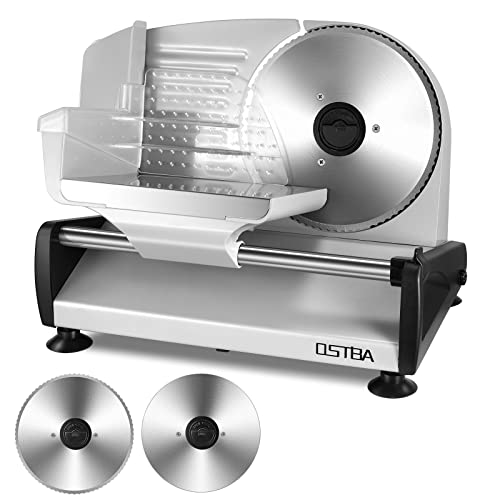
OSTBA Electric Meat Slicer
Two 7.5 inch blades ship in the box, one serrated for crusty bread and one smooth for meat and cheese. The 200 watt motor copes with semi frozen beef for hot pot slices, which most entry machines refuse. Its plastic housing feels lighter than the metal bodied machines above.
Pros
- Serrated blade included for bread and crusts
- Handles semi frozen beef for hot pot cuts
- Parts detach for washing without tools
Cons
- Plastic housing feels less solid than cast metal
- Storing two blades safely needs a plan
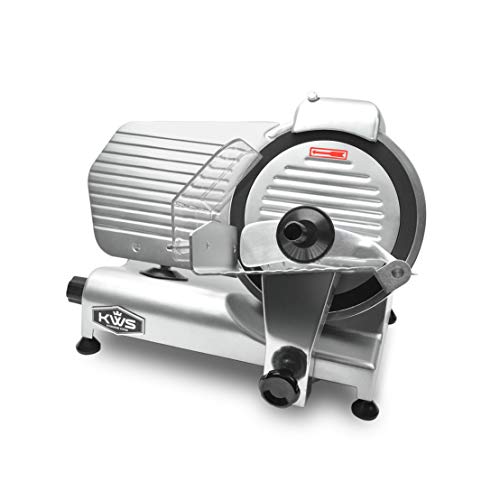
KWS MS-10NT Commercial Meat Slicer
Built for small delis and butcher counters, this 320 watt machine slices for long stretches without heat build up. A 10 inch stainless blade and a large carriage take whole cooked hams and blocks of cheese. Home cooks rarely need this much machine, and it shows in the size and weight.
Pros
- Sustains long slicing sessions without overheating
- Large carriage accepts whole cooked hams
- Blade and carriage strip down for deep cleaning
Cons
- Far too large for most home counters
- Needs a dedicated storage space

Chefman Die-Cast Electric Deli and Food Slicer
A die cast aluminium housing gives more stability than plastic bodied machines of a similar size. Serrated stainless blade work spans meat, cheese and firm vegetables. Thickness maxes out around half an inch, so thick steaks are outside its range.
Pros
- Metal body resists vibration during cuts
- Serrated edge suits cheese and firm vegetables
- Compact enough for an apartment kitchen
Cons
- Thickness range stops short of thick steaks
- Single blade, so no smooth option for prosciutto

Victorinox Fibrox Pro 12 Inch Granton Slicing Knife
Granton hollows along the edge release slices of brisket and roast turkey instead of letting them cling. The Fibrox handle keeps grip when hands are wet or greasy, and the blade goes in a drawer rather than on a counter. Consistent deli thin slicing takes skill a motor does not require.
Pros
- Takes no counter space at all
- Granton hollows stop slices sticking to the blade
- Nothing to disassemble after carving
Cons
- Even thickness depends entirely on technique
- Slow for slicing several pounds at once
How they stack up
| # | Model | Blade | Best for | Score | Price |
|---|---|---|---|---|---|
| 1 | BESWOOD BESWOOD250 10 Inch Electric Deli Meat Slicer | 10 inch chromium plated carbon steel | Best overall | 9.4 | Check price |
| 2 | Cuisinart FS-75 Kitchen Pro Food Slicer | 7.5 inch stainless steel | Best for home kitchens | 9.2 | Check price |
| 3 | Elite Gourmet EMT-503B Electric Deli Meat Slicer | 7.5 inch stainless steel | Best budget | 9.0 | Check price |
| 4 | OSTBA Electric Meat Slicer | Two 7.5 inch blades, serrated and smooth | Best for semi frozen meat | 8.8 | Check price |
| 5 | KWS MS-10NT Commercial Meat Slicer | 10 inch stainless steel | Best for high volume | 8.6 | Check price |
| 6 | Chefman Die-Cast Electric Deli and Food Slicer | Serrated stainless steel | Best compact metal build | 8.3 | Check price |
| 7 | Victorinox Fibrox Pro 12 Inch Granton Slicing Knife | 12 inch stainless steel with Granton edge | Best manual option | 8.0 | Check price |
Questions worth asking
What is the best meat slicer for home use?
BESWOOD BESWOOD250 for anyone slicing regularly, thanks to its 10 inch blade and belt drive. Cuisinart FS-75 is the better fit for weekly deli meat in a small kitchen.
Can you slice frozen meat with a home meat cutter?
Fully frozen meat will stall most home machines. Partially frozen beef works, and the 200 watt OSTBA handles it better than entry level 130 watt models.
What blade size do I need for a meat slicer?
7.5 inches covers deli meat, cheese and bread. Move to 10 inches if you slice whole cooked hams, large roasts or work through several pounds at a time.
Is a serrated or smooth slicer blade better?
Smooth blades give cleaner cuts on cured meat and prosciutto. Serrated edges grip crusty bread and firm cheese, which is why the OSTBA supplies both.
Electric slicer vs slicing knife: which should I buy?
An electric slicer gives repeatable thin slices in volume. A Victorinox Fibrox Pro slicing knife is better for a few carved roasts a year, with no storage or cleanup burden.
How do you clean a meat slicer safely?
Unplug it, set the thickness to zero, then remove the carriage, pusher and tray for washing. Wipe the blade with a cloth held in a cut resistant glove.
Are home meat slicers loud?
Belt driven machines like the BESWOOD250 run quieter than gear driven ones. Smaller motors sound sharper but only run for short bursts.
Can a meat slicer cut cheese and vegetables?
Yes, though soft cheese gums up a blade. Chill cheese first, and use a serrated blade for firm vegetables such as potatoes or carrots.
Our pick
BESWOOD BESWOOD250 is the meat cutter worth the counter space if you slice cured meat or roasts most weeks, since the 10 inch blade and belt drive stay composed through long sessions. Kitchens with limited room should take the Cuisinart FS-75, which covers deli meat and cheese and packs away in a cupboard. Anyone carving a few holiday roasts a year is better served by the Victorinox Fibrox Pro slicing knife.
Dana Whitfield
Dana spent eight years buying and merchandising for a regional kitchenware retailer before moving into editorial work. She has handled thousands of SKUs across cookware, small appliances and kitchen organization, and focuses on the practical differences that matter once a product is actually in daily use.