Which Crash Pad Actually Cushions a Highball Fall?
For most boulderers, the Metolius Session Crash Pad earns the top spot with balanced foam and a manageable taco fold. Highball problems call for the extra coverage of the Black Diamond Mondo Crash Pad. Anyone testing outdoor bouldering on a budget should start with the Mad Rock Mad Pad.
The Metolius Session Crash Pad tops this list because its firm closed-cell shell over a softer open-cell core keeps a missed highball from becoming a sprained ankle. Its taco fold suits climbers who split time between gyms and local crags. Tall or awkward highball problems still call for the bigger surface on the Black Diamond Mondo Crash Pad. New outdoor boulderers can start cheaper with the Mad Rock Mad Pad.
Foam depth, fold type and folded size vary more between these seven than most buyers expect, and that gap decides comfort under a hard fall. Closed-cell over open-cell foam construction, folded dimensions, weight and carrying systems all went into this comparison, alongside owner reports on durability across seasons of trail use.
Our top picks
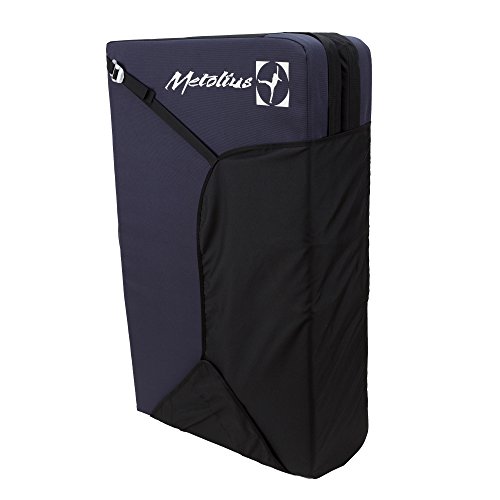
Metolius Session Crash Pad
A single taco-fold panel closes flat and buckles shut for the trailhead. Foam splits into a firmer closed-cell shell over a softer open-cell core, a common combo for consistent rebound. That balance handles gym-to-crag use without leaning into a specialty niche.
Pros
- Taco fold protects the foam edges during the fold
- Shoulder strap system carries comfortably on moderate approaches
- Foam combo suits both bouldering gyms and outdoor problems
Cons
- Landing area shrinks once folded for carrying
- Firmer top layer feels stiff on very short falls

Black Diamond Mondo Crash Pad
Two hinged panels unfold into one wide landing zone under a highball problem. Dense open-cell foam sits under a firmer closed-cell top layer for shock absorption. Group sessions benefit most, since several pads need to overlap without gaps between them.
Pros
- Unfolds into one of the largest single landing zones available
- Two-layer foam cushions high falls without bottoming out
- Backpack straps and hip belt make the bulk manageable on flat approaches
Cons
- Too bulky and heavy for solo hike-in days
- Double hinge leaves a seam that needs pad-stacking on uneven ground
Organic Simple Pad
Organic builds this pad with thicker open-cell foam than most stock options. A closed-cell top sheet spreads impact before it reaches the softer core underneath. Climbers moving to bigger problems often upgrade here specifically for that added foam depth.
Pros
- Extra foam depth absorbs harder falls than thinner pads
- Hinge fold keeps the full pad surface flat and even
- Removable straps let owners customize the carry system
Cons
- Heavier than taco-fold pads of similar footprint
- Thicker foam takes longer to spring back into shape between falls
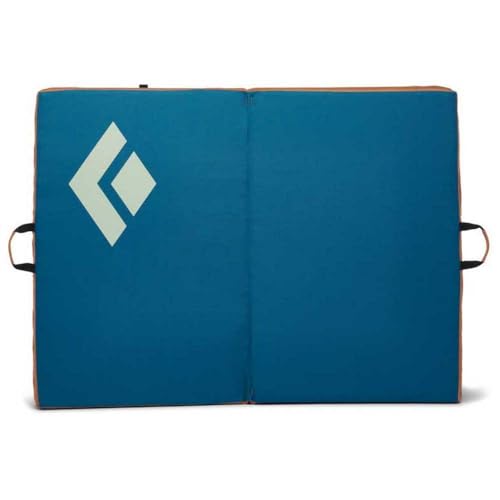
Black Diamond Circuit Crash Pad
This taco-fold pad splits the difference between the Mondo’s bulk and a stripped-down budget pad’s thin foam. Closed-cell foam over an open-cell base delivers real cushioning without much extra weight. Most local bouldering sessions never demand a second purchase after this one.
Pros
- Foam combo covers most fall heights without upgrading
- Taco fold keeps a compact profile for storage
- Hip belt eases the carry on longer trailheads
Cons
- Not as large as dedicated highball pads
- Buckle closure can loosen on rough trail approaches

Metolius Recon Crash Pad
A larger single-panel design gives a wider landing target under tall or traversing problems. Foam depth sits between the Session and the Mondo, built for hard highball attempts rather than casual sessions. Pairing it with a second pad closes the remaining gaps on a tall project.
Pros
- Wider single panel reduces gaps under traversing problems
- Deeper foam suits harder highball attempts
- Reinforced straps hold up under repeated highball sessions
Cons
- Larger footprint is awkward on narrow trails
- Heavier than pads built for pure approach speed

Petzl Cirro Crash Pad
Weight drops under 8 pounds once Petzl trims the foam stack to a single layer. The taco fold closes small enough to strap onto a daypack alongside a rope or rack. Remote boulders reachable only on foot suit this pad better than roadside crags.
Pros
- Light enough to add to a multi-hour approach pack
- Compact folded size fits into smaller vehicles and packs
- Simple single-foam build needs less break-in time
Cons
- Thinner foam gives less cushion on tall or awkward falls
- Smaller landing zone once unfolded

Mad Rock Mad Pad
A basic single-layer foam pad covers the essentials for gym climbers moving outdoors. Hinge-fold construction keeps the design and stitching simple. First-time buyers can test outdoor bouldering here before investing in a larger setup.
Pros
- Lowest cost entry into outdoor bouldering pads
- Light enough for short approaches without extra gear
- Simple hinge fold needs no learning curve
Cons
- Single foam layer bottoms out sooner on hard falls
- Straps and stitching wear faster than pricier pads
What to look for
What to look for in a bouldering crash pad Foam construction decides most of the protection a pad offers. A closed-cell top layer resists compression and spreads impact across the surface. Underneath, an open-cell base absorbs what gets through and springs back into shape between falls. Folded size and weight then decide how far you will actually carry it, since a pad left in the car protects nobody.
Hinge fold vs taco fold Hinge-fold pads open flat with no gap in the landing surface, which suits highball problems where every inch matters. Taco-fold pads close around a single crease instead, trading a smaller landing zone for a tighter, more portable package. Neither fold changes the foam quality inside. Pick based on how far you carry the pad and how tall your typical problems run.
Best crash pad for hike-in approaches Approaches over an hour punish heavy pads fast, so weight starts to outrank landing area. Dropping to a single foam layer, as the Petzl Cirro Crash Pad does, trims several pounds at the cost of cushion depth. That trade works fine for lower, well-scouted problems. Save the bulkier hinge-fold pads for boulders you can drive close to.
How to stack pads for tall or awkward landings A single pad rarely covers a highball landing on sloped or rocky ground. Overlapping two pads, with the firmer one on top, keeps an ankle from rolling into the gap between them. Groups projecting the same tall problem often pool a Session, a Mondo and a Recon into one continuous mat. Uneven ground under the pad matters as much as the pad itself.
How they compare
| # | Model | Folded size | Best for | Score | Price |
|---|---|---|---|---|---|
| 1 | Metolius Session Crash Pad | About 3.5 x 4 feet closed | Best overall | 9.4 | Check price |
| 2 | Black Diamond Mondo Crash Pad | Roughly 4 x 4.5 feet, about 5 inches thick | Best large landing zone | 9.2 | Check price |
| 3 | Organic Simple Pad | Roughly 4 x 4 feet, thicker profile than standard pads | Best for thick foam and high impact | 9.0 | Check price |
| 4 | Black Diamond Circuit Crash Pad | Roughly 4 x 3.5 feet | Best value | 8.7 | Check price |
| 5 | Metolius Recon Crash Pad | Larger footprint than the Session, roughly 4.5 x 4 feet | Best for hard tall problems | 8.5 | Check price |
| 6 | Petzl Cirro Crash Pad | Compact taco fold, smaller footprint than session pads | Best lightweight for hike-in approaches | 8.2 | Check price |
| 7 | Mad Rock Mad Pad | Around 3.5 x 3.5 feet | Best budget | 8.0 | Check price |
Common questions
How thick should a bouldering crash pad be?
Most stand-alone pads run 4 to 5 inches thick once unfolded flat. Thinner pads under 3 inches suit gym spotting more than outdoor highball falls. Stacking two thin pads rarely matches one properly layered pad, since the seam between them still lets an ankle roll through.
What is the difference between a hinge fold and a taco fold crash pad?
A hinge fold opens flat with no crease across the landing zone. A taco fold closes around one central crease, shrinking the pad for carrying but leaving that crease as a slightly softer spot. Highball climbers tend to favor hinge folds for the flat surface.
How many crash pads do you need for bouldering?
One pad covers most gym-adjacent problems and short outdoor boulders. Highball or traversing lines usually need two or three pads to remove gaps in the landing zone. Groups often pool individual pads rather than one climber buying several.
Can one person carry a large crash pad like the Mondo alone?
Yes, though shoulder straps and a hip belt make it manageable rather than comfortable over distance. Splitting the load between two people, one on the pad and one on the rack, works better past a mile.
What foam is inside a bouldering crash pad?
Most quality pads pair a firmer closed-cell foam top layer with a softer open-cell foam base. The closed-cell layer resists water and spreads the initial impact. Underneath, the open-cell layer compresses further and absorbs what the top layer passes through.
Are bouldering crash pads waterproof?
The outer fabric shell resists light rain and morning dew, but the foam inside is not sealed. Left out in a storm, a pad can soak through and take days to dry. Store a wet pad open, not folded, to avoid mildew inside the foam.
How do you clean a crash pad?
Wipe the fabric shell with mild soap and water, then let it air dry fully before folding it away. Chalk and dirt on the surface brush off dry most of the time. Skip the washing machine, since the foam inside does not handle prolonged soaking.
Do crash pads work on uneven or rocky ground?
They help but do not eliminate the risk of a rolled ankle on sloped or rocky landings. Overlapping two pads, with gaps filled rather than left open, evens out the surface. No single flat pad fully compensates for a landing zone that slopes hard in one direction.
Is a taco fold pad better for beginners than a hinge fold pad?
For most beginners, yes, since a taco fold packs smaller and carries more like a backpack. Hinge folds pay off once problems get taller or the approach gets shorter, where the flat landing surface matters more than portability.
The verdict
The Metolius Session Crash Pad remains the strongest all-around pick, since its foam layering and taco fold suit both weekend crags and regular gym-to-outdoor trips. Climbers projecting highball or traversing problems should size up to the Black Diamond Mondo Crash Pad for the extra coverage. Anyone testing outdoor bouldering before committing further should start with the Mad Rock Mad Pad instead.
Sierra Daniels
Sierra's background is in landscape design and nursery retail. She focuses on lawn and garden equipment, outdoor furniture and gear durability, weighing published specs against how materials actually hold up outside.