Which Craft Leather Hide Fits Your Next Project
Tandy Leather’s Oil-Tan Cowhide Side leads this comparison, since its full-grain construction handles belts, holsters and tooling from one hide. Hide & Drink’s Scraps Bag wins on value for small projects like coasters and keychains. Springfield Leather Company’s Veg Tan Tooling Leather holds stamped detail best at 8 to 9 ounces.
Tandy Leather’s Oil-Tan Cowhide Side suits crafters tackling belts, holsters and tooling from a single piece. Full-grain cowhide at 7 to 8 ounces holds carved detail and keeps its shape. Cost per side runs higher than precut scrap packs, so single-project buyers may not need that much material.
Tanning method, grain grade and thickness each change how a hide responds to a stamp or needle. That variation makes comparison shopping confusing for new buyers. We compared listed specifications, owner feedback on stiffness and dye uptake, and fit against common projects like wallets, belts and holsters.
Our top picks

Tandy Leather Oil-Tan Cowhide Leather Side
Vegetable oil-tan gives this full-grain cowhide side flexibility that suits both holsters and belts. Thickness runs 7 to 8 ounces, thick enough for structure yet still moldable when wet. The half side spans roughly 12 to 14 square feet, and its natural brown tone takes dye and edge finishing well.
Pros
- Full-grain surface holds tooling detail
- Oil-tan finish resists cracking over time
- One side covers several projects
Cons
- Costs more per side than precut packs
- Edges need trimming before use

Hide & Drink Full Grain Leather Scraps Bag
This bag bundles offcuts from Hide & Drink’s full-grain cowhide production, so shapes and sizes vary piece to piece. Buyers get several small to medium cuts per pound, enough for coasters, keychains and patches. Thickness mixes light and mid-weight pieces within the same bag.
Pros
- Low cost per square inch of real leather
- Genuine full-grain cowhide, not bonded scrap
- Good for testing dyes and stamps before committing
Cons
- Piece sizes and shapes arrive at random
- Not enough material for one large panel
Springfield Leather Company Veg Tan Tooling Leather
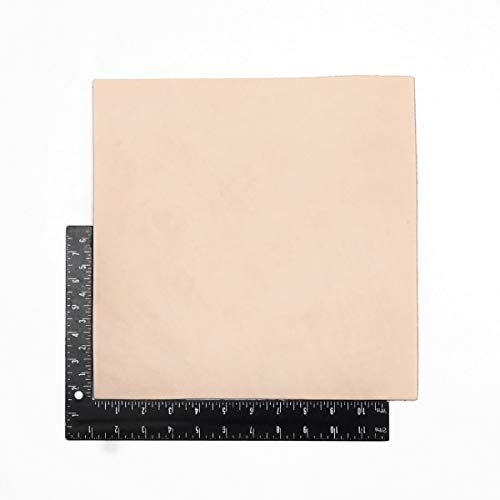
Springfield’s tooling leather ships vegetable-tanned and undyed, so it darkens naturally once wet-formed or stamped. Weight sits at 8 to 9 ounces, firm enough to hold carved detail without stretching. Its natural color leaves room for antique dye or a resist finish later.
Pros
- Holds stamped and carved patterns cleanly
- Wets and molds without losing its shape
- Even temper across the full sheet
Cons
- Too stiff for soft goods like wallets
- Needs a separate dyeing step after tooling
ELW (Eco Leather Wholesale) Chrome Tan Leather Hide
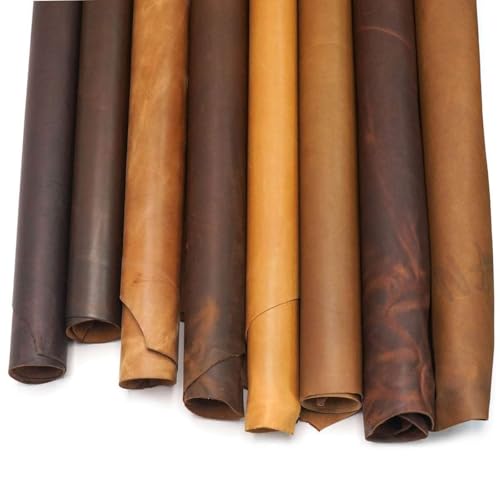
Chrome tanning keeps this hide soft and pliable at 2 to 3 ounces, matching the drape wallets and small pouches need. That process also gives it a smoother temper than a veg-tan sheet of the same weight. Several finished colors ship ready to sew, skipping an extra dyeing step.
Pros
- Soft enough for stitched wallets and cardholders
- Pre-dyed colors save finishing time
- Consistent thickness across the hide
Cons
- Too thin for structural pieces like belts
- Chrome tan resists vegetable dye absorption

Rustic Town Genuine Leather Hide Precut Panel
Rustic Town labels this genuine leather, meaning it comes from a split layer rather than full-grain. Panels arrive precut around 12 by 24 inches, sized for smaller wallet or pouch patterns. A thin profile keeps cost down but limits load-bearing use.
Pros
- Lowest entry point for real leather
- Precut size skips a trimming step
- Light enough for easy hand sewing
Cons
- Split grain wears faster than full-grain
- Not suited to belts or holsters

Realeather Crafts Leather Pieces Variety Pack
Realeather bundles precut pieces across different colors, textures and light to mid weights in one pack. The assortment suits practicing cuts, stitching and basic tooling before buying a full hide. A packaging insert labels each piece with basic care information.
Pros
- Wide color and texture variety in one pack
- Precut shapes cut down on wasted material
- Affordable way to sample leather types
Cons
- Individual pieces too small for full projects
- Tanning method isn’t specified per piece
Pioneer Leather Heavyweight Full Grain Cowhide Side
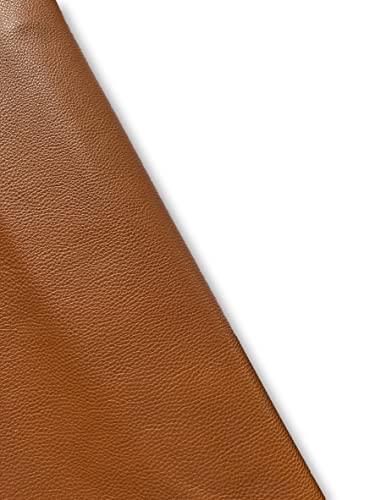
Pioneer’s heavyweight side runs 9 to 10 ounces, among the thickest precut options for structural work. Vegetable tan construction supports wet-molding for holsters and sheaths. A firm temper holds a belt’s shape under a buckle without curling.
Pros
- Thick enough for holsters without doubling layers
- Vegetable tan supports wet forming
- Full-grain surface resists scuffing
Cons
- Too rigid for wallets or small stitched goods
- Heavier weight adds to shipping bulk
The lineup, side by side
| # | Model | Leather Type | Best for | Score | Price |
|---|---|---|---|---|---|
| 1 | Tandy Leather Oil-Tan Cowhide Leather Side | Full-grain cowhide | Best overall | 9.4 | Check price |
| 2 | Hide & Drink Full Grain Leather Scraps Bag | Full-grain cowhide scraps | Best value | 9.1 | Check price |
| 3 | Springfield Leather Company Veg Tan Tooling Leather | Full-grain, tooling-grade cowhide | Best for tooling and stamping | 8.8 | Check price |
| 4 | ELW (Eco Leather Wholesale) Chrome Tan Leather Hide | Top-grain cowhide | Best for wallets and small leather goods | 8.6 | Check price |
| 5 | Rustic Town Genuine Leather Hide Precut Panel | Genuine/split leather | Best budget | 8.4 | Check price |
| 6 | Realeather Crafts Leather Pieces Variety Pack | Mixed cowhide pieces | Best for beginners | 8.2 | Check price |
| 7 | Pioneer Leather Heavyweight Full Grain Cowhide Side | Full-grain cowhide | Best for belts and holsters | 8.0 | Check price |
What matters most
Vegetable Tan or Chrome Tan: What Changes for Your Project Vegetable tanning uses tree bark extracts and takes weeks to finish, producing a firm hide that molds when wet. Chrome tanning finishes in about a day using mineral salts, yielding a softer, more pliable material. Holsters and tooled items favor veg-tan since it holds a stamped pattern. Wallets and small pouches often use chrome-tan leather because it drapes and stitches more easily.
What Full Grain, Genuine and Split Leather Labels Actually Mean Full-grain leather keeps the hide’s outer layer intact, showing natural grain and the highest durability. Genuine leather, despite the name, usually means a split layer that’s sanded and coated for a uniform look. Split leather wears faster and can peel at stress points like belt holes. Full-grain costs more per square foot but holds tooling and edge finishing better over time.
Matching Thickness to Wallets, Belts and Holsters Wallets and cardholders typically use 2 to 3 ounce leather, thin enough to fold without bulk. Belts need 8 to 10 ounces for structure under a buckle, sometimes doubled for extra stiffness. Holsters call for similarly heavy 8 to 10 ounce veg-tan that wet-molds around a firearm shape. Mixing weights within one project, like a light lining glued to a heavier shell, is common for bags and sheaths.
Precut Pieces or Whole Hides: Sizing for Beginners and Bulk Buyers Precut panels and scrap bags suit beginners testing stitching or dye before committing to a full hide. Whole sides give consistent grain and temper across multiple pattern pieces, useful for matching a belt to a holster. Buying scraps by the pound lowers cost per project but leaves piece size and shape up to chance. Production-scale crafters usually buy full sides to keep color and thickness consistent across a batch.
Frequently asked questions
What is the difference between full grain and genuine leather?
Full-grain leather keeps the hide’s outer layer, showing natural markings and the highest strength. Genuine leather usually comes from a lower split layer, sanded and coated for a uniform look. Full-grain resists wear and holds tooling better, while genuine leather suits lighter projects.
Is vegetable tanned leather better than chrome tanned for tooling?
Vegetable-tanned leather holds stamped and carved detail because it stiffens when wet, then keeps that shape once dry. Chrome-tanned leather stays soft and resists holding a stamped pattern. Tooling projects should stick with veg-tan in the 7 to 9 ounce range.
What thickness of leather works best for a wallet?
Wallets typically use leather between 2 and 4 ounces, thin enough to fold along seams without bulk. Cardholders and slim wallets lean toward the lighter end near 2 ounces. Bifold wallets with multiple layers can use slightly heavier 3 to 4 ounce leather for the shell.
Can craft leather work for holsters?
Holsters need thick, vegetable-tanned leather, usually 8 to 10 ounces, that wet-molds around a firearm. Thinner chrome-tanned pieces lack the rigidity to hold a molded shape. Full-grain cowhide in that weight range is the standard choice among holster makers.
Which leather is best for beginners learning to tool?
Beginners benefit from natural, undyed vegetable-tan leather around 7 to 8 ounces. Undyed leather shows stamped impressions clearly before any dye goes on. Precut practice pieces or variety packs let new crafters test technique without committing a full hide.
How much leather do I need for a belt?
A standard belt pattern uses roughly 4 to 6 square feet, depending on length and width. Vegetable-tanned leather at 8 to 10 ounces gives enough body for a single-layer belt. A half side usually covers one belt with material left over for a matching accessory.
Is genuine leather worth buying for small projects?
Genuine or split leather works fine for small, low-stress items like coasters or patches. It costs less per square foot than full-grain hide but wears faster at fold points. Structural pieces like belts or holsters should use full-grain instead.
Which craft leather takes dye most evenly?
Natural, undyed vegetable-tan leather absorbs dye most evenly since no existing finish blocks penetration. Chrome-tanned leather resists dye absorption because of its mineral tanning process. Testing dye on a scrap piece from the same hide confirms color before committing to a full project.
Final word
Tandy Leather’s Oil-Tan Cowhide Side takes the top spot for its full-grain surface and versatile 7 to 8 ounce weight, suited to belts, holsters and tooling alike. Crafters on a tighter budget or working on small patches should choose Hide & Drink’s Scraps Bag instead, since it delivers real full-grain cowhide in project-sized cuts. Anyone focused purely on stamped detail work will get more consistent results from Springfield’s Veg Tan Tooling Leather.
Jake Monroe
Jake worked as a residential contractor for over a decade before shifting to full-time writing. He evaluates power tools, hand tools and workshop gear through the lens of someone who has actually used them on job sites, not just read the box.


