Correction Fluid vs Tape: Which Fixes Mistakes Faster
BIC Wite-Out Quick Dry Correction Fluid leads this list for its foam-tip applicator and sub-two-minute dry time. Liquid Paper DryLine Grip Correction Tape suits anyone who wants zero wait before writing over a fix. BIC Wite-Out EZ Correct Correction Tape delivers the best value for everyday school and office corrections.
BIC Wite-Out Quick Dry Correction Fluid suits anyone who still reaches for a bottle over tape. Its foam tip spreads an even, opaque layer that dries in under two minutes. Heavy handwriting can still smear if you write over it before the surface fully sets.
Three real formats compete for the same job: bottled fluid, dispenser tape, and pen-style fluid, and none suits every mistake equally. We compared bottle volume, tape width, dry time, and refill availability across current Amazon listings, then checked that against owner feedback on smearing, tearing, and cap durability.
The top picks, ranked

BIC Wite-Out Quick Dry Correction Fluid
A foam-tip applicator lays down a thin, opaque coat over typed or handwritten text in a single pass. Water-based chemistry lets the fluid dry in under two minutes, quicker than older oil-based formulas. Amazon owners report the tip resists clogging better than store-brand competitors.
Pros
- Foam tip spreads fluid without streaking or pooling
- Sub-two-minute dry time supports quick re-writes
- Opaque formula covers both ink and pencil marks
Cons
- Needs a shake before each use to prevent clumping
- Cap dries out if left loose between uses

Liquid Paper DryLine Grip Correction Tape
A contoured rubber grip powers a dispenser that lays a dry, white strip you can write over immediately. No fluid means nothing to spill or leave capped between uses. Long correction sessions feel less tiring thanks to the ergonomic body, per the listing.
Pros
- Zero wait time before writing over a correction
- Rubber grip eases strain during long sessions
- Tape lays flat without bunching or tearing
Cons
- Non-refillable body means replacing the whole dispenser
- Strip can show a faint line under bright light

BIC Wite-Out EZ Correct Correction Tape
Snap-off design covers a single line of text cleanly, without the mid-strip tearing common in cheaper tapes. Cost per unit runs lower than fluid multi-packs while still handling typical school and office fixes. Reviewers report it lasts a full semester of daily use.
Pros
- Costs less per unit than fluid multi-packs
- Snaps cleanly at the end of a strip
- Compact body fits easily in a pencil case
Cons
- Narrow tape limits coverage on wide handwriting
- Spool isn’t refillable once it runs out

Tombow MONO Correction Tape
A ball-cam mechanism keeps even tension across the strip, so thin lines vanish without tearing the paper underneath. Owners can replace just the tape cassette instead of the entire dispenser. Ledgers and forms suit this precision better than broad coverage jobs, based on specifications.
Pros
- Refillable cassette cuts long-term plastic waste
- Ball-cam mechanism applies tape without skipping
- Handles fine, single-line corrections cleanly
Cons
- Costs more upfront than snap-off tape dispensers
- Refill cassettes require a separate purchase
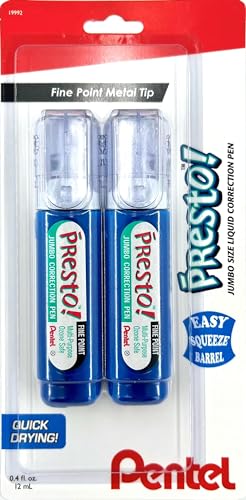
Pentel Presto! Correction Pen
Shaped like a marker, this pen stores fluid behind a metal precision tip instead of a foam pad. That narrow tip reaches into tight spots, like fixing one letter inside a word. Owners note the metal ball resists clogging longer than plastic-tip pens.
Pros
- Metal tip allows precise, small-area correction
- Marker shape makes control easy
- Ball tip resists clogging better than foam
Cons
- Holds less fluid than a standard bottle
- Struggles to cover large blocks of text

Amos Ecolutions X-5 Correction Tape
Recycled-content housing under the Ecolutions line appeals to buyers who want a lower cost per fix without switching to fluid. A 5 mm strip covers slightly more per pass than the 4.2 mm tapes above. Listings position it as a bulk classroom restocking pick.
Pros
- Wider 5 mm tape covers more per pass
- Recycled housing lowers per-unit plastic use
- Priced for bulk multi-pack purchasing
Cons
- Wider strip shows more on thin paper
- Fewer refill options than name-brand competitors

BIC Wite-Out Extra Coverage Correction Fluid
This formula trades some drying speed for a thicker, more opaque layer built to cover dark ink or toner in one coat. Laser-printed and photocopied pages that need two passes with thinner fluid often need only one here. Owners note the brush tip lays a heavier bead than the Quick Dry version.
Pros
- One-coat coverage over dark ink or toner
- Brush tip lays a thicker, even bead
- Works well on photocopied or laser-printed pages
Cons
- Dries slower than the Quick Dry formula
- Thick layer can crack if flexed while wet
Before you buy
What to look for in a correction fluid or tape Three formats cover almost every paper mistake: bottled fluid, dispenser tape, and pen-style fluid. Dry time separates the fluids, since water-based Quick Dry formulas cure in under two minutes while extra-coverage versions take longer. Tape skips drying altogether, and most cassettes run 4.2 mm to 5 mm wide so you can write over the strip right away. Refillable tape dispensers cost more upfront but cut long-term waste for daily correction work.
Correction fluid or correction tape: which fits your desk? Fluid still wins for covering large blocks of text or dark ink, since a brush or foam tip spreads a wider layer than any tape strip. Tape wins on speed, because nothing needs to dry before you write over it. Handwriting-heavy users often reach for BIC Wite-Out Quick Dry, while typists correcting single characters lean toward Tombow or BIC EZ Correct tape. Many desks end up keeping one of each rather than picking a single format.
Best options for offices and classrooms restocking in bulk Shared drawers burn through supplies faster than a single home desk, so per-unit cost and refill access matter more. Amos Ecolutions X-5 tape uses a recycled-content housing and sells well in bulk multi-packs for exactly that reason. Tombow MONO’s refillable cassette avoids replacing the whole dispenser every time tape runs out, which lowers cost across a school year. BIC’s EZ Correct stays a common shared-drawer choice simply because it restocks cheaply in bulk.
Fixing mistakes over toner, carbon copies, and dark ink Standard fluid sometimes needs two coats over laser toner or photocopied pages, since that ink sits darker than typical pencil or ballpoint. BIC Wite-Out Extra Coverage trades some drying speed for a thicker bead built for exactly that job. Pentel Presto’s metal-tip pen handles the opposite edge case, fixing a single letter inside a word without touching the rest. Area size usually decides between them: broad dark patches favor Extra Coverage, tiny fixes favor the pen.
The lineup, side by side
| # | Model | Format | Best for | Score | Price |
|---|---|---|---|---|---|
| 1 | BIC Wite-Out Quick Dry Correction Fluid | Correction fluid, foam-tip applicator | Best overall | 9.4 | Check price |
| 2 | Liquid Paper DryLine Grip Correction Tape | Correction tape, mechanical dispenser | Best for mess-free application | 9.1 | Check price |
| 3 | BIC Wite-Out EZ Correct Correction Tape | Correction tape, snap-off dispenser | Best value | 8.8 | Check price |
| 4 | Tombow MONO Correction Tape | Correction tape, refillable cassette | Best for precision work | 8.5 | Check price |
| 5 | Pentel Presto! Correction Pen | Correction pen, metal-tip applicator | Best for fine-tip touch-ups | 8.3 | Check price |
| 6 | Amos Ecolutions X-5 Correction Tape | Correction tape, snap-off dispenser | Best budget | 8.1 | Check price |
| 7 | BIC Wite-Out Extra Coverage Correction Fluid | Correction fluid, brush-tip applicator | Best for heavy, opaque coverage | 8.0 | Check price |
Frequently asked questions
How long does correction fluid take to dry?
Water-based formulas like BIC Wite-Out Quick Dry cure in under two minutes at normal room temperature. Thicker, extra-coverage formulas take longer since the bead sits deeper on the page. Humidity and the number of coats applied both slow the cure further.
What is the difference between correction fluid and correction tape?
Fluid is a liquid applied by brush, foam tip, or pen that needs time to dry before you write over it. Tape is a dry adhesive strip applied instantly from a dispenser, with no wait at all. Fluid tends to cover wider areas and darker ink better, while tape suits quick single-line fixes.
Can you write over correction tape right away?
Yes, that is the main edge tape holds over fluid. Liquid Paper DryLine Grip and Tombow MONO both apply a dry strip ready for writing the instant it’s laid down. No cure time needs managing, unlike bottled or pen-style fluid.
Is correction fluid still used in offices today?
Yes, BIC and Pentel still sell correction fluid in single bottles and multi-packs on Amazon. Digital documents have cut overall demand, but paper forms, checks, and handwritten records still need it. Owner reviews point to steady repeat purchases from schools, offices, and home users.
Which correction fluid covers photocopies best?
BIC Wite-Out Extra Coverage Correction Fluid targets darker source material like toner and photocopies. Its thicker formula lays a more opaque bead than standard Quick Dry fluid in one pass. Standard fluid can still work but may need a second coat over very dark ink.
What tape width works best for typed text?
Most correction tapes run 4.2 mm wide, matching a single line of typed text from BIC, Liquid Paper, or Tombow. Amos Ecolutions X-5 uses a slightly wider 5 mm strip that covers more per pass but shows more on thin paper. Narrower tape fits handwriting between ruled lines better than wider tape does.
Wite-Out vs Liquid Paper: which brand holds up better?
Both brands sell reliable fluid and tape lines, so the choice often comes down to format rather than brand quality. BIC Wite-Out spans more fluid formats, including a pen and an extra-coverage bottle. Liquid Paper’s DryLine Grip tape stands out for its ergonomic body and instant write-over strip.
Are refillable correction tape dispensers worth it?
For daily, high-volume use, yes, since replacing just the cassette costs less over time than buying new dispensers. Tombow MONO’s refillable design fits that use case well. Occasional users correcting a few lines a week may not use enough tape to recoup the higher upfront cost.
Which correction tool is best for fixing a single letter?
Pentel Presto’s metal-tip pen targets exactly that job, reaching into a word without touching surrounding letters. Tombow MONO’s ball-cam tape also handles fine, single-line fixes cleanly. Wide brush-tip fluid bottles cover more area than either tool needs for one letter.
Final word
BIC Wite-Out Quick Dry Correction Fluid stays the strongest all-around pick for bottle-and-brush users, thanks to its fast cure and reliable opacity. Anyone processing paperwork all day should switch to Liquid Paper DryLine Grip Correction Tape, since it skips the wait entirely. Buyers fixing dark ink or photocopies should reach for BIC Wite-Out Extra Coverage instead of the Quick Dry formula.
Marcus Chen
Marcus covered consumer electronics for enthusiast tech publications for six years before joining ChoiceCrest. He specializes in translating manufacturer spec sheets into plain-language buying advice, with a focus on audio, computing accessories and smart-home gear.
You might also need
Nintendo Game & Watch: Super Mario Bros Review: Still Worth It as a Collectible?

Ray-Ban Meta (Gen 2) Wayfarer Smart Glasses: Worth $379 for Clear Lenses?
AlyKets Nikon UC-E6 Replacement USB Cable: Does a $7.95 Cord Work as Well as the Original?
