Top Cordless Power Outlets for On-the-Go Charging
The Jackery Explorer 500 is our top pick for most people, offering a reliable 518Wh capacity with a pure sine wave inverter for sensitive electronics. Its main advantage is the trusted brand reputation and proven reliability, while its limitation is the higher price compared to similar capacity units.
Cordless outlets, also known as portable power stations, have become essential for camping trips, outdoor events, and emergency home backup. They let you charge phones, run small appliances, and even power medical devices without a wall socket.
Our guide breaks down the best options on Amazon based on specifications and owner reports. We focus on real-world usability, so you can pick a power station that fits your lifestyle.
The shortlist, ranked

Jackery Explorer 500
The Jackery Explorer 500 is a proven workhorse with 518Wh capacity and a pure sine wave inverter. It runs mini fridges, CPAP machines, and charges laptops. Owners praise its sturdy build and clear display.
Pros
- Pure sine wave AC output protects sensitive electronics
- Reliable performance with consistent power delivery
- Compact design for its capacity
Cons
- Heavier than some comparable models
- No fast USB-C PD port

Goal Zero Yeti 500X
Goal Zero Yeti 500X offers 505Wh capacity and a modular design that lets you add extra batteries for more runtime. It includes a variety of ports including USB-C PD and a 12V carport. Users like its rugged exterior.
Pros
- Expandable battery system increases flexibility
- Multiple charging options including USB-C PD
- Durable build with rubberized corners
Cons
- Higher cost per watt compared to some rivals
- Fan noise can be noticeable during heavy use

Anker PowerHouse 521
Anker PowerHouse 521 is a compact 256Wh power station that fits in tight spaces. It features a 300W AC inverter and two USB-C ports. Owners report it’s perfect for overnight trips and small electronics.
Pros
- Lightweight and easy to carry
- Affordable entry into portable power
- Fast charging via USB-C PD
Cons
- Limited capacity for larger appliances
- No pure sine wave inverter (modified sine wave)

Renogy 500 Portable Power Station
Renogy 500 offers 499Wh capacity and supports fast solar charging up to 120W. It has a robust set of outputs including AC, USB-A, USB-C, and 12V. Users appreciate the clear LCD and app connectivity.
Pros
- Fast solar charging with high input limit
- App control for monitoring and settings
- Multiple output ports including 12V carport
Cons
- Fan can be loud during high load
- No wireless charging pad
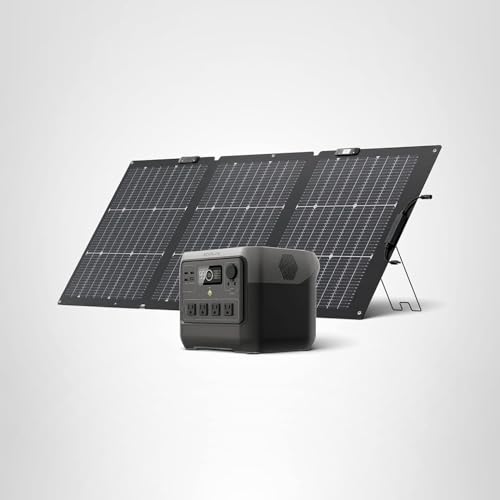
EcoFlow River 2 Pro
EcoFlow River 2 Pro packs 768Wh capacity with a 800W AC inverter. It recharges from 0-80% in under an hour using AC power. The unit features X-Boost technology to handle high-power devices.
Pros
- Blazing fast AC recharging
- High capacity and output for its size
- X-Boost technology runs heavy appliances
Cons
- Heavier and bulkier than others
- Premium price tag

Bluetti EB55
Bluetti EB55 features a rugged construction with a 537Wh capacity and 700W AC inverter. It uses LiFePO4 battery chemistry for longer cycle life. Owners report it handles extreme temperatures well.
Pros
- LiFePO4 battery lasts 3500+ cycles
- Dustproof and weather-resistant shell
- Multiple charging inputs including dual solar
Cons
- Bulky design
- No app connectivity

Westinghouse WH3000
Westinghouse WH3000 is an affordable 296Wh power station with a 300W AC inverter. It provides reliable power for phone charging, small lights, and low-wattage devices. Users like the simple operation and low cost.
Pros
- Lowest price point in this roundup
- Simple to use with basic ports
- Lightweight and portable
Cons
- Low capacity and output
- No USB-C PD port
How they stack up
| # | Model | Capacity | Best for | Score | Price |
|---|---|---|---|---|---|
| 1 | Jackery Explorer 500 | 518Wh (140,000mAh) | Overall reliability and balanced performance | 9.4 | Check price |
| 2 | Goal Zero Yeti 500X | 505Wh | Expandable power with optional extra batteries | 9.1 | Check price |
| 3 | Anker PowerHouse 521 | 256Wh | Budget-friendly portable power | 8.9 | Check price |
| 4 | Renogy 500 Portable Power Station | 499Wh | Solar enthusiasts with high input flexibility | 8.8 | Check price |
| 5 | EcoFlow River 2 Pro | 768Wh | Fast recharging and high power output | 9.2 | Check price |
| 6 | Bluetti EB55 | 537Wh | Durability and long-lasting battery | 8.7 | Check price |
| 7 | Westinghouse WH3000 | 296Wh | Budget-conscious users needing basic power | 8.0 | Check price |
How to choose
How to Choose Capacity Consider what you need to power. A capacity of 300Wh can charge laptops and phones multiple times. For appliances like mini fridges or CPAP machines, aim for 500Wh or more. Check the wattage of your devices and calculate runtime.
Output Types: AC, USB, 12V AC outlets run standard appliances. USB-A and USB-C ports charge phones and tablets. 12V carports are handy for car accessories. Look for pure sine wave inverters if using sensitive electronics like medical equipment.
Recharging Options Most stations recharge from wall outlets, car chargers, and solar panels. Solar charging is great for off-grid trips but requires compatible panels. Fast charging features can save time. Consider the charging input limits for solar.
Portability and Build Weight matters if you’ll carry it far. Heavier units with larger capacity are suitable for vehicle camping. Rugged designs with weather resistance are better for outdoor use. Check handles and form factor.
Good to know
What is a cordless outlet?
A cordless outlet is a portable power station with built-in battery and AC/DC outlets. It provides electricity without needing a wall socket. You charge it in advance and use it anywhere.
How do I determine the right capacity?
List the devices you plan to run and their wattage. Multiply watts by hours of use to get watt-hours needed. Add a buffer. Choose a power station with at least that capacity.
Can I run a refrigerator on these power stations?
Some larger models like the EcoFlow River 2 Pro (800W) can run a small refrigerator. Check the fridge’s starting wattage. The Jackery Explorer 500 also works for mini fridges. Always check surge capacity.
What is the difference between pure sine wave and modified sine wave?
Pure sine wave produces clean power similar to household electricity. It is safe for sensitive electronics like laptops and medical devices. Modified sine wave is cheaper but may cause issues with some devices. Our top picks use pure sine wave.
How long do these batteries last?
Most use lithium-ion batteries that last 500-1000 cycles. The Bluetti EB55 uses LiFePO4 which lasts 3500+ cycles. Proper storage and maintenance extend lifespan.
Can I charge them with solar panels?
Yes, most support solar charging. Ensure the panel’s wattage and connector are compatible. Renogy and Goal Zero have specific solar panels for optimum performance. Charging time varies with sunlight.
Are these safe to use indoors?
Yes, they are safe indoors as they produce no fumes. They use battery technology. Keep away from water and follow manufacturer guidelines. Always use certified products.
Can I take them on an airplane?
Most airlines allow lithium-ion batteries under 100Wh. Our picks exceed that. Check with your airline. For travel, consider smaller models like the Anker PowerHouse 521 (256Wh), but still verify regulations.
Final word
For most users, the Jackery Explorer 500 offers the best balance of reliability, capacity, and portability. If you need fast recharging and higher power output, choose the EcoFlow River 2 Pro. For a budget option, the Anker PowerHouse 521 provides solid performance at a lower cost.
Jake Monroe
Jake worked as a residential contractor for over a decade before shifting to full-time writing. He evaluates power tools, hand tools and workshop gear through the lens of someone who has actually used them on job sites, not just read the box.


