Cordless OBD2 Scanners for Trucks, Ranked by Coverage
BlueDriver Bluetooth Pro is the strongest cordless pick for light trucks, reaching ABS, SRS and transmission modules without a subscription. OBDLink MX+ logs live data fast enough to catch a misfire under tow. ANCEL X7HD covers 24 volt class 6 to 8 rigs running J1939.
BlueDriver Bluetooth Pro fits most pickup owners who want more than a check engine light. Enhanced software reaches ABS, airbag and transmission modules on many domestic trucks, and each code arrives with a ranked list of likely fixes. Actuator tests are missing, so commanding a part still needs a different tool.
Dongles look alike in a listing photo, yet module access varies wildly between brands. We compared supported protocols, enhanced coverage by manufacturer, bidirectional functions and standby current. Owner reports on dropped pairings, licence renewals and app changes decided the close calls.
The top picks, ranked
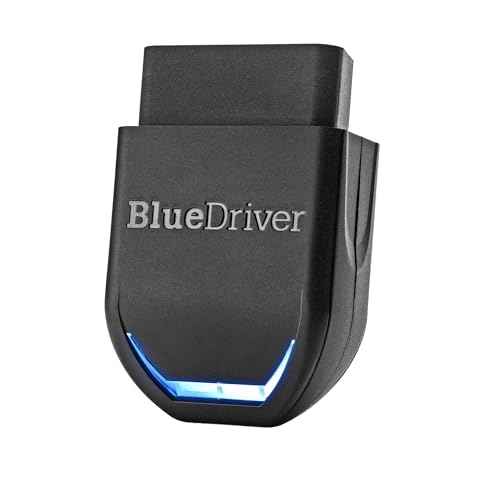
BlueDriver Bluetooth Pro OBDII Scan Tool
Codes arrive with a ranked list of likely fixes drawn from reported repairs on the same platform. Enhanced coverage on many Ford, GM and Ram trucks extends past the engine into ABS, SRS and transmission. Everything ships with the dongle, so no annual licence sits behind the features.
Pros
- Repair reports name likely fixes, not just codes
- Enhanced modules included with no annual licence
- Pairing holds on both iPhone and Android
Cons
- No bidirectional actuator tests
- Locked to the BlueDriver app

OBDLink MX+
High sample rates are the point here, which matters when a fault only shows under load. Enhanced diagnostics cover GM, Ford, Toyota and Nissan systems beyond generic powertrain codes. Third party apps such as OBD Fusion and Torque read it alongside the official OBDLink app.
Pros
- Fast sampling captures intermittent towing faults
- Works with OBD Fusion, Torque and similar apps
- Sleeps on its own to protect a parked battery
Cons
- Enhanced depth swings sharply between brands
- Layout assumes some diagnostic background

Autel MaxiAP AP200
Full system access lands in dongle form, covering every module on one licensed vehicle brand. Service functions run to oil resets, electronic parking brake retraction, throttle relearn and battery registration. Adding a second manufacturer means buying that brand pack separately.
Pros
- Reads every module, not the engine alone
- Handles oil, parking brake and throttle relearn jobs
- One dongle serves the whole MaxiAP app range
Cons
- Single brand licence hurts a mixed fleet
- Menu structure takes a while to learn
Topdon TopScan
Bidirectional commands cycle a fuel pump, cooling fan or solenoid instead of leaving you to guess. Eight resets cover oil life, steering angle sensor, electronic parking brake, throttle body and battery. A fault summary in the app points toward a first test rather than a parts list.
Pros
- Actuator tests confirm a part before you replace it
- Reset list covers most DIY maintenance jobs
- Small enough to live in a glovebox
Cons
- New vehicle data needs an annual renewal
- Bidirectional depth varies by model year

ANCEL X7HD Heavy Duty Truck Scanner
Rigs running 24 volt systems sit outside anything a keyfob dongle can address. X7HD speaks J1939 and J1708 alongside standard OBD2, so a mixed fleet stays on one tool. Forced DPF regeneration and injector tests run from the paired tablet, which is far bulkier than an adapter.
Pros
- Reads class 6 to 8 trucks that dongles cannot
- Forced regeneration runs from the tablet
- One tool spans light and heavy vehicles
Cons
- Bulkier and heavier than a dongle
- Brand coverage lists need checking first

Veepeak OBDCheck BLE+
Generic codes and live sensor streams are the whole job here, read through third party apps. Bluetooth low energy holds standby current low enough to leave the adapter plugged in overnight. Manufacturer modules stay locked out, so an ABS warning light will not produce a code.
Pros
- Cheapest dependable route to reading engine codes
- Low draw suits leaving it connected
- Pairs with well supported third party apps
Cons
- No ABS, airbag or transmission access
- Full features sit behind a paid third party app
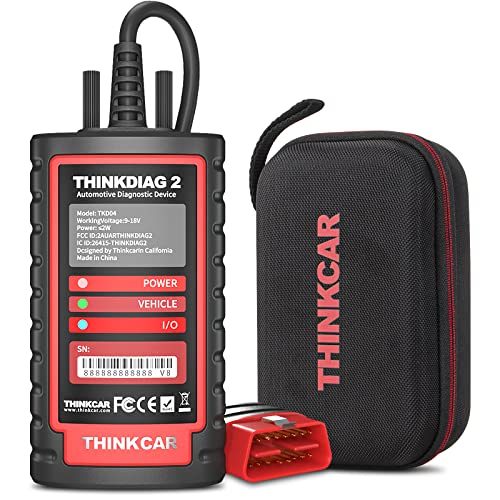
THINKCAR Thinkdiag 2
Workshop level module coverage arrives in a Bluetooth dongle, with bidirectional control and roughly fifteen reset services. CAN FD and DoIP support matters on recent domestic trucks that older adapters cannot address at all. Brand software packs renew on a schedule, and that is the real running cost.
Pros
- Module depth close to a workshop scan tool
- CAN FD support for newer truck platforms
- Long reset list including injector coding
Cons
- Brand packs need renewing to stay current
- Setup takes longer than plug and scan dongles
What to look for
What to look for in a cordless truck scanner Protocol support comes first, since any 1996 or newer light truck uses the 16 pin OBD2 port. Check which manufacturers the enhanced software covers next, because that decides whether ABS and transmission codes ever appear. Bidirectional control sits in a tier above that again. Standby current matters if the dongle stays plugged in, and the licence model decides what the tool still reads three years from now.
Generic codes, enhanced modules and full system access Three tiers exist and listings blur them badly. Generic adapters such as the Veepeak OBDCheck BLE+ read powertrain codes only. Enhanced tools add manufacturer specific modules, which is where BlueDriver and OBDLink MX+ sit. All system tools like the MaxiAP AP200 and Thinkdiag 2 reach every controller on a licensed brand, body and chassis included.
Light pickups, 24 volt rigs and the J1939 split Half ton and three quarter ton pickups share the car style 16 pin connector, so any dongle plugs straight in. Class 6 to 8 trucks use a 9 pin Deutsch connector with J1939 or J1708 messaging instead. No consumer dongle bridges that gap. ANCEL X7HD speaks both, which is why it carries a tablet rather than fitting in a pocket. Look at the port shape in the cab before ordering anything.
Live data logging, actuator tests and service resets Intermittent faults rarely store a code, so sample rate decides whether you catch one. OBDLink MX+ logs fast enough to record transmission temperature climbing on a grade while towing. Commanding a part is the other half of diagnosis: Topdon TopScan and Thinkdiag 2 cycle fans, pumps and EGR valves before you spend on replacements. Resets round it out, because electronic parking brakes must retract for a pad change and oil life counters need zeroing.
Compared at a glance
| # | Model | Connection | Best for | Score | Price |
|---|---|---|---|---|---|
| 1 | BlueDriver Bluetooth Pro OBDII Scan Tool | Bluetooth to iOS and Android | Best overall | 9.4 | Check price |
| 2 | OBDLink MX+ | Bluetooth with automatic sleep | Best for live data logging | 9.2 | Check price |
| 3 | Autel MaxiAP AP200 | Bluetooth dongle with MaxiAP app | Best value | 9.0 | Check price |
| 4 | Topdon TopScan | Bluetooth 5.0 | Best for service resets | 8.8 | Check price |
| 5 | ANCEL X7HD Heavy Duty Truck Scanner | 12 volt and 24 volt heavy duty trucks | Best for heavy duty diesel | 8.6 | Check price |
| 6 | Veepeak OBDCheck BLE+ | Bluetooth low energy | Best budget | 8.3 | Check price |
| 7 | THINKCAR Thinkdiag 2 | Bluetooth dongle with phone app | Best for newer truck platforms | 8.0 | Check price |
Common questions
Will an OBD2 scanner work on a diesel pickup?
Light duty diesel pickups use the standard 16 pin OBD2 port, so every scanner here plugs in. Medium and heavy trucks switch to 9 pin connectors and J1939, which needs the ANCEL X7HD. Confirm the port shape first.
What is the difference between OBD2 and J1939?
OBD2 is the emissions standard mandated on light vehicles, with a fixed 16 pin connector. J1939 is the CAN based standard used across commercial trucks, with its own connector and message set. Tools built for one do not read the other.
Which cordless scanner reads ABS and transmission codes?
BlueDriver and OBDLink MX+ both carry enhanced coverage that reaches ABS and transmission modules on many domestic trucks. MaxiAP AP200 goes deeper once you licence that brand. Generic adapters like the Veepeak stop at the engine.
Can a Bluetooth OBD2 dongle drain a truck battery?
Adapters that never sleep can flatten a battery over a week of standing. OBDLink MX+ and Veepeak OBDCheck BLE+ drop into low draw states instead. Unplug any dongle if the truck sits for a month.
Is BlueDriver better than OBDLink MX+ for trucks?
BlueDriver wins for owners who want a code explained and a repair suggested. OBDLink MX+ wins for raw data at speed and freedom to choose an app. Both read the same basic protocols.
Do you need bidirectional control for DIY truck repairs?
Not for reading codes or clearing a warning light. It pays off when you want proof that a fuel pump, cooling fan or EGR valve responds before buying one. Topdon TopScan is the cheapest route to that function here.
How many trucks can one scanner cover?
Enhanced tools such as BlueDriver work across brands from the moment you pair them. Licence based tools like MaxiAP AP200 and Thinkdiag 2 tie their deepest coverage to one manufacturer. Mixed fleets favour the first type.
Does clearing a code with a wireless scanner fix anything?
No. Clearing resets the light and wipes stored data, nothing more. Once the fault condition repeats, the same code returns, usually within a few drive cycles.
What is the best cordless OBD2 scanner for a small fleet?
BlueDriver covers mixed light duty vehicles without per brand licences, which suits a handful of vans and pickups. Add an ANCEL X7HD only if class 6 to 8 equipment is in the yard.
The verdict
BlueDriver Bluetooth Pro is the buy for a half ton or three quarter ton pickup, because enhanced module access and repair reports come with the hardware and never expire. Anyone chasing a fault that only appears under load should take OBDLink MX+ instead for its logging speed and app choice. Running class 7 or class 8 equipment changes the answer completely: buy the ANCEL X7HD for J1939 access.
Tony Russo
Tony trained as an automotive technician and spent years in service and parts retail before moving into writing. He focuses on garage tools, car care products and accessories from a hands-on maintenance perspective.


