Garage Jump Starters Ranked by Amps and Engine Size
NOCO Boost Plus GB40 suits most home garages, cranking gas engines to 6 litres on 1000 amps with clamps that ignore a reversed hookup. Hulkman Alpha 85 warms its own cells before a freezing start. Diesel pickups need the NOCO Boost Pro GB150 and its 3000 amp ceiling.
Pick the NOCO Boost Plus GB40 if your driveway holds sedans, hatchbacks and small SUVs. Its 1000 amp rating covers gas engines to 6 litres, and UltraSafe clamps withhold current when the connection is backwards. Diesel above 3 litres falls outside its range, so truck owners should look higher up this list.
Box art leads with peak amps, a figure no standard forces brands to measure the same way. Rated engine displacement, cell capacity and cold behaviour decide the January morning. We compared published gas and diesel limits, battery size, port selection and cable length. Recurring owner feedback about charge held after a season on a shelf settled the close calls.
The shortlist, ranked
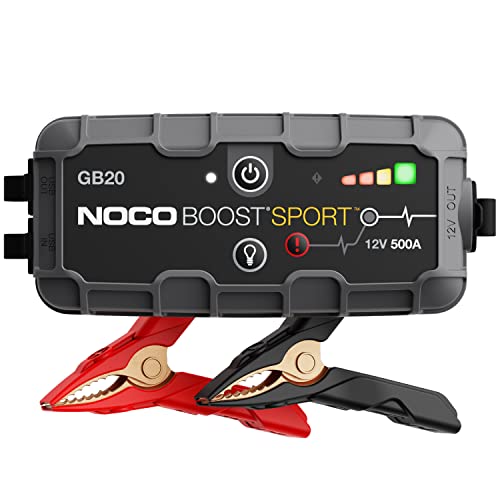
NOCO Boost Plus GB40
Rated for 6 litre gas engines and 3 litre diesels, the GB40 matches nearly every commuter car parked on a suburban street. UltraSafe clamps check polarity before passing any current, so a wrong connection at 6am costs nothing. A 100 lumen light with strobe mode handles the roadside half of the job.
Pros
- Clamps block current until polarity is correct
- Keeps usable charge across months of storage
- Small enough to live in a glovebox year round
Cons
- A 3 litre diesel ceiling rules out most pickups
- Micro USB recharging lags USB-C rivals

Hulkman Alpha 85
Cold saps lithium output, so Hulkman heats the cells first and then releases the crank. A colour LCD reports exact charge percentage and clamp status instead of four indicator dots. At 2000 amps it reaches 8.5 litre gas engines, well past what the GB40 covers.
Pros
- Preheating targets sub freezing garages directly
- LCD gives a real percentage, not an estimate
- USB-C covers both recharging and device output
Cons
- Weight and bulk work against glovebox duty
- Display keeps drawing power if left awake

GOOLOO GT4000S Jump Starter
Vans, trucks and 10 litre gas engines all fall inside the 4000 amp rating, as do diesels up to 8 litres. USB-C Power Delivery output turns it into a laptop bank during an outage. Clamp housings feel lighter in the hand than NOCO’s, which argues for careful storage in the case.
Pros
- Covers 10 litre gas and 8 litre diesel engines
- USB-C PD keeps a laptop alive in a power cut
- Ships with a carry case and wall adapter
Cons
- Clamp housings feel less rugged than NOCO’s
- Too bulky for permanent storage in a door pocket
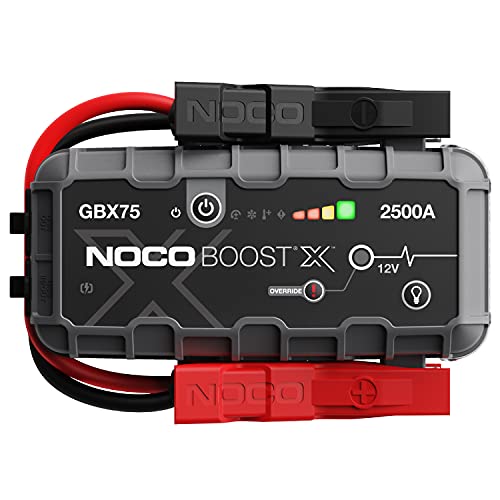
NOCO Boost Pro GB150
Heavy gauge cables and 3000 amps aim at 10 litre gas engines and 8 litre diesels. Cable reach is the quiet advantage, since batteries hide behind wheel arches and under truck bed floors. Sheer weight keeps this one parked on a garage shelf rather than riding in a car.
Pros
- Cranks large diesels that stall smaller packs
- Extended leads reach buried battery terminals
- Uses the same UltraSafe clamp system as the GB40
Cons
- Too heavy to carry in a small car
- A full recharge from empty takes hours
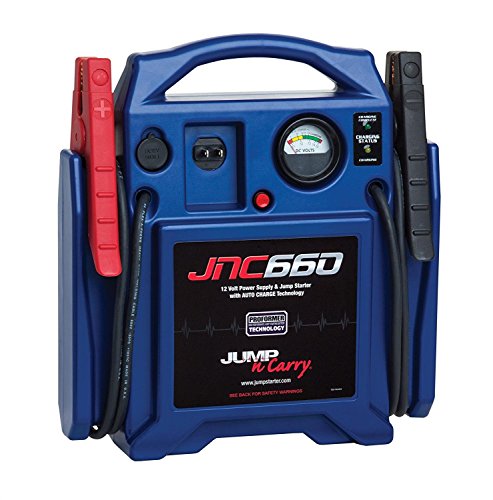
Clore Automotive Jump-N-Carry JNC660
Lead acid rather than lithium, this Clore PROFORMER battery pushes 1700 peak amps and shrugs off back to back starts. Forty six inch cables let the unit sit on the floor while the clamps still reach the terminals. Independent shops have leaned on the same design for years.
Pros
- Repeated starts do not trigger a thermal pause
- 46 inch leads suit cramped engine bays
- Battery can be replaced instead of binned
Cons
- Needs regular top up charging to stay ready
- Offers no USB ports or power bank mode

DBPOWER 800A Portable Car Jump Starter
Gas engines up to 7.2 litres sit within the 800 amp rating, which covers commuter cars and compact SUVs. An 18000mAh cell means it spends most of its life charging phones from a glovebox. Clamp construction stays basic and no diesel figure is published.
Pros
- Simplest entry point into lithium jump starting
- 18000mAh doubles as a large phone bank
- Slim enough to sit in a door pocket
Cons
- No published diesel engine rating
- Short leads and basic clamp construction
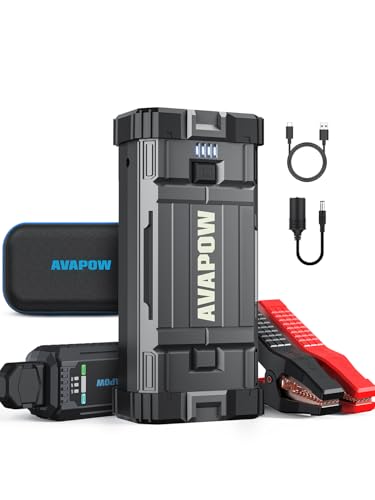
AVAPOW A58 Car Battery Jump Starter
Six thousand peak amps and a large cell leave headroom for several vehicles in one session. An LCD shows remaining charge and clamp status before you commit to a crank. Its 500 lumen light with SOS mode is bright enough to work under a bonnet at night.
Pros
- Reserve capacity covers several jumps per charge
- 500 lumen beam lights a night roadside repair
- LCD removes guesswork about remaining charge
Cons
- Large footprint claims real shelf space
- Brand support trails NOCO and Clore
How to choose
How many amps you actually need Peak amps describes the highest instantaneous current a pack can push, and brands measure it loosely. Read rated engine displacement instead. Four and six cylinder gas cars typically crank on 400 to 600 amps, so the GB40 at 1000 amps carries real margin. Diesel compression demands more turning force, which is why that same GB40 drops to a 3 litre diesel limit. Write down the largest engine in the household, then shortlist only packs that clear it with room to spare.
Clamp safety and reverse polarity protection Reversed clamps once meant blown fuses, welded metal or a damaged control module. Modern packs sense polarity and hold back current until the connection is right. NOCO brands this as UltraSafe, while GOOLOO and AVAPOW publish comparable short circuit and reverse protection. Confirm the feature explicitly if a teenager or a neighbour might borrow the unit. Cable gauge and length matter for the same safety reason, because short thin leads force you to balance the pack on the engine where one knock pulls a clamp loose.
Cold weather starts and winter storage Below freezing, lithium cells deliver less current exactly when a tired battery needs more. Chemistry inside the car battery slows too, so both halves of the job get harder at once. Hulkman Alpha 85 tackles this directly by warming its cells before releasing current. Every other lithium pack here depends on storage habits instead. Keeping the unit indoors and carrying it out only when needed recovers much of the lost output, which is also why the DBPOWER struggles most in January.
Lithium pack or a wheeled lead acid jump box Lithium fits most home garages. It holds charge for months, weighs a fraction of a lead acid box and rides in a car without complaint. Clore’s JNC660 earns its space in one narrow case: a workshop reviving several dead vehicles back to back, where a lithium pack heats up and pauses between attempts. Weekend project car owners should take the older technology on purpose. Anyone jumping one car twice a winter gains nothing from the extra weight and the monthly charging routine.
How they compare
| # | Model | Peak amps | Best for | Score | Price |
|---|---|---|---|---|---|
| 1 | NOCO Boost Plus GB40 | 1000A, 12V | Best overall | 9.4 | Check price |
| 2 | Hulkman Alpha 85 | 2000A, 12V | Best for cold weather starts | 9.2 | Check price |
| 3 | GOOLOO GT4000S Jump Starter | 4000A, 12V | Best value | 9.0 | Check price |
| 4 | NOCO Boost Pro GB150 | 3000A, 12V | Best for diesel trucks | 8.8 | Check price |
| 5 | Clore Automotive Jump-N-Carry JNC660 | 1700A | Best for a permanent garage station | 8.6 | Check price |
| 6 | DBPOWER 800A Portable Car Jump Starter | 800A, 12V | Best budget | 8.3 | Check price |
| 7 | AVAPOW A58 Car Battery Jump Starter | 6000A, 12V | Best for multi-car households | 8.0 | Check price |
Frequently asked questions
How many amps do I need to jump start a car?
Four and six cylinder gas cars usually start on 400 to 600 amps, so a 1000 amp pack like the GB40 leaves comfortable headroom. Large V8s want 2000 amps or more. Diesels above 5 litres should start at 3000 amps.
Can a jump starter revive a completely dead battery?
Usually yes, because the pack supplies cranking current on its own. A battery sitting at zero volts can stop some units from detecting a connection at all. NOCO models include a manual override for that situation.
Do jump starters work on diesel engines?
Only when the listing states a diesel rating. GB40 stops at 3 litres of diesel, while GOOLOO GT4000S and NOCO Boost Pro GB150 both claim up to 8 litres. DBPOWER publishes no diesel figure, so treat it as gas only.
What size jump starter is best for a V8 truck?
Aim for 2000 amps upward on gas V8s and 3000 amps on diesel pickups. GB150 and GT4000S both cover 10 litre gas engines. Cable length matters as much as amps, since truck batteries often sit under a bed floor.
How often should a jump starter be charged in storage?
Top lithium packs up every three months. NOCO and Hulkman hold charge well, though cold storage speeds the drain. A lead acid unit such as the JNC660 needs far more frequent attention to stay ready.
NOCO GB40 vs Hulkman Alpha 85: which suits a cold garage?
Alpha 85 wins below freezing because it preheats its cells before delivering current. GB40 answers better for a warm garage or glovebox duty, thanks to lower weight. Both protect against a reversed connection.
Is NOCO worth it compared with budget brands?
NOCO’s edge sits in clamp safety engineering and charge retention over several years. Entry level packs such as the DBPOWER match the amp claims on paper. Owners report the difference shows after a unit has sat unused for a whole season.
Can you leave a jump starter in the car during summer?
Heat shortens lithium cell life, and a parked cabin runs far hotter than outside air. Short trips cause no harm. For long term storage, move the pack indoors or into a shaded garage.
What does peak amps actually mean?
It describes maximum instantaneous current, not sustained cranking output. Comparing peak figures within one brand works reasonably well. Across brands the number drifts, which makes rated engine displacement the more honest specification.
Will a jump starter charge a phone or laptop?
Most lithium models will. GOOLOO GT4000S offers USB-C Power Delivery strong enough for a laptop, and the AVAPOW A58 adds USB-C output too. Clore’s JNC660 carries no USB port at all.
The bottom line
For a household of ordinary petrol cars, the NOCO Boost Plus GB40 is the pack worth owning, since polarity protected clamps and long charge retention matter more than headline amps on the one morning you need it. Owners of diesel pickups should jump straight to the NOCO Boost Pro GB150 and its longer cables. If your garage revives several dead vehicles in a single session, the Clore Jump-N-Carry JNC660 keeps going after a lithium pack has paused to cool.
Tony Russo
Tony trained as an automotive technician and spent years in service and parts retail before moving into writing. He focuses on garage tools, car care products and accessories from a hands-on maintenance perspective.



