Cooler Carts Ranked by Wheel Size and Ice Time
Permasteel’s 80 Quart Rolling Cooler Cart suits patio hosting, pairing an 80 quart bin with a side drain and a lower shelf. Rough ground changes the answer to the Igloo Trailmate Journey and its 10 inch wheels. Multi night camping without ice resupply points to the YETI Tundra Haul.
Hosting on a deck suits the Permasteel 80 Quart Rolling Cooler Cart. Eighty quarts covers an afternoon of drinks, a side plug drains meltwater, and two casters lock so the cart stays put. Those same small casters sink into a lawn. Grass, sand and gravel belong to the Igloo Trailmate Journey, while multi day ice retention goes to the YETI Tundra Haul.
One search covers two different products here: patio bar carts built around an ice bin, and rotomoulded coolers fitted with wheels. We compared stated quart capacity, wheel diameter, insulation type and drain position. Owner reports on rust, handle strength and rolling resistance settled the close calls.
The shortlist, ranked

Permasteel 80 Quart Rolling Cooler Cart
Eighty quarts holds roughly 100 cans before ice goes in, enough for an afternoon without a refill run. Meltwater leaves through a side plug, so nobody lifts a loaded bin. Two of the four casters lock, which keeps the cart still on sloped decking.
Pros
- Fits about 100 cans for a party
- Side plug drains without tipping the bin
- Lower shelf frees up the serving table
Cons
- Small casters sink into turf
- Thin liner loses ice within a day

Igloo Trailmate Journey 70 Quart Cooler
Ten inch wheels climb over sand ruts that stop a standard cooler wheel dead. Its telescoping butler handle stands upright and carries a tray, bottle opener and four cup holders. Seventy quarts covers a family beach day with ice to spare.
Pros
- Rolls across soft sand and long grass
- Butler tray keeps prep off the ground
- Cup holders cut beach clutter
Cons
- Tall body is awkward to lift into a boot
- Foam walls trail rotomoulded insulation
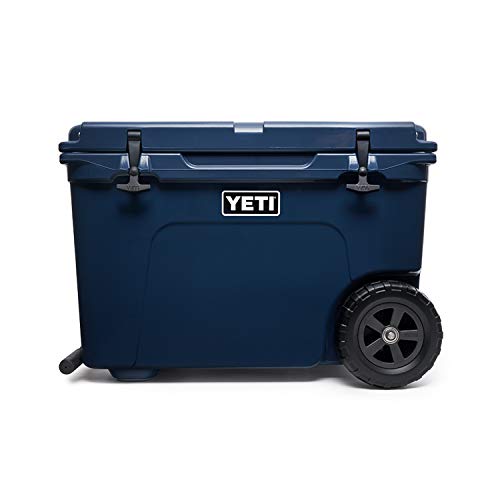
YETI Tundra Haul Wheeled Cooler
Pressure injected polyurethane and a freezer style gasket stretch ice life into days rather than hours. Solid never flat wheels cross rutted campsite tracks, and the aluminium tow bar folds flat when parked. Padlock it and the cooler counts as bear resistant, which some park campgrounds require.
Pros
- Ice survives several nights out
- Tow bar moves a heavy load one handed
- Gasket and latches seal properly
Cons
- Around 37 pounds before anything goes in
- One tow handle means one person pulls
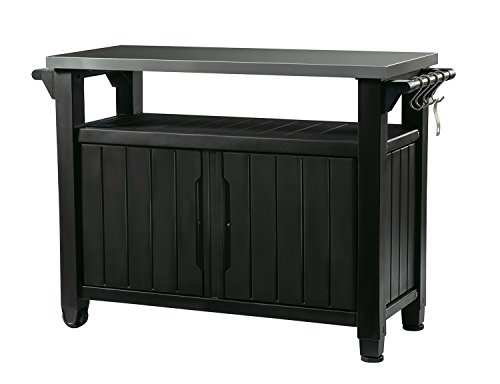
Keter Unity XL Portable Table and Cooler
Prep table, storage cabinet and ice bin share a single footprint, which suits a balcony with no spare floor. A removable insert holds bottles on ice and lifts out for washing. Resin shrugs off rain, so the unit stays outdoors uncovered through winter.
Pros
- Three jobs in one small footprint
- Resin needs no sealing or cover
- Cabinet hides tools and spare bottles
Cons
- Insert holds far less ice than a cart bin
- Not designed to be wheeled around

RTIC 52 Quart Ultra-Light Wheeled Cooler
RTIC lists this body as roughly 30 percent lighter than its standard hard cooler, which turns loading a truck bed into a one person job. Two large wheels and a moulded tow handle pull it over tarmac. Fifty two quarts swallows a case of drinks plus weekend food.
Pros
- Light enough to load single handed
- Closed cell foam outlasts any steel cart
- Rolls smoothly across a car park
Cons
- Wheels are smaller than the Trailmate’s
- Narrow well leaves tall bottles tilted

Giantex Rolling Cooler Cart
Solid fir slats sit better beside teak furniture than powder coated steel, and the finish takes a fresh coat of oil each spring. A plastic liner drops in for ice and pulls out for washing. Two fixed wheels pair with two swivel casters, so the cart pivots on a flat deck.
Pros
- Wood tone matches patio furniture
- Liner lifts out for cleaning
- Slatted shelf carries glasses and bottles
Cons
- Fir needs sealing to survive weather
- Liner holds less than the frame suggests

Best Choice Products 80 Quart Rolling Cooler Cart
Eighty quarts of bin capacity arrives with a drain plug and bottle opener already fitted. Build quality stays basic: a steel frame, a slatted shelf and four plain casters. Owners flag those casters as the weak point, so keep this cart on paving.
Pros
- Big bin for occasional garden parties
- Drain plug and opener come fitted
- Assembly runs under an hour
Cons
- Casters wear fast on rough ground
- Thin insulation needs ice topped up daily
Before you buy
What to look for in a cooler cart Four specs decide this buy: bin capacity, wheel diameter, insulation type and drain placement. Quarts describe volume, not cold. A thin steel liner gives up its ice in a day, while closed cell foam holds it for several. Wheels set your terrain limit before anything else does. Check that the plug sits low on a side wall, because a base drain means tipping a full bin to empty it.
Cooler cart or wheeled cooler: which one do you need Carts are outdoor furniture. An ice bin sits inside a frame, with a serving top and a shelf, and the whole thing stays near the grill. Wheeled coolers are sealed insulated boxes built to travel and hold ice for days. Ask where the unit will actually live. A deck cart gains nothing from rotomoulded walls, and a beach cooler has no use for a bottle opener bolted to its side.
Which wheels roll on grass, sand and gravel Wheel diameter alone decides your terrain. Casters under three inches belong on decking and concrete. Six inch wheels manage a mown lawn without digging in. Sand, gravel and long grass need something like the 10 inch never flat wheels on the Igloo Trailmate Journey. Two big wheels behind a tow handle beat four swivel casters everywhere except a flat patio, since swivels fight you the moment the ground tilts.
Best picks for decks, tailgates and camping trips Deck hosting rewards capacity and a serving shelf, which is the Permasteel case in one line. Tailgaters want a box that tows over tarmac and seals for the drive home, so the RTIC 52 Ultra-Light fits that job. Three nights of camping with no ice resupply is the only use that justifies hauling the YETI Tundra Haul and its 37 pounds. Balcony owners short on floor space should buy a table with an ice insert rather than a cart. Skip a wooden cart unless you will genuinely re oil it every spring.
How they compare
| # | Model | Capacity | Best for | Score | Price |
|---|---|---|---|---|---|
| 1 | Permasteel 80 Quart Rolling Cooler Cart | 80 quarts | Best overall | 9.4 | Check price |
| 2 | Igloo Trailmate Journey 70 Quart Cooler | 70 quarts | Best for rough ground | 9.2 | Check price |
| 3 | YETI Tundra Haul Wheeled Cooler | Around 45 pounds of ice or 55 cans | Best for ice retention | 9.0 | Check price |
| 4 | Keter Unity XL Portable Table and Cooler | Weather resistant resin | Best for small patios | 8.8 | Check price |
| 5 | RTIC 52 Quart Ultra-Light Wheeled Cooler | 52 quarts | Best for tailgating | 8.6 | Check price |
| 6 | Giantex Rolling Cooler Cart | Solid fir wood | Best wooden cart | 8.3 | Check price |
| 7 | Best Choice Products 80 Quart Rolling Cooler Cart | 80 quarts | Best budget | 8.0 | Check price |
Good to know
What is the difference between a cooler cart and a wheeled cooler?
A cart is a frame holding an ice bin, usually with a shelf and a work surface, and it lives outdoors. A wheeled cooler is a sealed insulated box built to travel. Carts serve drinks, coolers store them.
Can a cooler cart roll on grass?
Only with large wheels. Casters under three inches sink into turf and catch on roots. Six inch wheels cross a mown lawn, while 10 inch never flat wheels handle long grass.
Will a cooler cart work on sand at the beach?
Standard carts will not. Narrow casters cut a trench and stop dead in dry sand. Wide 10 inch wheels, as on the Igloo Trailmate Journey, are the minimum that keeps moving.
How long does ice last in a cooler cart?
About a day, since patio carts use thin liners instead of thick insulation. Rotomoulded wheeled coolers stretch to several days when pre chilled and packed two parts ice to one part contents.
How many cans fit in an 80 quart cooler cart?
Roughly 100 cans dry, dropping to around 60 once you add enough ice to keep them cold. Bottles eat more room than cans. Layering ice between rows chills faster than dumping it on top.
Are wooden cooler carts worth it?
They suit a patio set visually and the liner washes easily. Wood asks for a yearly coat of sealant, and unsealed fir greys and splits within two seasons. Steel and resin carts need far less attention.
Do cooler carts have a drain plug?
Most carry a threaded plug on a side wall or the base. Side drains empty meltwater without tipping a loaded bin. Look for a gasket behind the plug, because thin plugs weep constantly.
Which cooler cart is best for a small patio?
A table style unit with a removable ice insert, such as the Keter Unity XL, since it doubles as a work surface and hides storage. Wheeled carts need clear floor space and a path wide enough to push through.
Can you leave a cooler cart outside all year?
Resin units cope uncovered. Powder coated steel lasts longer under a cover, because scratches rust outward from the edge. Drain the bin and leave the lid propped open over winter to stop mould.
Is a cooler cart better than a folding table and a separate cooler?
A cart wins when drinks stay in one spot all afternoon, because the bin, shelf and serving top travel together. Separate kit wins when the cooler also goes to the beach or a campsite.
Our take
Buy the Permasteel 80 Quart Rolling Cooler Cart for deck side entertaining, where capacity, a side drain and a lower shelf matter far more than holding ice overnight. Anyone dragging drinks across sand or gravel should choose the Igloo Trailmate Journey instead. Campers going three days without an ice run need the YETI Tundra Haul and should accept 37 pounds of empty cooler as the tradeoff.
Sierra Daniels
Sierra's background is in landscape design and nursery retail. She focuses on lawn and garden equipment, outdoor furniture and gear durability, weighing published specs against how materials actually hold up outside.