Keep Coffee Fresher Longer With the Right Storage Container
Coffee Gator’s stainless canister leads for fresh-roasted beans thanks to its one-way CO2 valve, Airscape’s plunger canister suits beans past the off-gassing stage, and OXO’s POP Container handles pre-ground coffee on a tight budget. Seal type matters more than price once you know how fresh your beans are.
Coffee Gator’s stainless canister earns top marks for anyone buying beans within a week of roasting. Its one-way valve vents built-up CO2 without readmitting air, though the opaque body means you cannot check bean color without opening the lid.
Picking a coffee container is tricky because the right seal depends on your coffee’s age, not your budget. We compared seal mechanism, material, and capacity against how fast each coffee type releases gas or absorbs moisture.
How to choose
What actually degrades coffee freshness Air, light, moisture, and heat each break down coffee at a different rate. An airtight seal blocks air and moisture together, while an opaque body handles light separately. Heat control just means a cool cabinet away from the stove. Identify which of these your current storage already fails before buying a new container.
CO2 valve vs vacuum plunger vs basic airtight seal Beans release carbon dioxide for one to two weeks after roasting, and a one-way valve lets that gas escape while blocking air from entering. Vacuum plunger containers suit beans past that off-gassing window, or coffee bought pre-ground. Basic airtight seals cost less and work fine for shelf-stable ground coffee that produces no gas.
Material tradeoffs: stainless, glass, and plastic Stainless steel blocks all light and survives drops better than glass or plastic. Glass shows bean color and grind size but needs a dark cabinet to avoid UV exposure. Plastic costs least and often includes a clear window, trading some durability for a lower price.
Matching a container to how you actually use coffee Buyers tracking roast dates benefit from a built-in dial instead of a separate sticky label. Small kitchens favor a narrow footprint over a wide stainless canister. Anyone already invested in one brand’s vacuum storage system saves money staying inside that ecosystem instead of buying mismatched lids.
The top picks, ranked

Coffee Gator Stainless Steel Coffee Canister
Double-wall stainless steel blocks light completely, unlike glass or clear plastic. A one-way valve on the lid releases carbon dioxide that fresh beans give off for days after roasting. Built into the lid, a date-tracking dial replaces a separate sticky label.
Pros
- Blocks all light from beans
- One-way valve suits beans roasted within days
- Built-in dial tracks freshness without labels
Cons
- Opaque body prevents a visual bean check
- 12 oz capacity holds less than plastic bins

Airscape Kitchen Coffee Canister
A plunger lid pushes air out as it closes, leaving little oxygen behind to stale the beans inside. Brushed stainless resists dents better than the lighter aluminum bodies used on cheaper canisters. Daily counter use barely marks the finish.
Pros
- Plunger actively expels excess air
- Dent-resistant stainless holds up on countertops
- Available in several capacity sizes
Cons
- No CO2 valve for beans roasted this week
- Plunger needs a firm push to seat fully

OXO Good Grips POP Container
One push compresses a silicone gasket against the rim, sealing out air between scoops. Clear walls show exactly how much coffee remains, useful for restocking before you run out. Shelf-stable ground coffee suits this seal better than gas-releasing whole beans.
Pros
- Clear body shows remaining coffee level
- Single-button seal needs no learning curve
- Stackable shape saves cabinet space
Cons
- No CO2 valve for freshly roasted beans
- Clear walls admit light unless stored in a dark cabinet

Planetary Design Airscape Coffee and Food Storage Container
Internal markings on this plunger-seal canister show fill level without lifting the lid to check. Whole beans and ground coffee both store well inside it. Each closure repeats the same vacuum seal as the standard Airscape.
Pros
- Fill markings track usage without opening the lid
- Handles beans and ground coffee equally well
- Consistent vacuum seal on every closure
Cons
- Costs about the same as the unmarked Airscape
- Lacks a dedicated CO2 valve
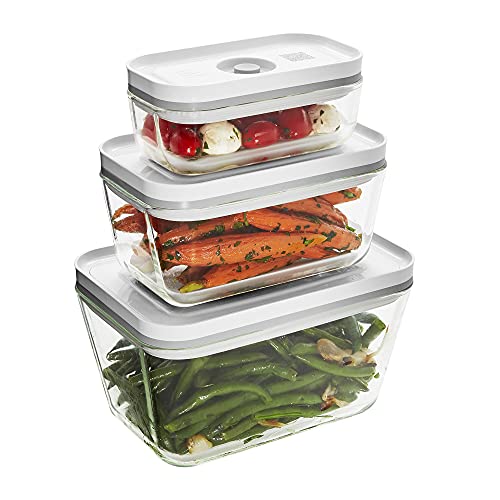
Zwilling Fresh & Save Coffee Container
A hand pump on the lid pulls a partial vacuum after each use, no batteries required. Its narrow footprint slides into shelves too tight for wide stainless canisters. Owners already using Zwilling’s vacuum food storage line can share lids across containers.
Pros
- Narrow footprint suits tight cabinet shelves
- Works with the broader Zwilling vacuum system
- Hand pump creates a real partial vacuum
Cons
- Needs manual pumping after every use
- Plastic body wears faster than stainless

Bar Ani Coffee Canister with CO2 Valve
Single-wall steel keeps costs down while still fitting a one-way CO2 valve into the lid. Fresh-roasted beans off-gas safely without forcing air back inside. Buyers who want valve protection without a double-wall price tag land here.
Pros
- CO2 valve at a lower price point
- Handles fresh-roasted beans adequately
- Compact size suits smaller kitchens
Cons
- Single-wall steel insulates less than double-wall bodies
- Lighter gauge feels less premium than top competitors

Prepara Evak Glass Coffee Container
Glass walls let you check bean color and grind consistency without opening the lid. A push-down seal removes air on closure, similar to a plunger canister. Light passes through glass freely, so a dark cabinet matters more here than with stainless.
Pros
- Clear glass allows a visual bean check
- Push-down seal removes air on each close
- Suits open-shelf display in a kitchen
Cons
- Glass lets light through unless kept in a dark spot
- Heavier and more breakable than stainless options
The lineup, side by side
| # | Model | Material | Best for | Score | Price |
|---|---|---|---|---|---|
| 1 | Coffee Gator Stainless Steel Coffee Canister | Double-wall stainless steel | Best overall | 9.3 | Check price |
| 2 | Airscape Kitchen Coffee Canister | Brushed stainless steel | Best for air removal | 9.0 | Check price |
| 3 | OXO Good Grips POP Container | BPA-free plastic, clear body | Best value | 8.7 | Check price |
| 4 | Planetary Design Airscape Coffee and Food Storage Container | Stainless steel | Best for portion tracking | 8.5 | Check price |
| 5 | Zwilling Fresh & Save Coffee Container | BPA-free plastic with vacuum lid | Best for compact kitchens | 8.3 | Check price |
| 6 | Bar Ani Coffee Canister with CO2 Valve | Single-wall stainless steel | Best budget for fresh beans | 8.1 | Check price |
| 7 | Prepara Evak Glass Coffee Container | Glass with silicone seal | Best for visual storage | 8.0 | Check price |
Questions worth asking
What is the best container for coffee to keep it fresh?
An opaque, airtight container with a one-way CO2 valve suits beans roasted within the past two weeks. Once beans pass that stage, a vacuum-seal container works just as well.
Do coffee containers need a CO2 valve?
Only beans still off-gassing need one, which is roughly the first one to two weeks after roasting. Pre-ground or older beans do fine in a standard vacuum or airtight container.
Is it better to store coffee in the fridge?
Refrigeration usually backfires, since temperature swings create condensation and add moisture. A cool, dark cabinet with an airtight container works more reliably.
Glass vs stainless steel coffee container, which one wins?
Stainless blocks light completely, which protects freshness better over time. Glass trades that protection for the ability to see bean color and grind at a glance.
How long does coffee stay fresh once opened?
Whole beans in a sealed, dark container usually hold flavor for a few weeks past the roast date. Pre-ground coffee fades faster, often within one to two weeks.
What size coffee container should I buy?
Match capacity to what you use within a few weeks. An oversized container just means beans sit longer than ideal before you reach the bottom.
Can ground coffee and whole beans share the same container?
Yes, though ground coffee stales quicker due to its larger surface area. It benefits more from a full vacuum seal than a valve built for whole beans.
Do CO2 valve containers help with older coffee?
Not much. The valve only matters while beans are still releasing gas, so a vacuum or basic airtight seal protects older coffee just as effectively.
Which coffee container works best for small kitchens?
Compact vacuum canisters like the Zwilling Fresh & Save fit narrow shelves better than wide stainless bins, without giving up seal quality.
Our take
Buyers grinding through freshly roasted bags should choose the Coffee Gator canister for its CO2 valve and full light-blocking body. Anyone storing beans past the off-gassing stage gets equal protection from the Airscape plunger canister at a lower price. Skip a valve-equipped canister entirely if you only buy pre-ground shelf-stable coffee; the OXO POP Container handles that job for less.
Dana Whitfield
Dana spent eight years buying and merchandising for a regional kitchenware retailer before moving into editorial work. She has handled thousands of SKUs across cookware, small appliances and kitchen organization, and focuses on the practical differences that matter once a product is actually in daily use.


