Picking a Compass That Still Works When Electronics Fail
The Suunto MC-2 is the best overall compass, with a mirror sighting system that improves bearing accuracy for map navigation. The Cammenga Model 27 suits anyone needing rugged, tritium-lit durability, and the Coghlan’s Map Compass covers casual trail use on a budget.
The Suunto MC-2 is the best overall compass, because its mirror sighting system and adjustable declination correction improve bearing accuracy compared to simple baseplate models. It costs more and adds bulk versus a basic compass, so hikers on established, well-marked trails can get adequate navigation from a simpler model like the Suunto A-10 instead.
We compared sighting accuracy and needle design, declination adjustment, durability, and extra features like clinometers using manufacturer specifications and owner feedback from retail listings.
The top picks, ranked

Suunto MC-2
A mirror sighting system lines up distant landmarks with the compass dial for more accurate bearings than baseplate-only designs. An adjustable declination scale corrects for the gap between magnetic and true north without manual math.
Pros
- Mirror sighting improves bearing accuracy on landmarks
- Adjustable declination removes manual correction math
- Global needle performs reliably across hemispheres
Cons
- Bulkier than simple baseplate compasses
- Costs more than entry-level models
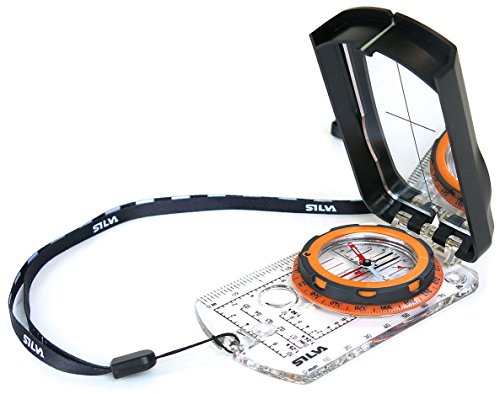
Silva Ranger 2.0
A clear baseplate and sighting mirror pair well with detailed topographic map work, where precise bearing transfer matters most. Luminous markings help read the dial in low light without a separate flashlight.
Pros
- Sighting mirror improves accuracy for map bearing work
- Magnifying lens helps read small map details
- Luminous markings aid low-light navigation
Cons
- Larger baseplate is less pocketable than minimalist designs
- Premium price compared to basic baseplate compasses

Brunton TruArc 15
A global needle design stays level and accurate across a wider range of latitudes than fixed-balance needles. The baseplate includes detailed ruler and scale markings for precise map distance measurement.
Pros
- Global needle stays accurate across varied latitudes
- Detailed ruler scales assist precise map measurement
- Clinometer adds slope-angle reading capability
Cons
- More features than casual hikers typically need
- Learning curve for first-time compass users
Cammenga Official Model 27
A tritium-illuminated dial glows for years without batteries, built to military specification for durability in rough handling and extreme temperatures. A lensatic sighting design favors precise directional bearings over map-plotting features.
Pros
- Tritium illumination glows for years without batteries
- Built to withstand rough handling and temperature extremes
- Lensatic sighting gives precise directional bearings
Cons
- Lacks a baseplate for direct map plotting
- Heavier than lightweight baseplate compasses

Suunto A-10
A straightforward baseplate design covers basic bearing and map orientation without the learning curve of mirror sighting or clinometer features. It suits hikers sticking to marked trails rather than off-trail route finding.
Pros
- Simple design is easy for beginners to learn
- Clear baseplate works fine for basic map orientation
- Lightweight and compact for trail use
Cons
- No declination adjustment for precise bearing accuracy
- Lacks sighting mirror for distant landmark bearings

Silva Expedition 4
A built-in clinometer scale measures slope angle, useful for assessing avalanche risk or steep terrain before committing to a route. The sighting mirror and adjustable declination support precise off-trail navigation.
Pros
- Clinometer helps assess slope angle before route decisions
- Global needle performs well across varied terrain
- Magnifying lens assists detailed map reading
Cons
- More complex than needed for simple trail hiking
- Larger size than minimalist backup compasses

Coghlan’s Map Compass
A basic baseplate compass covers occasional trail navigation at a noticeably lower price than feature-rich models. It works fine as a simple backup for someone who already relies mainly on a phone or GPS device.
Pros
- Lowest cost option in this comparison
- Lightweight and easy to carry as a backup
- Simple enough for quick, casual use
Cons
- No adjustable declination for precise bearings
- Lacks sighting mirror or clinometer features
What to look for
What to Look for in Compass Type and Declination Adjustment Baseplate compasses pair well with map work, while lensatic models like the Cammenga Model 27 favor precise directional sighting without a flat plotting surface. Adjustable declination, found on the Suunto MC-2 and Silva Ranger 2.0, removes the need to calculate the local correction manually every time.
Mirror Sighting Compasses Versus Simple Baseplate Models A sighting mirror improves bearing accuracy on distant landmarks, which matters most for off-trail route finding with the Suunto MC-2 or Silva Expedition 4. Hikers staying on marked, well-signed trails rarely need that precision and can rely on a simpler compass like the Suunto A-10.
Compasses for Backcountry Navigation Versus Casual Trail Use Backcountry travel off marked trails benefits from added features like a clinometer and global needle, both present on the Silva Expedition 4 and Brunton TruArc 15. Casual day hikers on established trails get by fine with a basic baseplate compass that costs less and weighs less.
Durability and Night Visibility for Rugged Use Extended backcountry trips or low-light conditions favor durable, self-illuminating designs like the Cammenga Model 27, which uses tritium instead of a battery-powered light. Day hikers who finish before dark rarely need that level of ruggedness or illumination.
The lineup, side by side
| # | Model | Type | Best for | Score | Price |
|---|---|---|---|---|---|
| 1 | Suunto MC-2 | Mirror sighting baseplate compass | Best Overall | 9.3 | Check price |
| 2 | Silva Ranger 2.0 | Mirror sighting baseplate compass | Best for Map Navigation | 9.0 | Check price |
| 3 | Brunton TruArc 15 | Baseplate compass with sighting mirror | Best for Precision Bearing Work | 8.8 | Check price |
| 4 | Cammenga Official Model 27 | Lensatic sighting compass | Best for Durability and Night Use | 8.6 | Check price |
| 5 | Suunto A-10 | Basic baseplate compass | Best for Beginners | 8.3 | Check price |
| 6 | Silva Expedition 4 | Mirror sighting baseplate compass | Best for Backcountry Navigation | 8.1 | Check price |
| 7 | Coghlan’s Map Compass | Basic baseplate compass | Best Budget Pick | 7.7 | Check price |
Questions worth asking
Is a compass still necessary with GPS and phone apps available?
Yes, a compass has no battery to die and works reliably in cold or wet conditions, which is why most backcountry guidance recommends carrying one like the Suunto MC-2 as a backup.
What does adjustable declination mean on a compass?
It lets the compass correct for the local gap between magnetic north and true north, as on the Suunto MC-2 and Silva Ranger 2.0, without recalculating the offset by hand each time.
Do I need a mirror sighting compass for hiking?
Mirror sighting, found on the Suunto MC-2 and Silva Expedition 4, improves accuracy for off-trail bearings but adds little benefit for hikers staying on clearly marked paths.
What is a global needle on a compass?
A global needle stays balanced and accurate across a wider range of magnetic latitudes than a standard fixed needle, which matters for travelers using one compass in different regions.
Is a lensatic or baseplate compass better for navigation?
Baseplate compasses work better for plotting bearings directly on a map, while lensatic compasses like the Cammenga Model 27 favor precise directional sighting without map plotting.
Does a compass need batteries to glow at night?
Not necessarily; the Cammenga Model 27 uses tritium illumination that glows for years without a battery, unlike some electronic compass displays.
What is a clinometer used for on a compass?
A clinometer measures slope angle, which helps assess terrain steepness or avalanche risk before committing to a route, as featured on the Silva Expedition 4 and Brunton TruArc 15.
Can a basic compass work as a reliable backup?
Yes, a simple baseplate compass like the Suunto A-10 or Coghlan’s Map Compass works fine as an emergency backup, even without advanced sighting or declination features.
How accurate does a hiking compass need to be?
Most hiking navigation only needs accuracy within a few degrees, which any compass here provides; precision sighting features matter more for technical backcountry route finding.
The bottom line
The Suunto MC-2 is the strongest overall pick for its mirror sighting accuracy and adjustable declination across varied terrain. Anyone needing a rugged, battery-free option for rough or extended use should choose the Cammenga Model 27 instead. Casual hikers wanting a simple backup on a budget can still rely on the Coghlan’s Map Compass.
Sierra Daniels
Sierra's background is in landscape design and nursery retail. She focuses on lawn and garden equipment, outdoor furniture and gear durability, weighing published specs against how materials actually hold up outside.
You might also need

Minikey Solar Bird Feeder Camera: Is the AI Bird ID Worth the Subscription?

Refresh Sports Glider Ray Pool Torpedo: A Good Pick for Underwater Pool Play?

Sweet Home Collection Patio Chair Cushions: Enough Padding for Daily Outdoor Use?
