Compact Camping Lanterns That Last the Whole Trip
Black Diamond’s Moji R+ suits most campers: 150 diffused lumens, about 4 ounces, roughly 70 hours on low. Goal Zero’s Lighthouse Micro Flash folds a USB plug into its body, so no cable travels with it. BioLite’s AlpenGlow 250 lights a family picnic table better.
Black Diamond’s Moji R+ is the lantern most campers should carry. Its frosted globe spreads 150 lumens without a hotspot, and the whole unit weighs about 4 ounces. Colour modes are a novelty, not a reason to buy. Week long trips away from power still favour a lantern that runs on swappable AA cells.
Brightness dominates lantern listings. Few campers actually want maximum output inside a two person tent. We compared peak lumens, quoted runtime on low, weight, charging method and ingress protection rating. Owner feedback on beam quality, hook strength and cold weather battery drop settled the close calls.
Our top picks
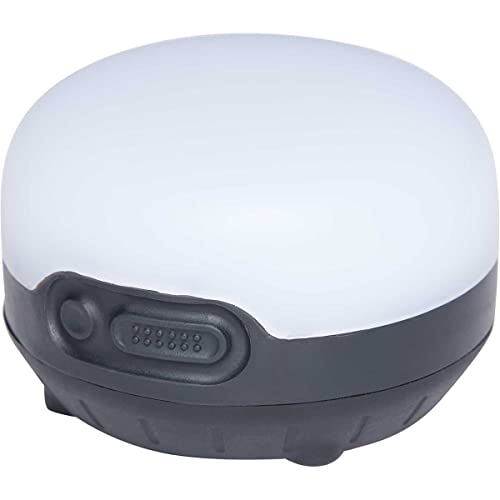
Black Diamond Moji R+ Lantern
Frosted plastic turns 150 lumens into an even pool, which is what you want from a light hanging a foot above your face. Twin hooks fold out to grab tent loops or a ridge line. Dimmed right down, the lithium ion cell stretches to roughly 70 hours, so a weekend needs no top up.
Pros
- Even diffused pool with no visible hotspot
- Twin hooks hang it from tent loops or a cord
- Dimmer reaches a genuinely low reading level
Cons
- Cell cannot be swapped on trips longer than its charge
- Colour modes rarely get used after the first night

Goal Zero Lighthouse Micro Flash
A USB plug folds out of the tail, so this refills from a laptop, wall brick or power bank with nothing else in the bag. One end switches to a directional beam when you need to find a trail marker. Under 3 ounces means it rides in a jacket pocket rather than a pack.
Pros
- Fold out USB plug removes the charging cable
- Doubles as a torch, so one light covers both jobs
- Lowest setting runs for days between charges
Cons
- Slim body throws a smaller pool than a globe lantern
- Exposed plug contacts need protecting in a loose pack

BioLite AlpenGlow 250
Tuneable white light at 250 lumens covers a picnic table and a camp kitchen. Shaking the body cycles colour and candle flicker modes, which keeps younger children busy after dark. USB-C handles charging, and a reserve mode holds back the last of the 3200 mAh cell.
Pros
- Output is enough to light a full picnic table
- USB-C matches the cable already in most packs
- Colour and flicker modes suit camping with children
Cons
- Around 8 oz, heavier than any pocket lantern here
- Colour modes cut runtime well below the 40 hour figure

Streamlight Siege AA
Three AA cells run this, so spares in a dry bag outlast any charge cycle. Streamlight quotes 200 lumens on high and roughly 120 hours on low. IPX7 sealing survives a drop into a stream, and a removable diffuser switches output between soft flood and a directed beam.
Pros
- Spare AA cells keep it running for weeks
- IPX7 rating handles rain and brief immersion
- Diffuser lifts off to swap flood for beam
Cons
- Loaded with alkalines it outweighs rechargeable rivals
- Cells need replacing every few trips

MPOWERD Luci Outdoor 2.0 Inflatable Solar Light
Deflated, this packs to about an inch thick and clips to a pack lid to charge while you walk. Sunlight is the only input, so no cable, no cells and no charging stop on a multi day route. Peak output of 75 lumens will not light a campsite, though it suits a two person tent.
Pros
- Charges strapped to a pack in daylight
- Collapses flat and inflates in seconds
- IP67 housing floats if it goes in the water
Cons
- A full charge takes roughly seven hours of sun
- Too dim for cooking or campsite repairs
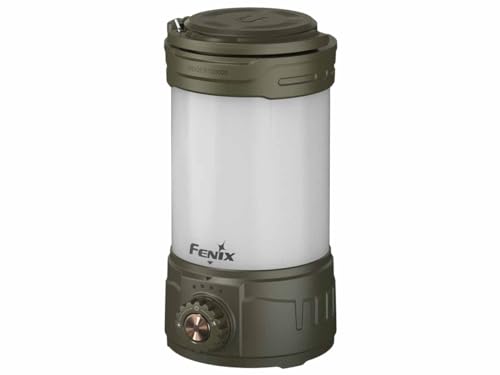
Fenix CL26R Pro
Peak output reaches 650 lumens, turning a pocket lantern into a work light for cooking, gear repairs or a lost tent peg. A magnetic base sticks it to a vehicle panel or a stove windshield and frees both hands. USB-C refills the removable cell, which you can swap instead of waiting.
Pros
- Bright enough to cook and make repairs by
- Magnetic base holds it to any steel surface
- Removable cell can be swapped mid trip
Cons
- Top setting empties the battery within hours
- Far too harsh for use inside a tent

Vont 2 Pack LED Camping Lantern
Pull the body open and 30 LEDs light up, press it shut and they go off. Two units arrive per pack, enough to cover a tent porch and a car boot at once. Flat, functional output does the job, but nothing dims and the AA cells are not supplied.
Pros
- Two lanterns arrive in one pack
- Collapsing action is easy to work in the dark
- Worth keeping in a car or a kitchen drawer
Cons
- Output cannot be dimmed at all
- Six AA cells needed before first use
Compared at a glance
| # | Model | Max output | Best for | Score | Price |
|---|---|---|---|---|---|
| 1 | Black Diamond Moji R+ Lantern | 150 lumens | Best overall | 9.4 | Check price |
| 2 | Goal Zero Lighthouse Micro Flash | 150 lumens | Best pocket rechargeable | 9.2 | Check price |
| 3 | BioLite AlpenGlow 250 | 250 lumens | Best for family campsites | 9.0 | Check price |
| 4 | Streamlight Siege AA | 200 lumens | Best for long trips on AA cells | 8.7 | Check price |
| 5 | MPOWERD Luci Outdoor 2.0 Inflatable Solar Light | About 75 lumens | Best solar | 8.5 | Check price |
| 6 | Fenix CL26R Pro | 650 lumens | Best high output | 8.2 | Check price |
| 7 | Vont 2 Pack LED Camping Lantern | 3 AA cells per lantern, not included | Best budget | 8.0 | Check price |
Before you buy
What to look for in a compact camping lantern Lumens win the listing, yet most tent lighting happens between 10 and 50 lumens. Check the runtime quoted on low, since that is the setting you live on. Weight only counts if the lantern goes in a pack rather than a car boot. Ingress ratings translate simply: IPX4 shrugs off rain, IPX7 survives a drop into a stream. Hanging hardware is the detail buyers skip and then miss every night, so look for twin hooks or a D ring.
Rechargeable, replaceable or solar power Rechargeable lanterns weigh less and refill for nothing, provided a power bank or a vehicle comes along. They run dry on trips longer than one charge, and lithium cells lose capacity below freezing. Swappable AA models such as the Streamlight Siege AA keep going while spares last, which is why expedition kit lists still name them. Solar sits between the two. Luci Outdoor 2.0 needs about seven hours of sun, so treat it as a backup under forest canopy or in winter.
Best camping lanterns for backpacking Packed size and grams decide this branch. Luci Outdoor 2.0 deflates to roughly an inch thick and rides on the outside of a pack. Goal Zero’s Lighthouse Micro Flash weighs about 2.8 ounces and leaves the cable at home. Either covers a solo tent comfortably. Bigger units such as the AlpenGlow 250 earn a place only when the trip is car based, or when someone else carries the tent.
Lighting a tent, a camp kitchen and a power cut Task light and ambient light pull in opposite directions. Cooking, gear repairs and hunting for a dropped peg want concentrated output, which is the Fenix CL26R Pro at 650 lumens. Reading in a tent wants a diffused globe turned down low, exactly the Moji R+ case. Regular campers end up owning one of each rather than one compromise. At home, a pair of collapsible Vont lanterns in a drawer covers outages without touching the camping kit.
Questions worth asking
How many lumens do you need for a camping lantern?
Between 100 and 250 lumens covers a tent and a small table. Cooking outdoors is easier at 400 lumens or more, though that output feels harsh inside a two person tent.
Rechargeable vs battery camping lanterns, which is better?
Rechargeable wins on weight and running cost across a weekend. Replaceable AA cells win on trips longer than one charge and in freezing weather, where lithium capacity drops.
Are solar camping lanterns worth it?
On sunny multi day hikes, yes, because they add no cable and almost no weight. Under forest canopy or winter cloud they charge too slowly to serve as your only light.
What does IPX7 mean on a camping lantern?
It means the housing survives temporary immersion in water. IPX4, the far more common rating, handles rain and splashes but not a drop into a stream.
Can a camping lantern charge a phone?
Some larger models include a USB output and work as a small power bank. Using it that way eats the light runtime you were carrying the lantern for.
Which camping lantern is best for inside a tent?
A diffused globe running low, such as the Black Diamond Moji R+. Directional beams bounce off nylon walls and throw glare straight back at you.
How long do compact camping lanterns last on one charge?
On the lowest setting, anywhere from 24 hours to well over 100 depending on cell size. At full output, expect four to eight hours from most rechargeable models.
Do camping lanterns work in cold weather?
Lithium cells lose runtime below freezing, sometimes noticeably. Keep the lantern in your sleeping bag overnight, or run an AA model on lithium primary cells.
Is a headlamp better than a camping lantern?
A headlamp aims wherever you look, which suits cooking and night walks. A lantern lights a whole tent or table without blinding the person opposite. Most campers end up carrying both.
Our pick
Buy the Black Diamond Moji R+ first. Roughly 70 hours on low, 150 diffused lumens and a 4 ounce body cover nearly every night spent in a tent. Campers out longer than a single charge should take the Streamlight Siege AA and a sleeve of spare cells instead. Families lighting a picnic table will get more use from the brighter, warmer BioLite AlpenGlow 250.
Derek Holt
Derek has a background coaching recreational and amateur athletes and has worked the sales floor at specialty fitness retailers. He focuses on equipment durability, ergonomics and realistic use cases rather than marketing claims.