Compact Belt Sanders That Pack a Punch
For most hobbyists, the Makita 9903 is the top pick, offering a balance of power and control in a lightweight frame. Its main advantage is the automatic belt tracking system that prevents belt drift, saving you time and frustration. However, its dust bag is small, so you may want to connect a shop vac for extended sanding sessions.
Sanding is a necessary evil in woodworking, but the right tool can turn a tedious task into a quick chore. Compact belt sanders are perfect for tight spaces, one-handed operation, and reducing fatigue during long sessions.
This guide breaks down the best models available today, focusing on features that matter: power, dust control, and ease of use. Whether you’re a DIYer or a pro, you’ll find a sander that fits your hand and your project.
The shortlist, ranked

Makita 9903 3″ x 21″ Belt Sander
A favorite among woodworkers, the Makita 9903 delivers smooth operation with its automatic belt tracking. It has a powerful motor that handles heavy stock removal, yet it remains comfortable to use.
Pros
- Automatic belt tracking prevents misalignment
- Comfortable grip reduces fatigue
- Dust collection bag included
Cons
- Dust bag fills quickly
- No variable speed control

DEWALT 3″ x 21″ Belt Sander (DWE43144)
The DWE43144 stands out with its dust-sealed switch and efficient dust collection system. It also offers variable speed, giving you control for different materials, and a quick belt change mechanism.
Pros
- Variable speed for precise work
- Excellent dust collection with two outlets
- Tool-free belt release
Cons
- Heavier than some rivals
- Slightly bulky design

Bosch 1294DVS 4-Inch x 24-Inch Belt Sander
This Bosch model offers a wider 4-inch belt for covering large flat areas quickly. Its variable speed dial and constant response circuitry keep the speed steady under load, making it a workhorse.
Pros
- High material removal rate
- Constant speed under load
- Replaceable backing pad extends life
Cons
- Heavier and wider, less portable
- Dust bag is not very effective

Porter-Cable 352VS Variable Speed 3-Inch x 21-Inch Belt Sander
The Porter-Cable 352VS offers variable speed and a dust bag at an affordable price. It is reliable for general sanding tasks and includes a sturdy carrying case.
Pros
- Variable speed adds versatility
- Comes with carrying case
- Lightweight and easy to handle
Cons
- Less powerful motor
- Dust collection could be better

Ryobi One+ 18V Cordless Belt Sander (PBLBS01B)
This Ryobi cordless sander gives you freedom from outlets, ideal for outdoor jobs. It runs on 18V batteries, but owners note that battery life is limited, so keep spares handy.
Pros
- No cord to restrict movement
- Brushless motor for longer runtime
- Compact and fits well in hand
Cons
- Runtime is short with standard batteries
- Less power than corded models
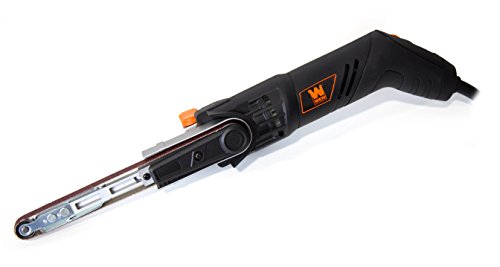
WEN 6302 3-Inch x 18-Inch Belt Sander
The WEN 6302 is a lightweight and compact sander that is easy to maneuver. It is perfect for quick sanding jobs and includes a dust bag and a flat base for bench mounting.
Pros
- Very lightweight and portable
- Can be mounted to a bench for stationary use
- Low price
Cons
- Smaller belt size limits large jobs
- No variable speed

SKIL 3-Inch x 18-Inch Belt Sander (BL751101)
The SKIL sander features a one-click belt release that simplifies swapping belts. It also has a dust-sealed switch and a comfortable grip, making it a user-friendly option.
Pros
- Tool-free belt changes save time
- Comfortable soft grip
- Dust-sealed switch for longer life
Cons
- Less powerful than larger models
- Dust bag is modest
How to choose
Side by side
| # | Model | Belt Size | Best for | Score | Price |
|---|---|---|---|---|---|
| 1 | Makita 9903 3″ x 21″ Belt Sander | 3 x 21 inches | Best overall for balanced performance | 9.4 | Check price |
| 2 | DEWALT 3″ x 21″ Belt Sander (DWE43144) | 3 x 21 inches | Best for dust management | 9.2 | Check price |
| 3 | Bosch 1294DVS 4-Inch x 24-Inch Belt Sander | 4 x 24 inches | Best for wide surface sanding | 9.0 | Check price |
| 4 | Porter-Cable 352VS Variable Speed 3-Inch x 21-Inch Belt Sander | 3 x 21 inches | Best value for budget-conscious | 8.7 | Check price |
| 5 | Ryobi One+ 18V Cordless Belt Sander (PBLBS01B) | 3 x 18 inches | Best for cordless convenience | 8.5 | Check price |
| 6 | WEN 6302 3-Inch x 18-Inch Belt Sander | 3 x 18 inches | Best for small projects and detail work | 8.3 | Check price |
| 7 | SKIL 3-Inch x 18-Inch Belt Sander (BL751101) | 3 x 18 inches | Best for ease of belt changes | 8.0 | Check price |
Good to know
What is the difference between 3×18 and 3×21 belt sanders?
The 3×21 belt is longer, providing more surface contact, which allows for faster material removal and smoother results on large flat areas. The 3×18 is shorter and often lighter, making it easier to handle in tight spaces and for overhead work.
Can I use a compact belt sander for polishing?
Yes, by attaching a fine grit belt or a polishing belt, you can use a belt sander for polishing metal or wood. However, dedicated polishers may offer better control. Always use the appropriate belt for the material.
How do I prevent the belt from slipping off?
Ensure the belt is properly aligned and tensioned. Many sanders have automatic tracking, but if yours doesn’t, adjust the tracking knob while running. Also, avoid applying excessive pressure, which can cause the belt to wander.
Can I mount a compact belt sander to a bench?
Yes, many models have a flat base or come with a clamp that allows you to mount them upside down on a workbench, turning them into a stationary sander. This is useful for sanding small parts with precision.
What safety gear should I use with a belt sander?
Always wear safety glasses to protect your eyes from dust and debris. A dust mask or respirator is recommended to avoid inhaling fine particles. Hearing protection is also advisable if you are sanding for extended periods.
How do I choose the right grit belt?
Coarse grits (40-60) are for heavy stock removal, medium grits (80-120) for smoothing, and fine grits (150-220) for finishing. Start with a coarse grit if you need to remove a lot of material, then progress to finer grits for a smooth surface.
Are cordless belt sanders as powerful as corded ones?
Generally, corded sanders offer more consistent power and longer runtime. Cordless models have improved, but they may struggle with heavy-duty tasks and battery life. For occasional use and portability, a cordless can be sufficient.
What maintenance does a belt sander require?
Regularly clean the dust ports and replace the belt when worn. Check the tracking and tension periodically. Also, inspect the power cord for damage. Keep the tool dry and store it in a clean environment to prolong its life.
Can I use a belt sander on metal?
Yes, but you need a belt designed for metal, such as aluminum oxide or ceramic. Also, be aware that sanding metal produces sparks, so keep the work area clear of flammable materials and wear appropriate protection.
What is the best way to sand edges and corners?
Use the front edge of the sander, but be careful not to tip it too much. Some sanders have a removable front guard that allows you to get closer to edges. Practice on scrap material to develop control.
Our pick
For most DIYers and pros, the Makita 9903 offers the best combination of power, reliability, and user-friendly features. If dust control is your priority, choose the DEWALT DWE43144. For cordless freedom, the Ryobi is a solid choice, but keep extra batteries. If budget is a concern, the Porter-Cable provides good value without major sacrifices.
Jake Monroe
Jake worked as a residential contractor for over a decade before shifting to full-time writing. He evaluates power tools, hand tools and workshop gear through the lens of someone who has actually used them on job sites, not just read the box.