Which Commercial Frying Pan Fits a Home Kitchen?
Tramontina Professional 12 Inch leads for most home cooks, combining heavy gauge aluminium with an NSF certified nonstick surface. Vollrath 67952 Wear-Ever holds up better under constant release cycles. For induction hobs and hard searing, Matfer Bourgeat black carbon steel is the one to buy.
Tramontina Professional Aluminum Nonstick Fry Pan, 12 Inch is the commercial pan that makes sense on a home hob. Thick aluminium spreads heat with no hot spot over a gas flame, and its NSF certified coating is rated for food service use. Aluminium carries one hard limit: induction hobs will not see it. Induction kitchens should take the Matfer Bourgeat carbon steel instead.
Restaurant cookware answers to different priorities than consumer lines. Thicker stock, riveted handles and coatings chosen for cycles replace matching lids and gloss finishes. We compared published metal gauges, coating chemistry, handle attachment and stated oven ceilings. Owner feedback on coating wear and warping under high heat adjusted the order. Pans with glued plastic handles rated below 350 degrees Fahrenheit did not make the list.
What we recommend
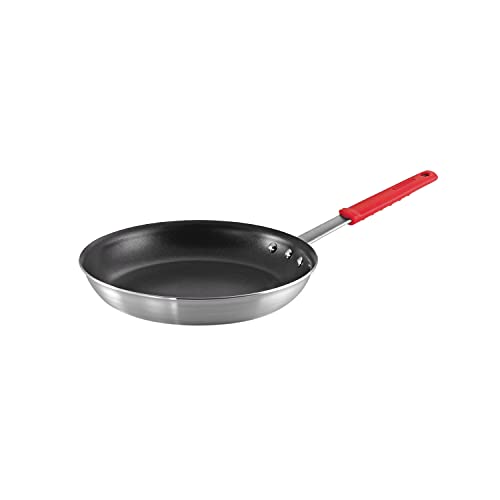
Tramontina Professional Aluminum Nonstick Fry Pan, 12 Inch
Restaurants buy this pan by the case, and heat spreads evenly across its thick aluminium base with no hot spot over a gas burner. Its reinforced nonstick coating holds NSF certification for food service. A silicone grip slides off so the pan can finish a dish at 450 degrees Fahrenheit. Aluminium is not magnetic, so induction hobs ignore it.
Pros
- Even heat across the base with no hot spots
- Grip lifts off for oven finishing
- Light enough to flip one handed
Cons
- Not compatible with induction hobs
- Coating dislikes sustained high heat

Vollrath 67952 Wear-Ever Fry Pan with CeramiGuard II, 12 Inch
CeramiGuard II is a ceramic reinforced nonstick built for constant release cycles rather than weekend eggs. Vollrath forms the body from 3003 series aluminium, which shrugs off the warping thin pans suffer over a ring burner. Bolted rivets hold the plated steel handle, so it cannot work loose. Styling stays unapologetically institutional.
Pros
- Coating rated for daily release cycles
- Thick 3003 body resists warping
- Riveted handle stays tight over years
Cons
- Bare steel handle heats on a gas hob
- Aluminium body will not run on induction

Matfer Bourgeat Black Carbon Steel Fry Pan, 11 7/8 Inch
Carbon steel tolerates heat that destroys any coating, which is exactly what a steak crust demands. Matfer presses this pan from black carbon steel with nothing applied on top, so no chemical ceiling limits oven use. Season it like cast iron and weeks of cooking build a slick release layer. Bare steel rusts when stored damp, so dry it and wipe on oil.
Pros
- Takes searing temperatures indefinitely
- Builds a natural release layer over time
- Runs on gas, electric and induction alike
Cons
- Rusts if put away wet
- Steel handle gets very hot

All-Clad D3 Stainless 12-Inch Fry Pan
Bare stainless earns its place when browned fond becomes the sauce, since nonstick surfaces never build that layer the same way. Three ply construction bonds an aluminium core between stainless faces for even heat. All-Clad rates the pan to 600 degrees Fahrenheit in the oven, the highest ceiling here outside bare iron. Eggs will stick unless you preheat properly and add fat.
Pros
- Builds fond for deglazed pan sauces
- Very high oven ceiling for finishing
- No coating to wear out or replace
Cons
- Eggs stick without careful technique
- Needs scrubbing after high heat cooking
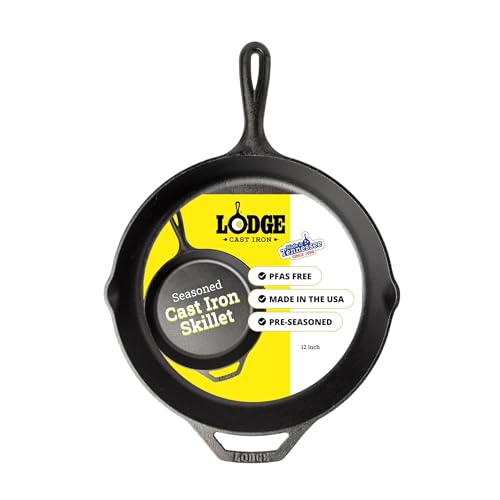
Lodge L10SK3 12-Inch Cast Iron Skillet
Nothing else here stores heat like cast iron, so surface temperature barely drops when cold steak lands. Lodge ships it pre seasoned, usable straight from the box. At roughly eight pounds, one handed flipping is off the table. Heat it slowly, because iron conducts poorly and hot spots form over a small ring.
Pros
- Holds temperature when cold food hits it
- Moves from hob to oven to grill
- Seasoning improves with every use
Cons
- Heavy to lift and manoeuvre
- Slow to heat evenly on a small ring

Winco AFP-14A 14-Inch Aluminum Fry Pan
Fourteen inches of cooking surface sears a full batch instead of steaming it, which a 10 inch pan cannot manage. Winco uses 3.5 mm aluminium stock, thick enough to stay flat despite the width. Its riveted handle is bare metal, so keep a dry cloth within reach. Uncoated aluminium reacts with tomato, wine and other acids over long simmers.
Pros
- Fits a full batch without crowding
- Thick stock resists warping across 14 inches
- Nothing on the surface to chip or peel
Cons
- Reacts with acidic sauces
- Handle needs a cloth on a hot hob

HexClad 12 Inch Hybrid Frying Pan
Laser etched hexagons raise stainless ridges above recessed nonstick, so a metal spatula rides on steel rather than coating. Tri ply construction underneath delivers even heat and full induction compatibility. HexClad rates the pan to 500 degrees Fahrenheit in the oven. Release still trails a dedicated nonstick pan, most obviously with eggs.
Pros
- Metal utensils do not scrape the coating
- Runs on induction and takes a hot oven
- Browns better than pure nonstick
Cons
- Release trails a true nonstick pan
- Ridges trap residue and need scrubbing
How they compare
| # | Model | Body | Best for | Score | Price |
|---|---|---|---|---|---|
| 1 | Tramontina Professional Aluminum Nonstick Fry Pan, 12 Inch | Heavy gauge aluminium | Best overall | 9.4 | Check price |
| 2 | Vollrath 67952 Wear-Ever Fry Pan with CeramiGuard II, 12 Inch | 3003 series aluminium | Best for high volume cooking | 9.2 | Check price |
| 3 | Matfer Bourgeat Black Carbon Steel Fry Pan, 11 7/8 Inch | Black carbon steel | Best for searing | 9.0 | Check price |
| 4 | All-Clad D3 Stainless 12-Inch Fry Pan | Three ply, aluminium core between stainless | Best for pan sauces | 8.8 | Check price |
| 5 | Lodge L10SK3 12-Inch Cast Iron Skillet | Cast iron, pre seasoned | Best budget | 8.6 | Check price |
| 6 | Winco AFP-14A 14-Inch Aluminum Fry Pan | 14 inches | Best for large batches | 8.4 | Check price |
| 7 | HexClad 12 Inch Hybrid Frying Pan | Tri ply steel with laser etched hexagons | Best for metal utensils | 8.2 | Check price |
What to look for
What makes a frying pan commercial grade Metal thickness is the first marker. Commercial aluminium pans run roughly 3 to 4 mm, while thin supermarket stock buckles over a ring burner. Handle attachment comes second. Riveted and welded handles outlast the glued or screwed designs that work loose within a year. NSF certification, carried here by the Tramontina and Vollrath pans, confirms the piece meets food service cleanability standards. None of that makes a pan prettier, which is why restaurant lines ship with no lid and no gift box.
Nonstick, carbon steel or bare stainless Coatings release eggs and fish on almost no fat. They also degrade above roughly 450 degrees Fahrenheit and carry a finite life. Carbon steel, as in the Matfer Bourgeat pan, has nothing to fail and absorbs any heat a domestic hob produces, in exchange for seasoning and rust care. Bare stainless from All-Clad builds fond and survives scrubbing, though preheating technique decides whether food sticks. Uncoated aluminium like the Winco heats fast and weighs little, but reacts with acidic ingredients over long cooks.
Will it work on induction and in the oven? Induction needs a magnetic base, which rules out the aluminium Tramontina, Vollrath and Winco pans immediately. Cast iron, carbon steel, tri ply stainless and the HexClad hybrid all respond. Oven ceilings vary more than buyers expect: All-Clad D3 reaches 600 degrees Fahrenheit, HexClad 500, and the Tramontina 400 with its silicone grip fitted. Check the handle rather than the pan body, since handles usually set the limit. Gas cooks should also match diameter to burner size, because a 14 inch pan over a small ring leaves cold edges.
Best commercial frying pan for eggs, searing and batch cooking Eggs and delicate fish belong in the Tramontina or Vollrath nonstick pans, kept at moderate heat to protect the surface. Steak and smashed burgers go into the Matfer carbon steel or the Lodge cast iron, both of which hold temperature when cold meat lands. Pan sauces want the All-Clad, since fond is the entire point. Cooking for six at once? Reach for the 14 inch Winco, because crowding a smaller pan turns searing into steaming. Most kitchens settle on one coated pan for breakfast and one uncoated pan for anything needing a crust.
Questions worth asking
What makes a frying pan commercial grade?
Thicker metal, riveted or welded handles, and coatings rated for repeated release cycles. Many carry NSF listing for sanitation. Consumer pans spend that budget on finish, lids and matching sets.
Which commercial frying pan is best for eggs?
Tramontina Professional 12 Inch, run over medium heat. Vollrath 67952 with CeramiGuard II suits cooks frying eggs daily. Keep both away from sustained high heat.
Do commercial frying pans work on induction hobs?
Only magnetic ones do. Matfer carbon steel, Lodge cast iron, All-Clad D3 and HexClad all heat on induction. Aluminium pans from Tramontina, Vollrath and Winco will not.
Carbon steel vs cast iron: which fries better?
Carbon steel heats faster and weighs less, so it flips and manoeuvres easily. Cast iron stores more heat, which suits thick steaks and oven finishing. Both need seasoning and dry storage.
How long does a commercial nonstick coating last?
Heat and utensils decide it, not the calendar. Staying below 450 degrees Fahrenheit with silicone or wooden tools stretches coating life considerably. Regular high heat searing shortens it fast.
Can commercial frying pans go in the dishwasher?
Uncoated stainless generally survives it. Nonstick, carbon steel and cast iron should be hand washed, since detergent strips seasoning and dulls coatings. Two minutes at the sink beats replacing a pan.
What size frying pan should a home kitchen have?
Twelve inches covers most family cooking without crowding the food. Step up to the 14 inch Winco for big batches. Keep a smaller pan alongside for single portions.
Is a commercial frying pan worth it for home cooking?
Yes for anyone who cooks most nights, because thicker bases stay flat and riveted handles outlive consumer designs. Occasional cooks gain less. Style is the real trade off, since restaurant pans look plain.
Do restaurant pans perform well on a home gas hob?
They usually perform better, thanks to thicker bases that even out flame hot spots. Match pan diameter to the burner ring. An oversized pan on a small ring leaves the rim cold.
Why do commercial pans use bare metal or removable handles?
Bare steel and aluminium handles survive oven heat that melts plastic grips. Tramontina solves it with a silicone sleeve that pulls off before the pan goes in. Expect a cloth to be part of the routine.
The bottom line
Buy the Tramontina Professional Aluminum Nonstick Fry Pan, 12 Inch for a gas or electric kitchen. Commercial gauge aluminium, an NSF certified coating and a grip that lifts off for the oven deliver far more pan than the plain looks suggest. Induction owners should choose the Matfer Bourgeat carbon steel instead, trading a seasoning routine for unlimited searing heat. Add the All-Clad D3 only if deglazed pan sauces are a weekly habit.
Dana Whitfield
Dana spent eight years buying and merchandising for a regional kitchenware retailer before moving into editorial work. She has handled thousands of SKUs across cookware, small appliances and kitchen organization, and focuses on the practical differences that matter once a product is actually in daily use.


