Commercial Grade String Trimmers That Fit Homeowner Budgets
The Stihl FS 91 R stands out as the top pick for homeowners wanting commercial durability without the huge price. It offers pro grade power in a manageable package. Its main advantage is the Easy2Start system that reduces starting effort. A limitation is that it uses a curved shaft, which some users find less precise for edging.
Commercial string trimmers are built to endure long hours and tough weeds, but many are too heavy or costly for home use. However, several models strike a balance, offering pro level performance without overwhelming the average user. This roundup highlights those that are accessible, reliable, and worth the investment for a large property.
Homeowners with big yards or rough terrain often find that consumer trimmers break down quickly. Upgrading to a commercial unit can save money in the long run, as they feature stronger engines, better materials, and easier maintenance. We compared specifications and owner feedback to identify the best options for residential use.
The best picks, ranked

Stihl FS 91 R
The FS 91 R is a professional grade curved shaft trimmer that suits homeowners with large lots. Its 27.2 cc engine delivers strong torque for thick weeds, while the Easy2Start system reduces pulling effort. Owners report it starts easily and runs smoothly season after season.
Pros
- Strong power for thick growth
- Easy2Start system for quick starts
- Durable build for years of use
Cons
- Curved shaft may limit edging precision
- Requires mixed fuel
Echo SRM-225
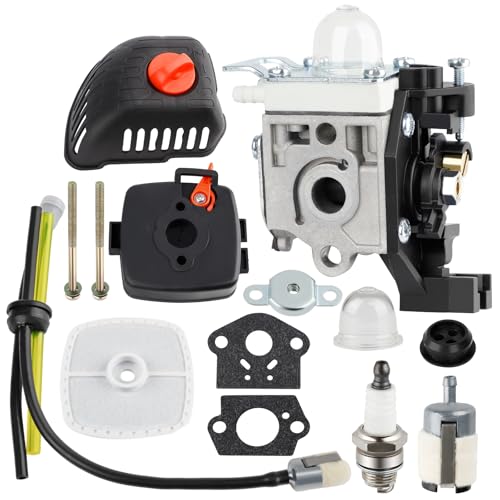
The Echo SRM 225 offers commercial grade performance at an affordable price. Its 21.2 cc engine is efficient and reliable, and the straight shaft design makes edging easier. Users appreciate the i-30 starting system, which reduces the effort needed to pull the cord.
Pros
- Affordable for commercial quality
- Straight shaft for precise edging
- Reliable starting
Cons
- Engine not as powerful as larger models
- Looped handle may be less comfortable for some

Husqvarna 128LD
The Husqvarna 128LD is a lightweight trimmer that is easy to handle for long sessions. It features a 28 cc engine, which is surprisingly strong for its class, and a straight shaft for versatility. The adjustable handle and harness make it comfortable for various user heights.
Pros
- Very light and easy to maneuver
- Powerful for its weight
- Adjustable handle for comfort
Cons
- Some users find vibration high
- Plastic parts may not be as durable as others

Makita XRU15PT1
For homeowners who prefer battery power, the Makita XRU15PT1 is a top contender. It runs on two 18V batteries and delivers power comparable to gas models. It is quiet, emission free, and has a variable speed trigger for precise control. The straight shaft and loop handle offer good balance.
Pros
- No fuel mixing or pull starts
- Quiet operation
- Variable speed control
Cons
- Need to invest in batteries and charger
- Run time may be limited for large yards
Echo PAS-225
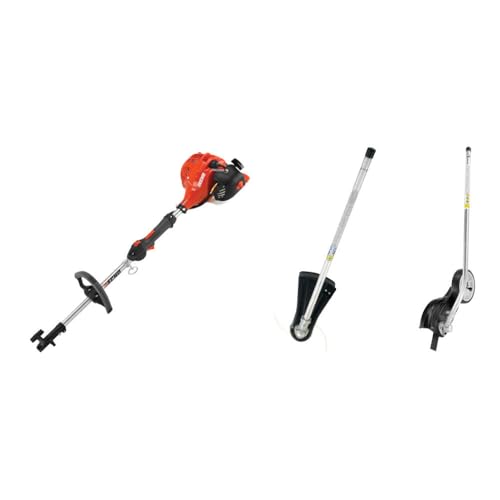
The Echo PAS 225 is a multi tool system, but it shines as a trimmer. Its 21.2 cc engine is solid, and the attachment capability allows you to add edgers, blowers, and more. The straight shaft and loop handle provide good control. Perfect for homeowners who want one power head for multiple tasks.
Pros
- Quick change attachments
- Good power for its size
- Expandable system saves space
Cons
- Attachment options add cost
- Heavier than dedicated trimmers

Stihl FS 111 R
The Stihl FS 111 R is a step up in power and durability, ideal for homeowners with very large lots or rough terrain. Its 28.4 cc engine is robust, and the bike handle provides excellent control. The straight shaft is perfect for edging, and the anti vibration system reduces fatigue.
Pros
- High power output
- Excellent anti vibration
- Bike handle for balanced control
Cons
- Heavier and may be tiring for smaller users
- Priced higher than other models

Kawasaki TJ27E
The Kawasaki TJ27E offers a 27.2 cc engine and a straight shaft design, making it a strong performer. It is often used by landscaping professionals, but its price and features make it accessible to homeowners. The loop handle is simple, and the overall build is sturdy.
Pros
- True commercial build
- Strong engine performance
- Reliable starting
Cons
- Heavier than some competitors
- Limited dealer network in some areas
Compared at a glance
| # | Model | Engine Displacement | Best for | Score | Price |
|---|---|---|---|---|---|
| 1 | Stihl FS 91 R | 27.2 cc | Best overall for power and reliability | 9.4 | Check price |
| 2 | Echo SRM-225 | 21.2 cc | Best value for budget conscious homeowners | 9.1 | Check price |
| 3 | Husqvarna 128LD | 28 cc | Best for lightweight maneuverability | 8.8 | Check price |
| 4 | Makita XRU15PT1 | 36V (18V X2) | Best cordless option for quiet operation | 8.9 | Check price |
| 5 | Echo PAS-225 | 21.2 cc | Best versatile attachment capable system | 8.7 | Check price |
| 6 | Stihl FS 111 R | 28.4 cc | Best for heavy duty work on large properties | 9.0 | Check price |
| 7 | Kawasaki TJ27E | 27.2 cc | Best for commercial grade reliability at a moderate price | 8.5 | Check price |
What to look for
Questions worth asking
Are commercial string trimmers worth it for a homeowner?
Yes, if you have a large yard or tough vegetation. They are more durable and powerful than residential models, so they last longer and handle thick weeds easier. They also often have better anti vibration and comfort features.
What is the difference between a residential and commercial trimmer?
Commercial trimmers have more powerful engines, heavier duty shafts and handles, and are designed for continuous use. They also have better air filtration and fuel systems. Residential models are lighter and cheaper but may not withstand heavy use.
How much land do I need to justify a commercial trimmer?
Generally, if you have more than an acre of grass to maintain, a commercial trimmer can save you time and reduce the risk of breakdowns. For smaller yards, a high end residential model might be sufficient.
Can I use a commercial trimmer for edging?
Yes, most commercial trimmers have a straight shaft that makes edging easier. Some also have a rotating head or an edging feature. If edging is important, choose a model with a straight shaft and a bike handle for better control.
Do commercial trimmers require more maintenance than residential ones?
Commercial trimmers do require regular maintenance, such as air filter changes and valve adjustments, but they are designed to be easily serviced. Following the manual will keep them running well. The intervals are similar to residential, but the parts are often higher quality.
What type of fuel do commercial trimmers use?
Most commercial trimmers are two stroke and require a mix of gas and oil. The ratio is typically 50:1, but always check the manual. Some models have a four stroke engine that uses straight gas, but they are less common.
Are battery powered commercial trimmers comparable to gas?
Modern battery models, like the Makita, can match the power of gas for many tasks. They are quieter and have no emissions, but run time may be limited to 30 to 60 minutes per charge. For a large property, you may need extra batteries.
What is the best way to choose the right trimmer for me?
Consider the size of your yard, the thickness of the vegetation, your budget, and your physical strength. If you have a big yard and thick weeds, a gas model with a straight shaft and a bike handle is often best. If you prefer low maintenance, consider a high end battery model.
The verdict
For most homeowners seeking commercial durability, the Stihl FS 91 R is the best overall choice due to its combination of power, ease of use, and reliability. If you want to save money without sacrificing much, the Echo SRM 225 offers excellent value. Those who prefer battery power should consider the Makita XRU15PT1. Whichever you choose, investing in a commercial trimmer will provide dependable service for years.
Sierra Daniels
Sierra's background is in landscape design and nursery retail. She focuses on lawn and garden equipment, outdoor furniture and gear durability, weighing published specs against how materials actually hold up outside.


